 Русский
 Английский
PERIODICALS
-

Purpose of publication & mdash; provide chess players from different countries with up-to-date information about the most interesting games played in recent international competitions, about the latest achievements in chess theory and practice. He laid the foundations of the information system in chess. Each volume & Scaron; ahovski informator contains several hundred selected games of the competition over the past 4 months (several hundred more are given in the notes), 36 original endings and combinations, the most important theoretical novelties in the debuts. The games are published with notes mainly of the chess players who played them, in a special notation where the pieces are indicated by chess symbols. This makes the publication accessible to chess players of all countries. The use of chess symbols and a cipher allows the processing of chess data using a computer, which increases the efficiency of information. There is a permanent column & mdash; & laquo; FIDE & raquo ;, with the latest information on its activities, information on the most important events in the chess life of individual countries and the chess world as a whole.
-

Coated paper. & laquo; Shackeleton & raquo; (& laquo; Sakk & eacute; let & raquo; & mdash; & laquo; Chess life & raquo;) & mdash; Hungarian Chess Federation monthly magazine. Published in Budapest from 1951 [until 1985 it was called & laquo; Magyar Shackelet & raquo; (& laquo; Magyar Sakk & eacute; let & raquo; & mdash; & laquo; Hungarian chess life & raquo;)]. Chief Editor & mdash; A. Coverage (since 1985). Continues the tradition of the magazine & laquo; Magyar shakquilag & raquo; (& laquo; Magyar sakkvil & aacute; g & raquo;), which was published intermittently in 1911 & mdash; 1950. It covers the chess life of Hungary and other countries, publishes the best games of Hungarian chess players, reviews of major competitions, articles on the work of Hungarian and foreign chess players, materials on chess history, composition, bibliography and more. He pays great attention to chess life in the USSR.
-

74.48 $
Czechoslovak chess & nbsp; (& laquo; Československy & scaron; ach & raquo;) & mdash; a monthly & nbsp; chess & nbsp; magazine published since June & nbsp; 1906. It is published under the auspices of the Czechoslovak Union of Physical Education in the publishing house & laquo; Olympia & raquo; (Prague). Editor & mdash; & nbsp; M. & nbsp; Philip & nbsp; (since & nbsp; 1974). The circulation is about 12 thousand copies. It illuminates the current chess life in Czechoslovakia and abroad. & Nbsp;
-

41.38 $
Hungarian chess life was a magazine of the Hungarian Chess Federation from 1951 to 1984. Coated paper
-
-
-
-

103.45 $
Several non-bound editions are included. Full annual kit. The oldest chess magazine in the world by continuity of publication. The magazine covers the chess life of the world and individual regions, competitions; historical and literary materials, parties, analyzes, various information are printed.
-

62.06 $
Ежемесячный журналъ, посвященный шахматной игре и ея литературе. Издаваемый М. Чигоринымъ 1876-1877. С.-Петербургъ. Типография В.О. Демакова. Великий русский шахматист, основоположник отечественной шахматной школы Михаил Иванович Чигорин в течение десяти лет издавал великолепные журналы "Шахматный листок" (1876-1881) и "Шахматный вестник" (1885-1887). Он был там основным, а порой - и единственным автором. Излишне говорить, что эти ярчайшие образцы русской шахматной мысли давным-давно стали практически недоступны современному читателю. Благодаря этому труду появляется возможность познакомиться с нашим бесценным шахматным, историческим и литературным наследием. "Приятно отметить, что роскошное, элитное исполнение данного четырехтомного издания не имеет аналогов в мировой шахматной литературе", - пишет в "Слове к читателю" многократный чемпион мира Анатолий Карпов. Первый том включает в себя два года: 1876-1877. СЛОВО К ЧИТАТЕЛЮ «Чигорин – основоположник отечественной шахматной школы, выдающийся теоретик, претендент на мировую корону». Как часто нам приходилось читать и слышать эти слова, которые от частого употребления затерлись, стали казаться пустой банальностью. Между тем, Михаил Иванович Чигорин (1850 – 1908) был действительно ярчайшей творческой личностью. Азартный, увлекающий человек, он ради поиска шахматной истины, разгадки тайн замысловатой дебютной либо внешне простой эндшпильной позиции не жалел сил и времени. В те далекие годы универсальность еще не стала «жизненной необходимостью» в шахматах, а потому каждый крупный мастер обладал четко выраженным индивидуальным стилем, со своими достоинствами и недостатками. Русский чемпион верил в динамический потенциал фигур, стремился к открытой фигурной игре, охотно жертвовал материал за инициативу. Его могучий оппонент Вильгельм Стейниц превыше всего ставил незыблемые позиционные ценности: надежность пешечной структуры, преобладание в центре, перевес в пространстве. Чигорин и Стейниц сыграли два матча на первенство мира, множество турнирных и легких партий, но их принципиальный спор велся не только за шахматной доской. Полемически острые, бескомпромиссные дискуссии этих титанов и их последователей украшали страницы газет и журналов тех лет. Чигорин страстно любил шахматы, и его угнетало отсутствие общественного интереса к этой мудрой игре в нашей стране. Он стремился доказать, что шахматы – не пустая забава; они могут стать делом всей жизни, настоящей профессией. Чтобы показать шахматы в самом выгодном свете и привлечь внимание просвещенной публики, Чигорин в течение десяти лет издавал, в основном за свой счет, журналы «Шахматный листок» (1876-81) и «Шахматный вестник» (1885-87). Он был там основным, а порой – и единственным автором. Излишне говорить, что эти ярчайшие образцы русской шахматной мысли давным-давно уже стали библиографической редкостью. Современный читатель избалован обилием шахматной литературы. Однако без исторической ауры, обволакивающей творческую сущность шахматиста, наш внутренний мир был бы гораздо беднее. Издательство «Русский шахматный дом» совершает настоящий подвиг, давая возможность каждому познакомиться с нашим бесценным шахматным, историческим и литературным наследием. Приятно отметить, что роскошное, элитное исполнение данного четырехтомного издания не имеет аналогов в мировой шахматной литературе. Анатолий Карпов, многократный чемпион мира


-
 The life of a chess player in the system. Memories of the grandmaster
Author:
Averbah 45.00 $ -
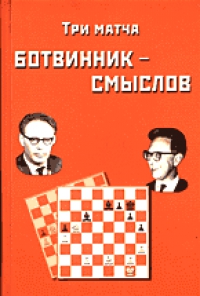 Три матча Ботвинник-Смыслов
Author:
Botvinnik 45.00 $ -
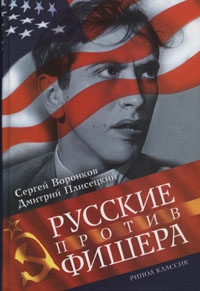 Russians vs Fisher
Author:
Voronkov 65.00 $ -
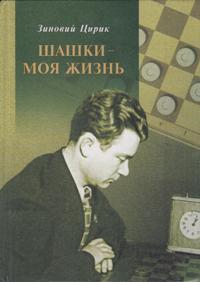 Checkers is my life
Author:
Ciric 87.50 $ -
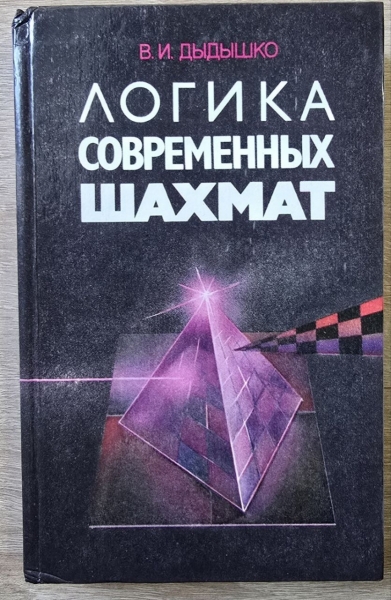 The logic of modern chess
Author:
Dydyshko 72.50 $ -
 Siegbert Tarrasch. The Queen
Author:
Tarrash 72.50 $ -
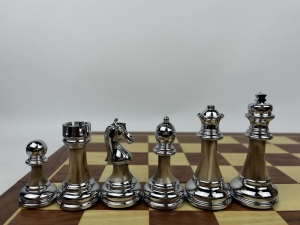 High quality acrylic metal heavy chess pieces with wooden board
202.50 $
-
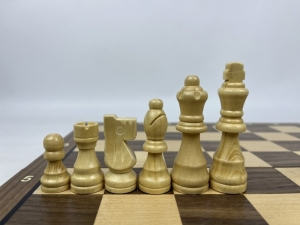 Wooden magnetic Staunton chess with a lock (silver)
56.25 $
-
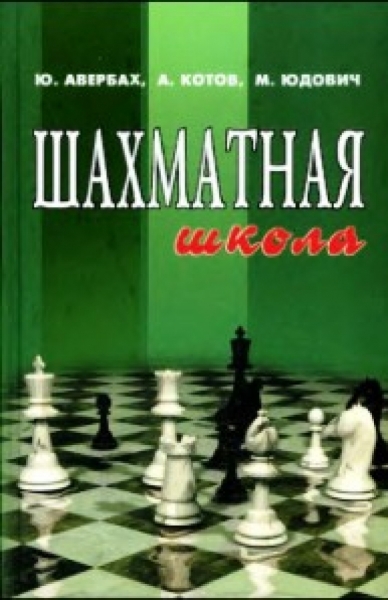 Chess school
Author:
Averbah 15.00 $ -
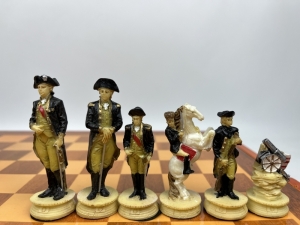 The chess set of The Chessmen. US war - Great Britain
325.00 $