 Русский
  Английский
eBay items
-
25.00 $
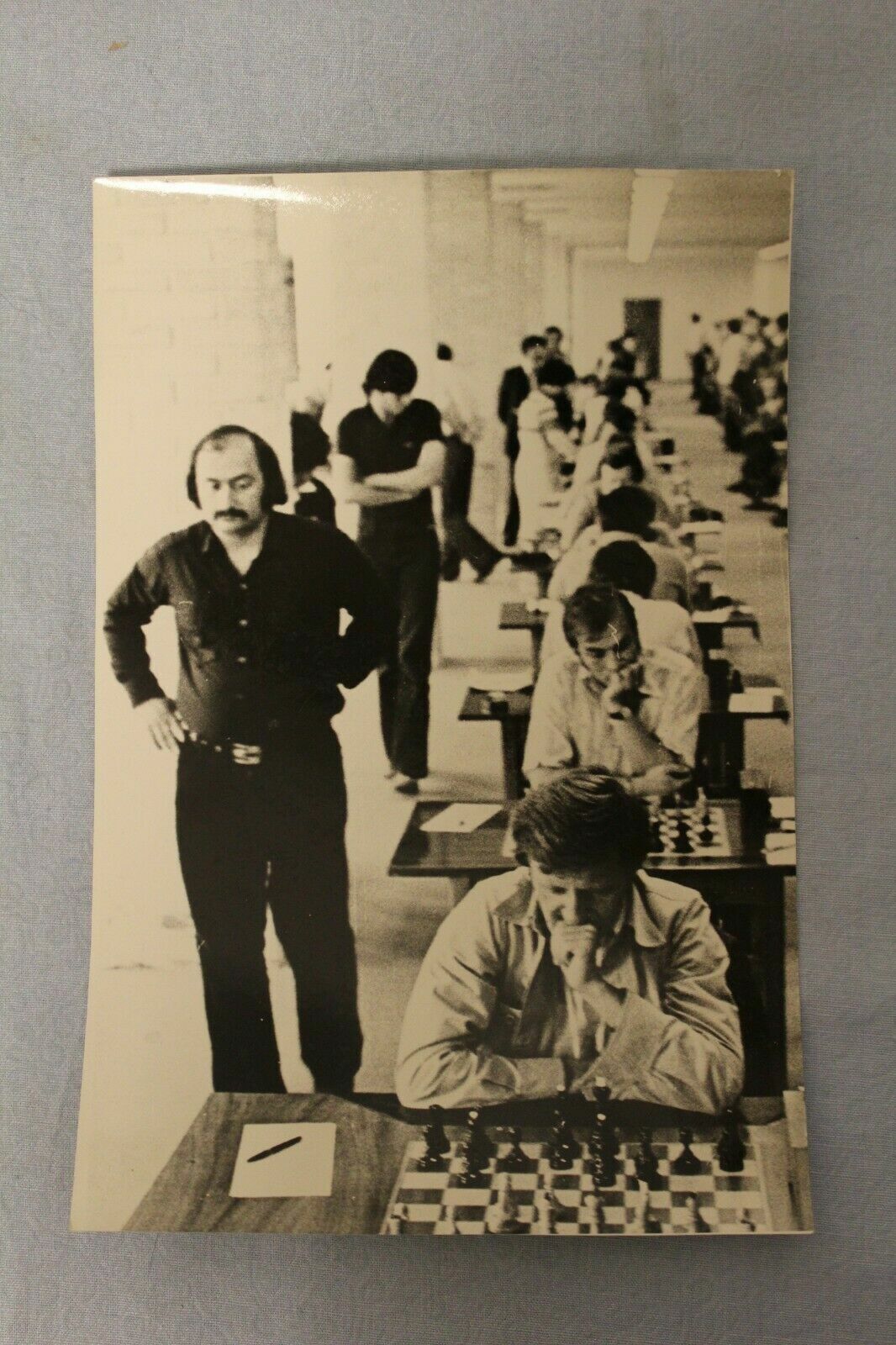
This photo is from the archive of Chess in the USSR journal Size: 22x14.5 cmArt PK5
-
31.00 $
ORIGINAL SOVIET CHESS PHOTO FROM 12TH USSR CHESS CHAMPIONSHIP IN 1940 YEAR.CHESS GRANDMASTER, INTERNATIONAL ARBITER, ICCF GRANDMASTER - IGOR BONDAREVSKY.SIZE OF THE PHOTO - 8 cm x 5,5 cm12TH SOVIET CHESS CHAMPIONSHIPThis is a photograph from the famous 12th Soviet Chess Championship held in the Grand Hall of the Moscow Conservatory from September 4th through October 3rd, 1940. The 12th Soviet Chess Championship was truly a battle of the titans. Outstanding players such as Mikhail Botvinnik, Paul Keres, Vasily Smyslov, Alexander Kotov, Isaac Boleslavsky, Igor Bondarevsky, and Andre Lilienthal took part. This so-called "absolute championship" is rightfully considered one of the strongest USSR chess championships ever held. Heres an excerpt from Mikhail Botvinniks memoirs. "It was a tough tournament. There were many participants and very few off-days. The Grand Hall of the Conservatory has excellent acoustics. The spectators behaved impudently, made a great deal of noise, and clapped all the time. The excellent acoustics only made matters worse. Supposedly, Sergei Prokofiev applauded Keres vigorously after the latter won a game. The other people in his box reprimanded him,, and then the composer remarked, "I have every right to express my feelings." Would my friend Mr. Prokofiev be happy if he were playing a trio and spectators applauding the violinists performance drowned out his piano piece? Chess players are in a worse position, though. A pianist can afford to play a few false notes amid booming applause, something a chess player isnt allowed to do." The results of the 12th Soviet Chess Championship were truly sensational, since two young players, Andre Lilienthal and Igor Bondarevsky, came in first and second, respectively, leaving grandmasters Mikhail Botvinnik and Paul Keres, the tournament favorites, far behind. The unprecedented hype surrounding this tournament matched its historical significance. After all, the unofficial right to contend for the world championship crown, as well as the prestigious title of USSR champion were on the line. "The most difficult and most monumental tournament in which Ive ever taken part has come to a close," Andre Lilienthal wrote. "I have no reason to be displeased with myself. First off, my win over Botvinnik himself wasnt too bad. Secondly, I snatched what seemed to be an irrevocably lost point from Bondarevsky in the last round. Thirdly, I managed not to lose a single game. Fourthly, I wound up in the wonderful young company of Bondarevsky and Smyslov at the top of the leaderboard. A decisive match for the title of USSR champion is up next. I have to prepare thoroughly for it, which, first and foremost, means getting some much needed rest." Three months after the tournament was completed, on January 14th, 1991, the Soviet Committee on Physical Culture and Sports issued an order approving the tournament results and awarding Bondarevsky and Lilienthal, the tournament winners, grandmaster titles; however, this order was missing a key point, since it did not mention any sort of match between the two victors. That strange inconsistency came to light a month later when it was decided - through a behind-the-scenes power struggle - that one more tournament for the title of absolute USSR champion would be held, a tournament Mikhail Botvinnik won. Large green folder Chuangy
-
18.00 $
Soviet Chess Photo: Vladimir Tukmakov gives a simul. Kirsan Ilyumzhinov, Juan Antonio Samaranch, President of the International Olympic Committee. Dimensions: approx. 10 * 15 cmArt PK7
-
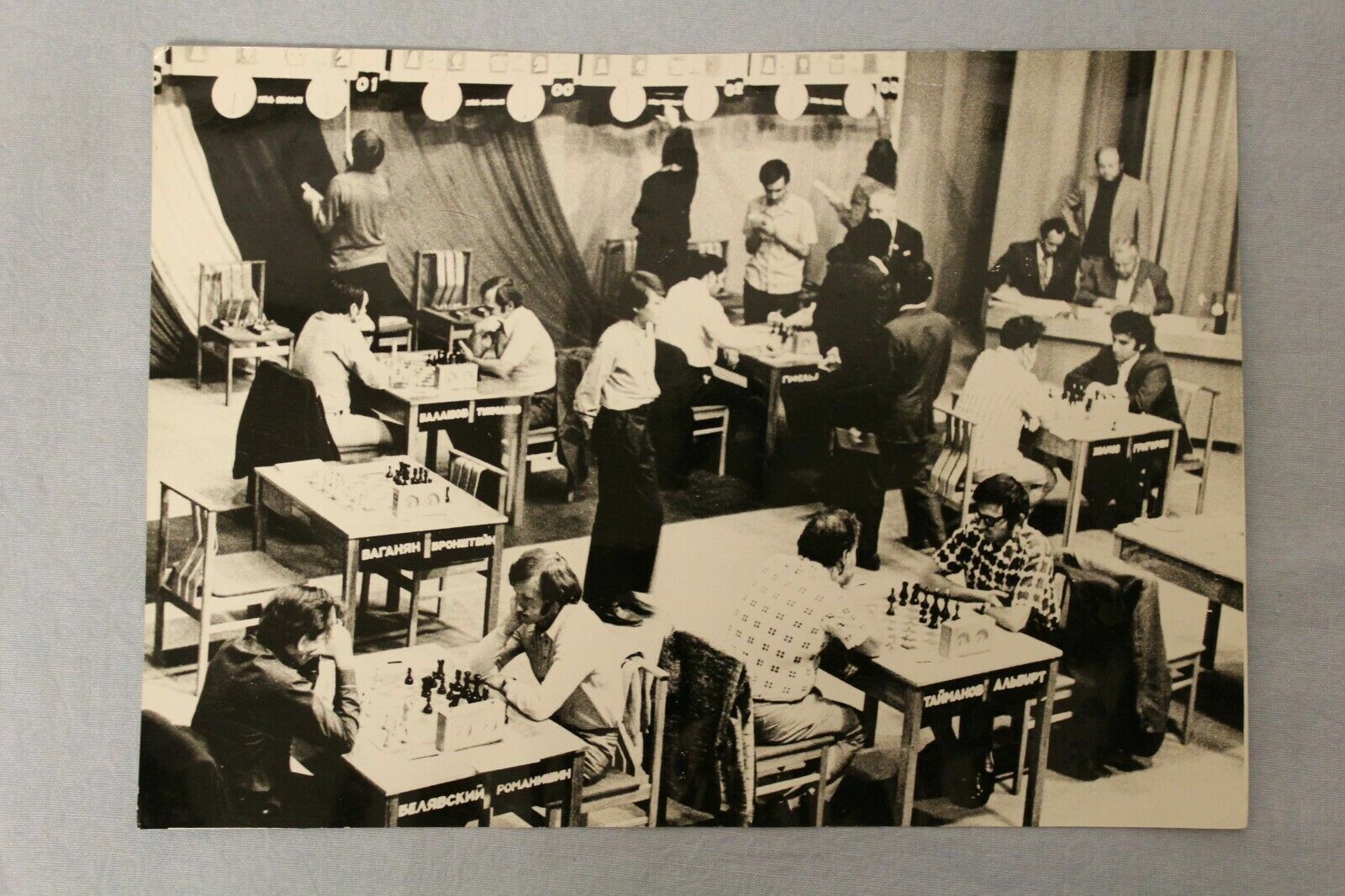
30.00 $
Size: 23x16.5 cmart pk5
-
-
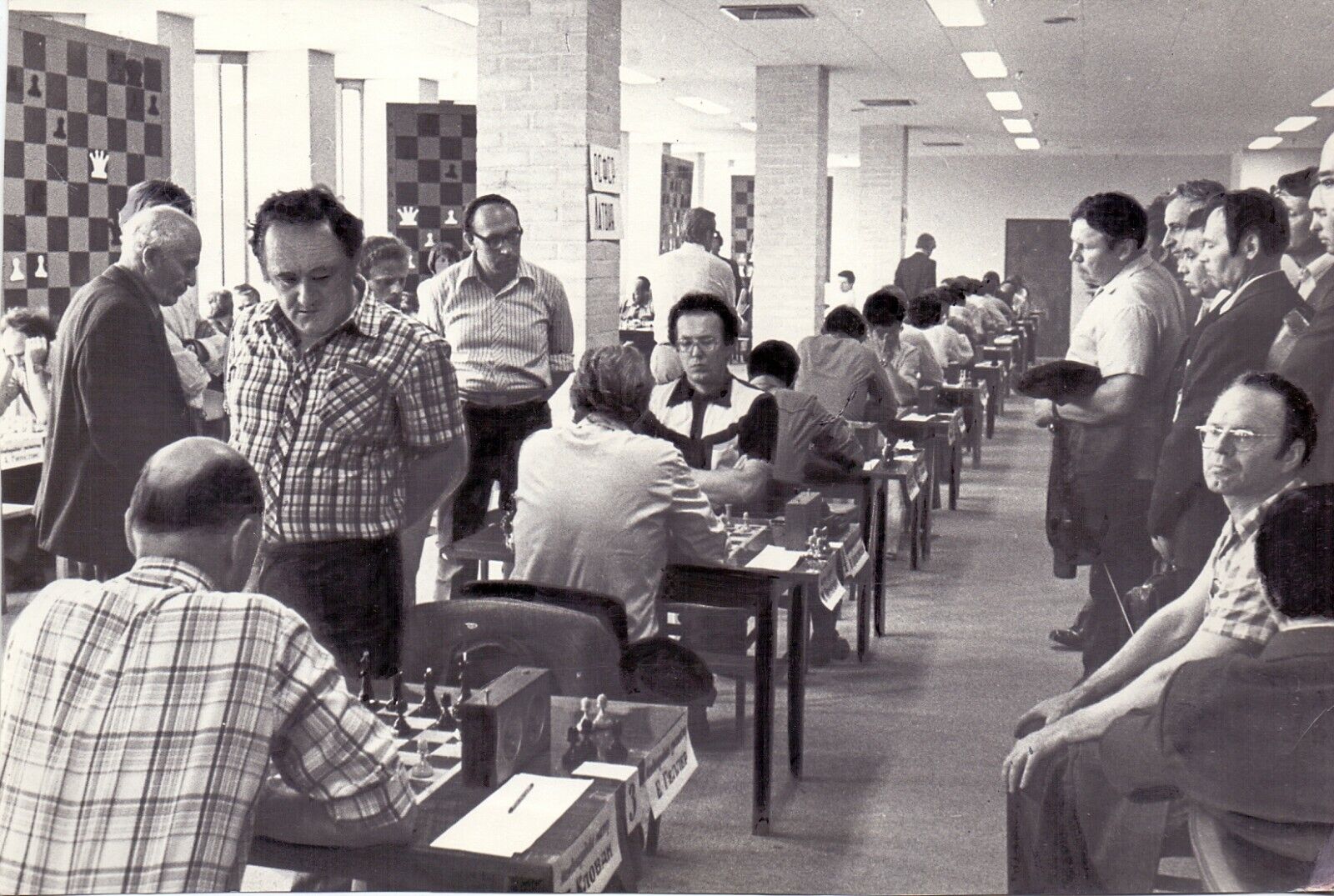
30.00 $
Soviet Chess Photo: Klovāns, Geller, Dorfman. Photo By V. Kutyrev Dimensions: approx. 14 * 21 cm Арт пк3
-
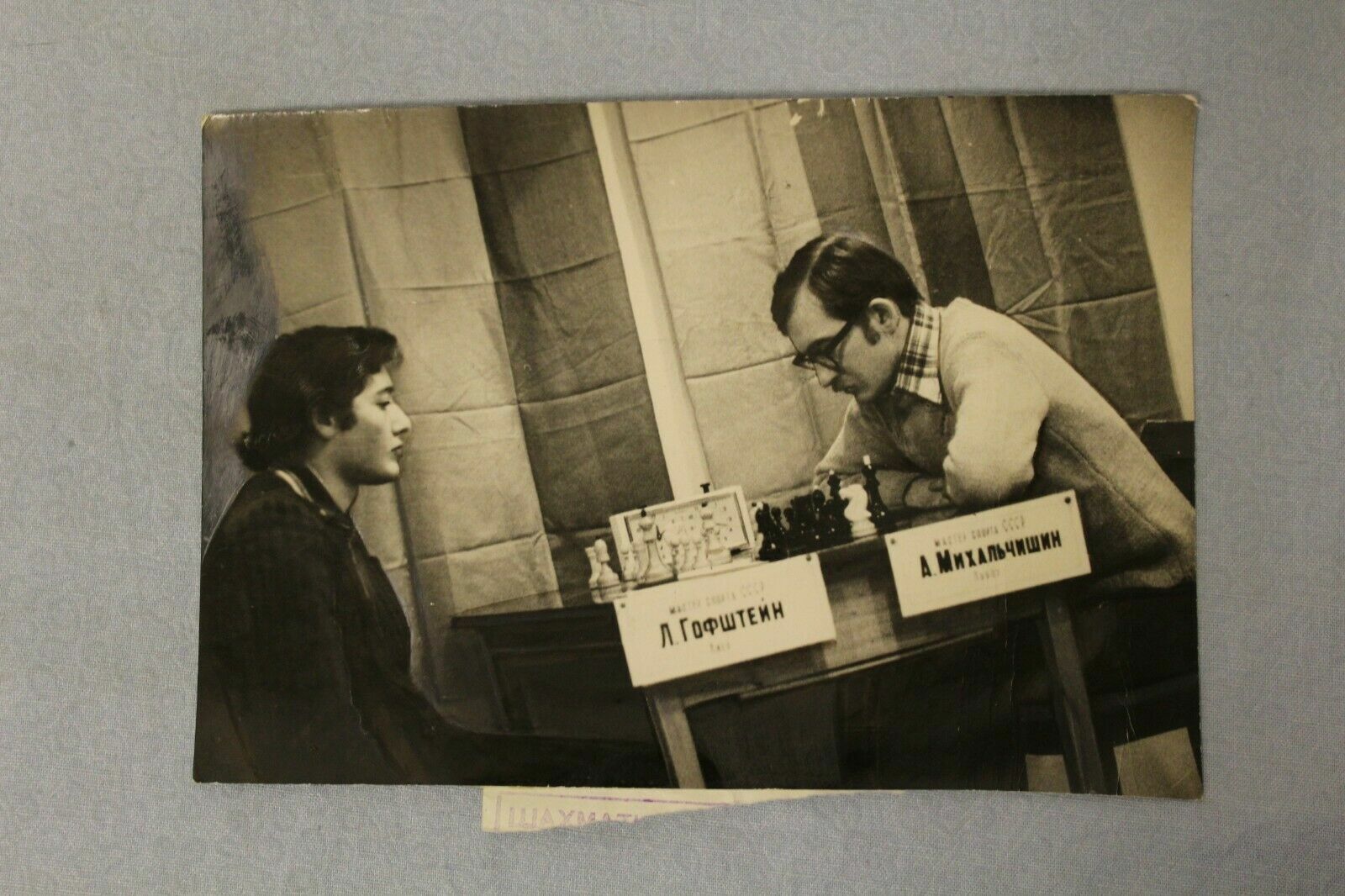
30.00 $
This photo is from the archive of Chess in the USSR journal Size: 18x12.5 cmart pk5
-
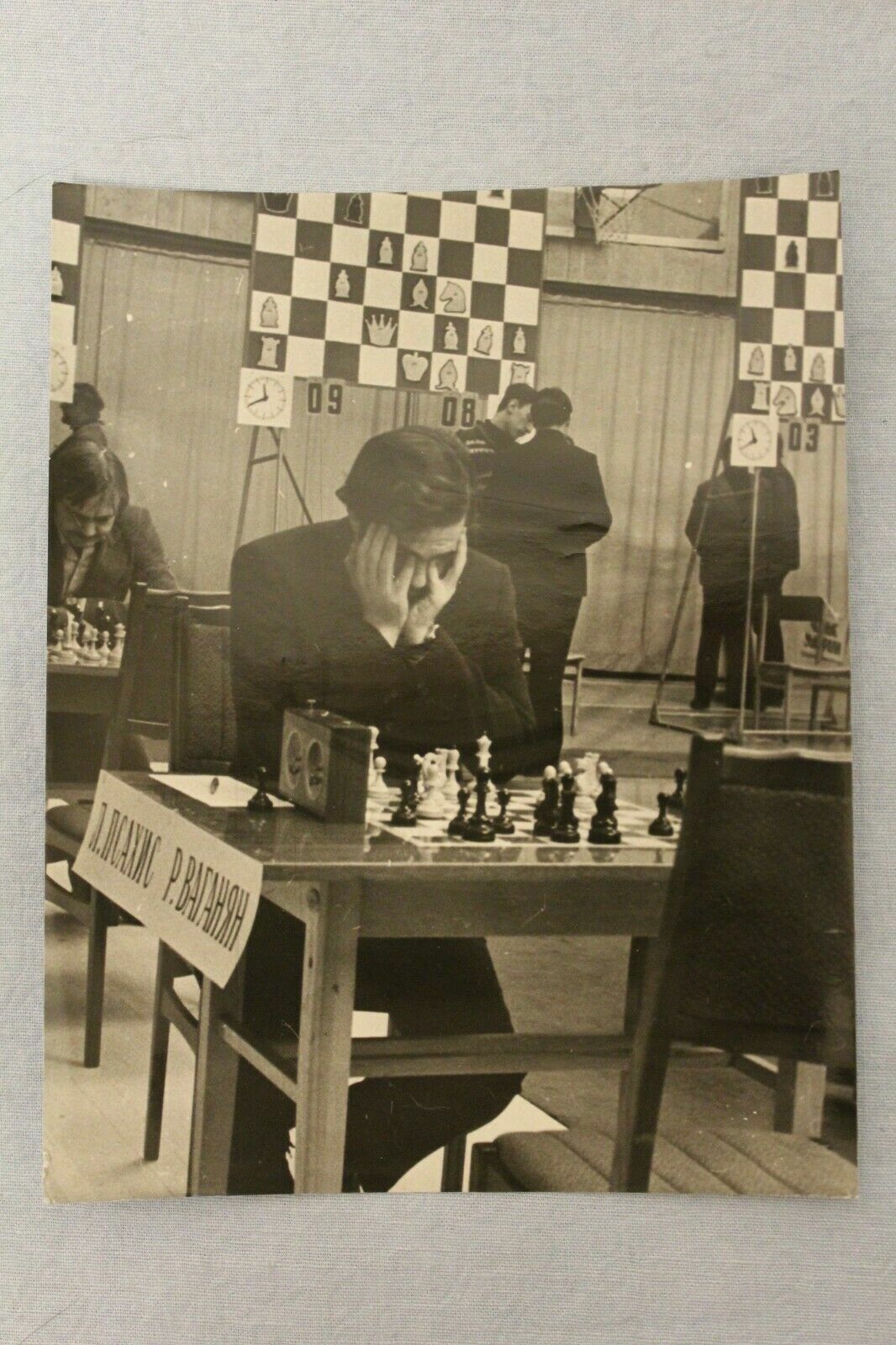
25.00 $
This photo is from the archive of Chess in the USSR journal Size: 17.5x14 cmart pk5
-
25.00 $
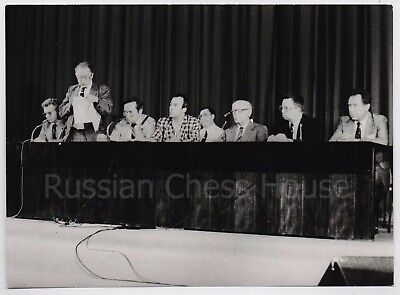
Soviet Chess Photo: Mikhail Botvinnik, Nikolai Krogius, Mikhail Beilin, Alexander Roshal Dimensions: approx. 19 * 14 cm Photo from archive of Alexander Roshal Alexander Borisovich Roshal (1936 – 2007) was a Soviet chess master and journalist, the co-founder and editor-in-chief of the magazine (chess review) «64» Арт ПК1
-
35.00 $
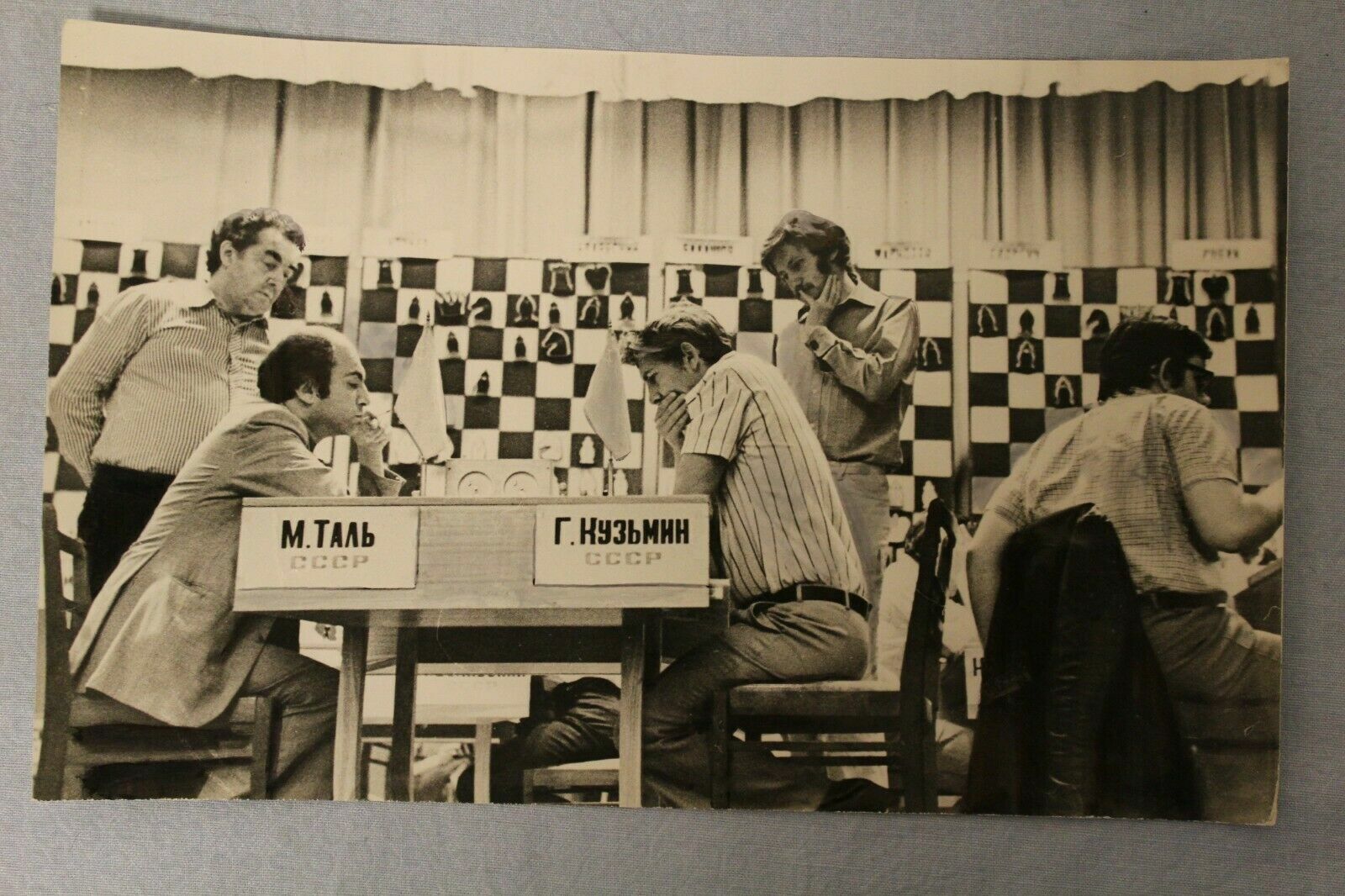
This photo is from the archive of Chess in the USSR journal Size: 23.5x14.5 cmArt PK5
-
40.00 $
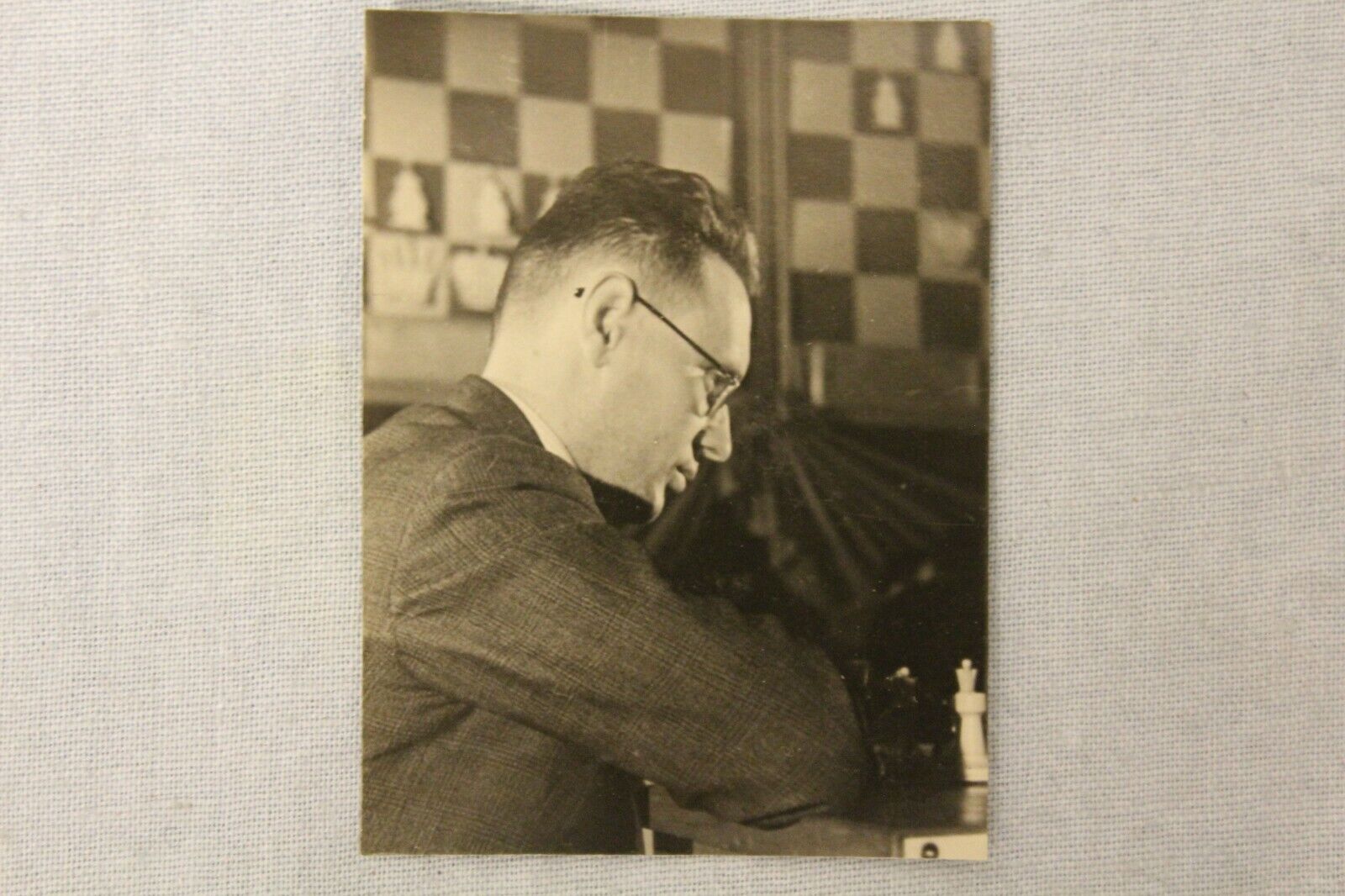
Mikhail Botvinnik SIZE OF THE PHOTO - approx. 4 cm x 6 cm 12TH SOVIET CHESS CHAMPIONSHIP: This is a photograph from the famous 12th Soviet Chess Championship held in the Grand Hall of the Moscow Conservatory from September 4th through October 3rd, 1940. The 12th Soviet Chess Championship was truly a battle of the titans. Outstanding players such as Mikhail Botvinnik, Paul Keres, Vasily Smyslov, Alexander Kotov, Isaac Boleslavsky, Igor Bondarevsky, and Andre Lilienthal took part. This so-called "absolute championship" is rightfully considered one of the strongest USSR chess championships ever held. Here’s an excerpt from Mikhail Botvinnik’s memoirs. "It was a tough tournament. There were many participants and very few off-days. The Grand Hall of the Conservatory has excellent acoustics. The spectators behaved impudently, made a great deal of noise, and clapped all the time. The excellent acoustics only made matters worse. Supposedly, Sergei Prokofiev applauded Keres vigorously after the latter won a game. The other people in his box reprimanded him,, and then the composer remarked, "I have every right to express my feelings." Would my friend Mr. Prokofiev be happy if he were playing a trio and spectators applauding the violinist’s performance drowned out his piano piece? Chess players are in a worse position, though. A pianist can afford to play a few false notes amid booming applause, something a chess player isn’t allowed to do." The results of the 12th Soviet Chess Championship were truly sensational, since two young players, Andre Lilienthal and Igor Bondarevsky, came in first and second, respectively, leaving grandmasters Mikhail Botvinnik and Paul Keres, the tournament favorites, far behind. The unprecedented hype surrounding this tournament matched its historical significance. After all, the unofficial right to contend for the world championship crown, as well as the prestigious title of USSR champion were on the line. "The most difficult and most monumental tournament in which I’ve ever taken part has come to a close," Andre Lilienthal wrote. "I have no reason to be displeased with myself. First off, my win over Botvinnik himself wasn’t too bad. Secondly, I snatched what seemed to be an irrevocably lost point from Bondarevsky in the last round. Thirdly, I managed not to lose a single game. Fourthly, I wound up in the wonderful young company of Bondarevsky and Smyslov at the top of the leaderboard. A decisive match for the title of USSR champion is up next. I have to prepare thoroughly for it, which, first and foremost, means getting some much needed rest." Three months after the tournament was completed, on January 14th, 1991, the Soviet Committee on Physical Culture and Sports issued an order approving the tournament results and awarding Bondarevsky and Lilienthal, the tournament winners, grandmaster titles; however, this order was missing a key point, since it did not mention any sort of match between the two victors. That strange inconsistency came to light a month later when it was decided - through a behind-the-scenes power struggle - that one more tournament for the title of absolute USSR champion would be held, a tournament Mikhail Botvinnik won.Арт ПК 2
-
25.00 $
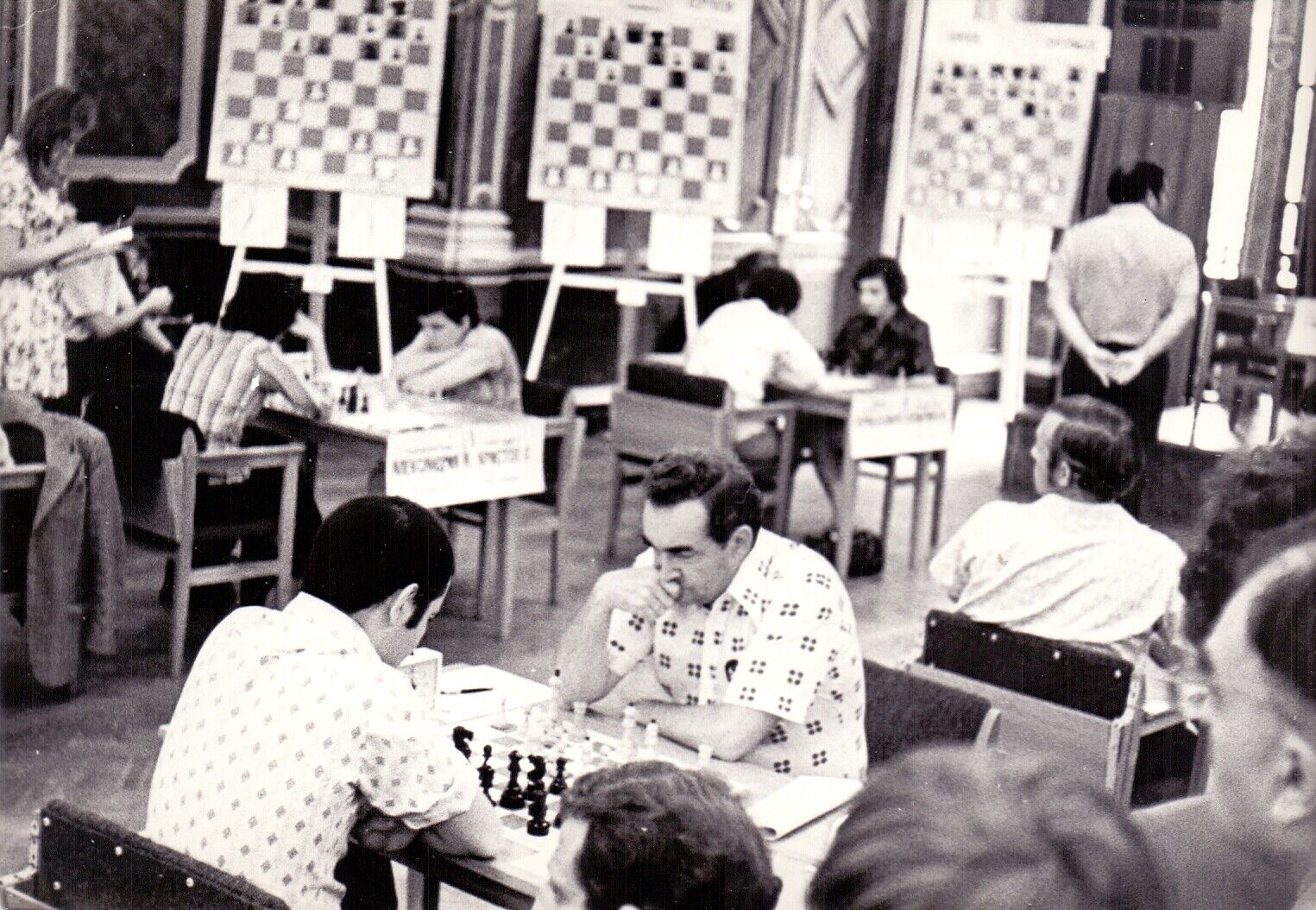
Soviet Chess Photo: Mark Taimanov. Photo By M. Rabkin Dimensions: approx. 13,5 * 20 cm Арт пк3

-
The life of a chess player in the system. Memories of the grandmaster
Author:
Averbah 45.00 $ -
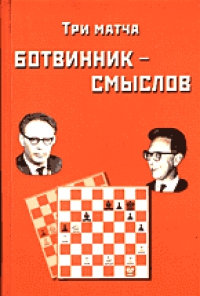 Три матча Ботвинник-Смыслов
Author:
Три матча Ботвинник-Смыслов
Author:
Botvinnik 45.00 $ -
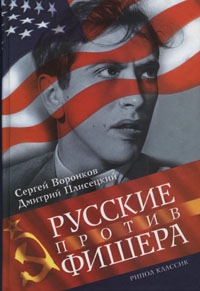 Russians vs Fisher
Author:
Russians vs Fisher
Author:
Voronkov 65.00 $ -
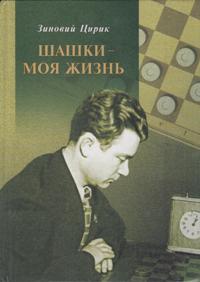 Checkers is my life
Author:
Checkers is my life
Author:
Ciric 87.50 $ -
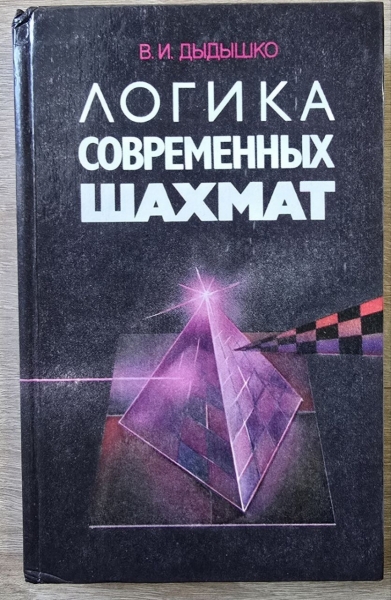 The logic of modern chess
Author:
The logic of modern chess
Author:
Dydyshko 72.50 $ -
 Siegbert Tarrasch. The Queen
Author:
Siegbert Tarrasch. The Queen
Author:
Tarrash 72.50 $ -
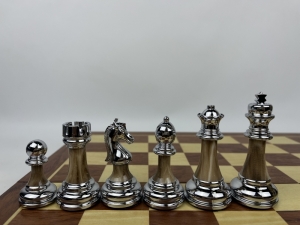 High quality acrylic metal heavy chess pieces with wooden board
202.50 $
High quality acrylic metal heavy chess pieces with wooden board
202.50 $
-
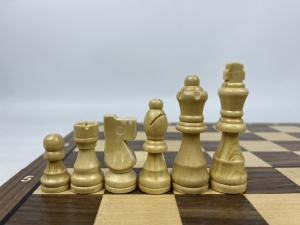 Wooden magnetic Staunton chess with a lock (silver)
56.25 $
Wooden magnetic Staunton chess with a lock (silver)
56.25 $
-
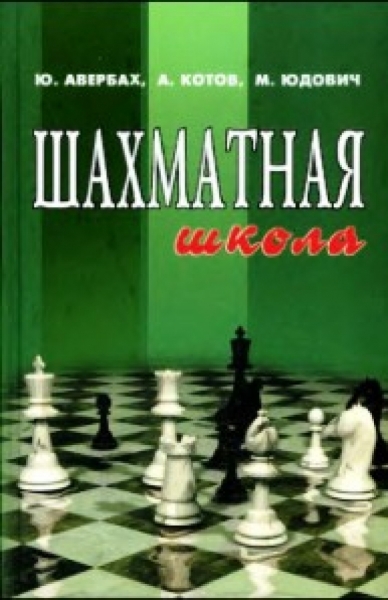 Chess school
Author:
Chess school
Author:
Averbah 15.00 $ -
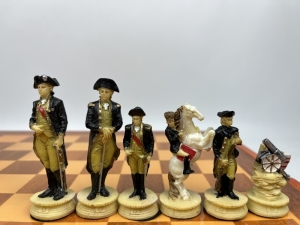 The chess set of The Chessmen. US war - Great Britain
325.00 $
The chess set of The Chessmen. US war - Great Britain
325.00 $