menu
top sales
  • Author:
    Tal

    21.67 $
  • Author:
    Eive

    The corpus of this textbook includes two significant works by the world chess champion, scientist and prominent teacher Max Euwe — "Self‑help chess game", created in collaboration with G. Den-Hertog, and "Chess Lessons". The first work is designed for beginners, the second for more experienced chess players. The book is a real chess tutorial in the true sense of the word. This is expressed not only in the appropriate distribution of the material and the method of presentation, designed to awaken the initiative of the student, but also in numerous practical exercises offered to the reader after explaining each new concept or technique.The textbook primarily attracts the methodology of presentation of the material, the principles of which will be useful for coaches and teachers of chess sections and circles. For a wide range of chess fans.

    25.00 $
  • Author:
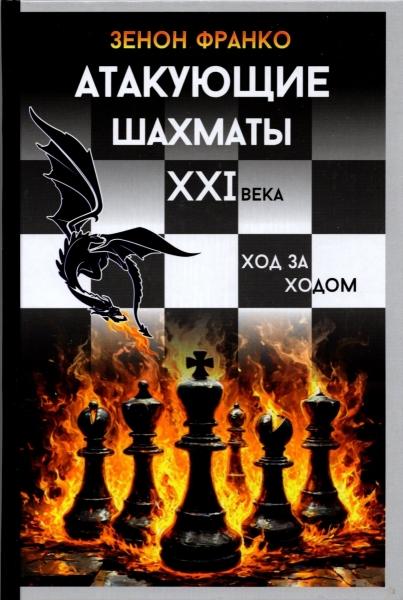
    Franco

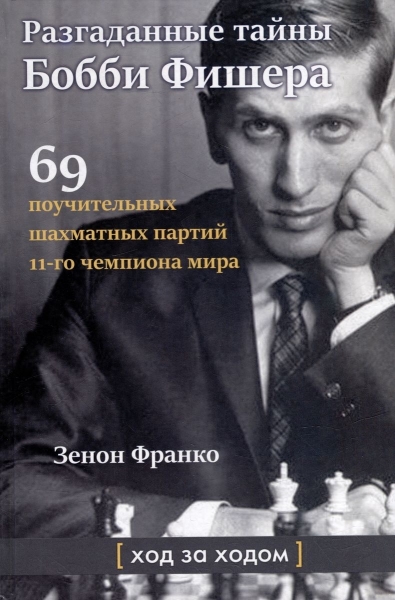
    In his new book, grandmaster Zenon Franco deeply analyzes the 69 instructive victories of the 11th world champion Robert Fischer. The book is not overloaded with options, the emphasis – with detailed explanations in a move-by-move style, creating an ideal platform for learning chess. In the "reference" At points in each game, the reader is offered test questions, which helps both the practical study of key techniques of the chess game and the reliable assimilation of acquired knowledge. Questions and answers engage the reader in the learning process and help him track his growth in chess strength. The appendix provides a critical analysis of the unsatisfactory translation of Robert Fisher's famous book “My 60 Memorable Games.”

    23.33 $
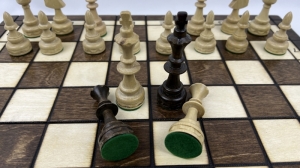
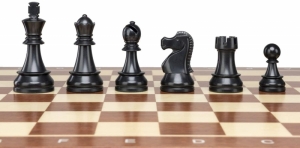
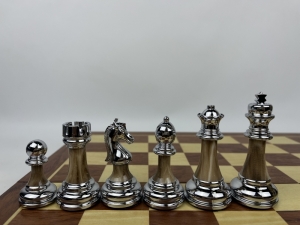
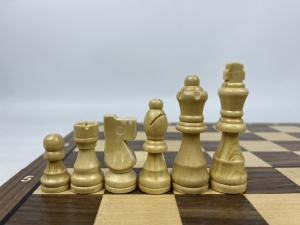
  • Chess was invented in the 5th century AD in India and spread throughout the world. The uniqueness of this game is that it still covers the minds of everyone - from young to old! Chess combines elements of science and sports. They develop logic, perseverance, attentiveness, analytical thinking and memory.  Checkers is a fun, dynamic and relatively simple game. Every country in the world has it. It is comparatively easier to find a partner here than in chess. Backgammon – one of the oldest known board games. It is known that it came to us from the East. First, you need to master the basic techniques, so that later you can boldly apply various tricks during the game.  Cage length: 4.5 cm. King height: 8.8cm King base diameter: 2.8 cm The length and width of the field when unfolded: 44 X 44 cm. Material: wood Country of origin: China.

    84.48 $
  • Made in Holland. Chess computer "Centaur" easy to use. You can easily install any language. Using the touch panel  40x40 cm (cell size 48 x 48 mm) you can easily move the figures. The sensors will record strokes. The board has a capacious rechargeable internal battery. The uniqueness of the computer is that it quickly adapts to  your playing strength (from beginner to grandmaster) so that you have the right opponent. Centaur will help you analyze the game so as not to make the same mistakes and improve your chess skill. Please note, computer is not compatible to connect to your PC or online chess. The set includes USB cable and DGT electronic chess pieces . Height of the king is 86mm.  

    1553.60 $
  • Author:
    Zhuravlev

    This tutorial is addressed to those who want to learn to play chess on their own and improve further. The lesson-based method of presentation, as well as numerous exercises, contribute to the consistent assimilation of the rules and laws that form the basis of the chess game. The book contains extensive educational material, which is presented to the reader in accordance with modern pedagogical principles. The purpose of this manual is to train chess players of the III category (rating up to 1800). The textbook can also be used for classes in groups - it covers the material of existing programs of the first year of study in children's and youth chess schools.

    23.33 $
  • Author:
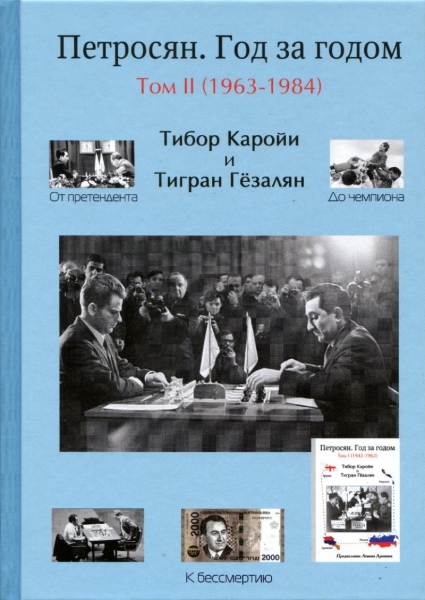
    Karoii

    50.00 $
  • Author:
    Bezgodov

    The youngest first–grader in the USSR, the world champion among young men, a participant in the candidates tournament at the age of 19 - Boris Spassky's rise was rapid. And then fate gave the brilliant chess player a test of strength: he stumbled twice at the decisive moment and remained beyond the threshold of interzonal tournaments ... Only ten years after his first great success, Spassky managed to pass all the qualifying tests and earn the right to a match for the crown, but he failed to defeat the Iron Tigran Petrosian the first time. It took three more years of super–efforts: by Sisyphus he rose again to the foot of Olympus and did not miss a second chance - in 1969 he became the Tenth king of chess! An essay about the life of Boris Vasilyevich and his sporting path full of ups and downs was written by Dmitry Oleynikov, Candidate of Historical Sciences, curator of the Chess Museum of the Chess Federation of Russia. 70 beautiful and instructive games of Spassky were commented on by the champion of Russia in 1993, the famous author and theorist grandmaster Alexey Bezgodov, as well as grandmaster Dmitry Kryakvin and FIDE master Steve Giddins. The preface was written by the 14th world champion Vladimir Kramnik. For a wide range of chess fans.

    21.67 $
  • Author:
    Vysotsky

    20.00 $
  • Author:
    Galkin

    The book by grandmaster and experienced coach Alexander Galkin is dedicated to the strongest piece on the chessboard – to the queen. Using the example of episodes from games of modern grandmasters (the vast majority of games date back to 2020-2023) and his own grandmaster practice, the author tries to generalize, and in some places even clarify the methodology for understanding and playing queen endings, as well as other types of endgames with the presence of queens ) On the desk. The book presents various ratios of material – “queen against queen”, “queen and minor piece against queen and minor piece”, “queen and rook against queen and rook”, “queen against two rooks”, “queen against rook and pawns”, “ queen against a rook and a minor piece”, “two queens against two queens” – practically the entire spectrum of encountered endgames of this type. The material is structured in such a way that the reader can get maximum benefit from studying the examples of queen endings and its other derivatives offered by the author. The book is aimed at advanced chess players, is useful for coaches and can be recommended to a wide range of chess fans.

    18.33 $
  • more

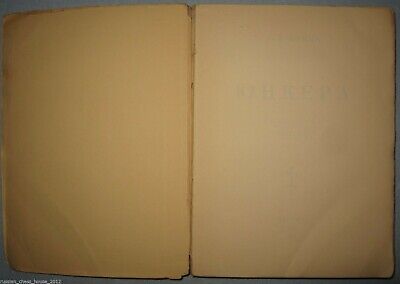
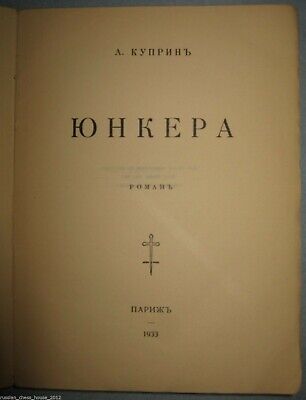
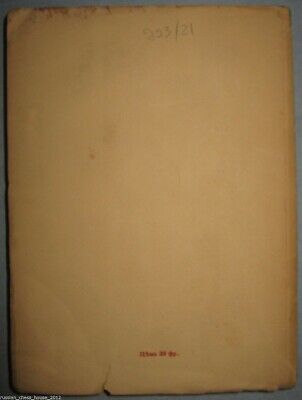
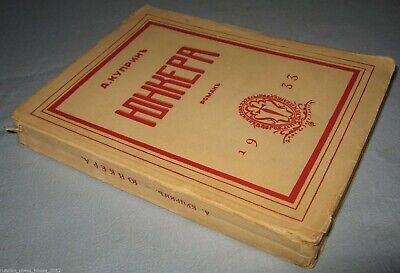
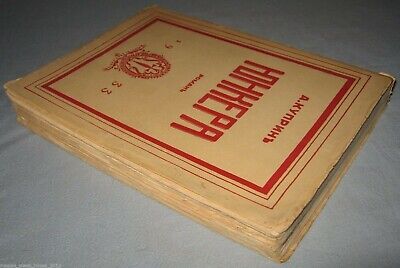
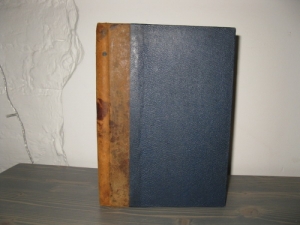
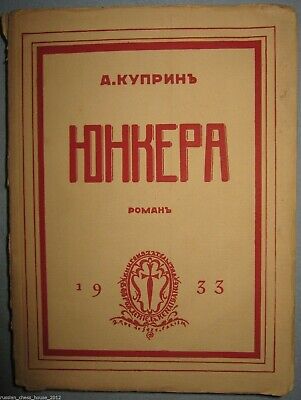
Antique Russian Book: A.Kuprin. Autobiographical novel "Junkers". Paris, 1933
54 $

RUB

Description:

Autobiographical novel
Author: Alexander Kuprin
Title: Junkera (Junkers).
Publisher: Editions et librairie «La Renaissance» (Vozrojdenie), Paris, 1933
First russian edition
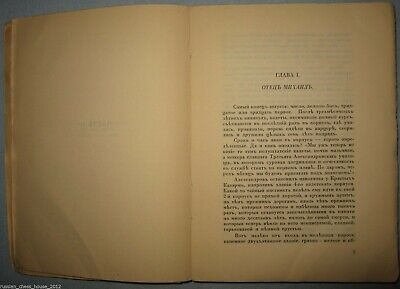
328 pages
Language: Russian
 
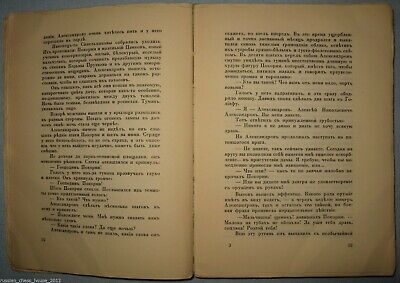
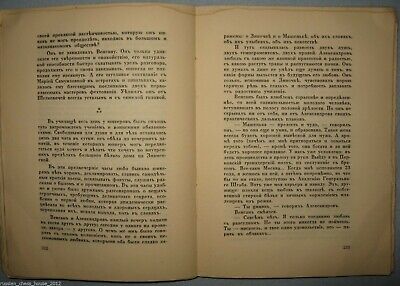
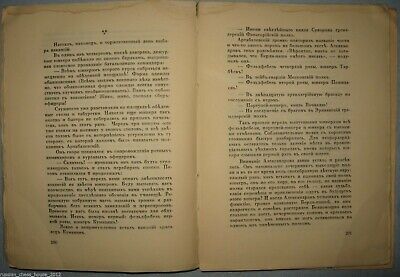
In May 1916 in the newspaper "Evening News" was placed Kuprina interview, talked about his future plans: "... I began to hunt for the end of" junkers ", - informed the writer - this novel is a kind of continuation of my own story" At the turn (Cadets). " Here I am all in the power of images and memories cadet life with her front and inner life, with quiet joy of first love and meetings at dance parties with their "likes." Remember cadet years tradition of our military schools, types of caregivers and teachers. And I remember a lot of good ... I hope that this fall will release this story to light. " (M. Petrov, Y AIKuprin, "Evening News", 1916, May 3, № 973). The revolutionary events in Russia and the subsequent emigration stopped work on a novel writer. Only in 1928, five years before the publication of the novel as a book, in the newspaper "Renaissance" appear some of its chapters. Two years later, in "Renaissance" were printed a few more chapters. Separate edition of the novel was published only in 1933.
 
В мае 1916 года в газете «Вечерние известия» было помещено интервью Куприна, рассказавшего о своих творческих планах: «... с охотой я принялся за окончание «Юнкеров», — сообщал писатель, — повесть эта представляет собой отчасти продолжение моей же повести «На переломе (Кадеты)». Здесь я весь во власти образов и воспоминаний юнкерской жизни с ее парадною и внутреннюю жизнью, с тихой радостью первой любви и встреч на танцевальных вечерах со своими «симпатиями». Вспоминаю юнкерские годы, традиции нашей военной школы, типы воспитателей и учителей. И помнится много хорошего ... Надеюсь, что осенью текущего года выпущу эту повесть в свет». (Петров М., У А.И. Куприна, «Вечерние известия», 1916, 3 мая, №973). Революционные события в России и последовавшая затем эмиграция прервали работу писателя над романом. Только в 1928 году, за пять лет до издания романа отдельной книгой, в газете «Возрождения» появляются отдельные его главы. Двумя годами позже  в «Возрождении» были напечатаны еще несколько глав. Отдельным изданием роман вышел только в 1933 году.


To leave comments, sign in or register on the site.
There are no comments on this record yet.