menu
top sales
  • Author:
    Golenishchev

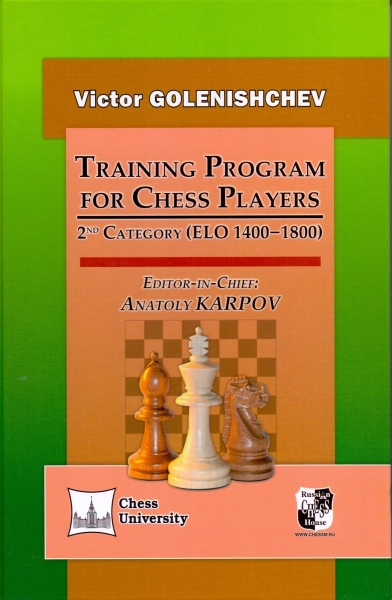
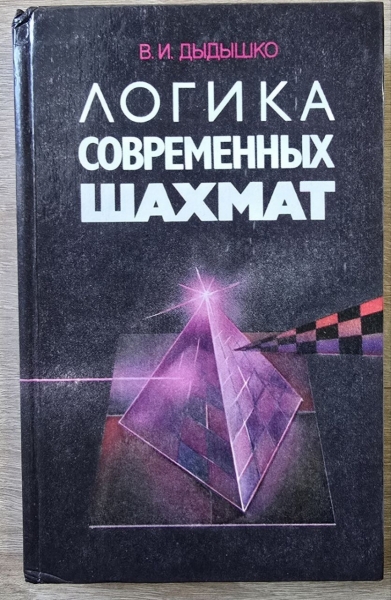
    Like other titles in the Training Program for Chess Players series, this volume is both an excellent textbook for independent study and a powerful training aid for chess coaches. In the view of many experts, no better work of this kind has ever been written. coach and Master of Sport. Golenishchev's programs are still considered. critically important and are successfully employed in chess schools. His teaching methods remain popular in Russia and around the world. Supervised by Editor-in-Chief and former Karpov, this new edition of Golenishchev's classic work is updated to include important games from the recent high-level chess competitions, reflecting modern approaches to the game. OPENING Fragment 1 OPENING Fragment 2

    30.00 $
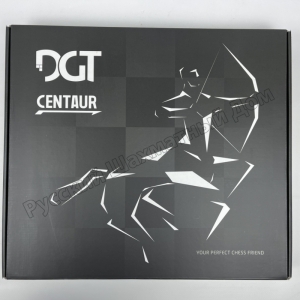
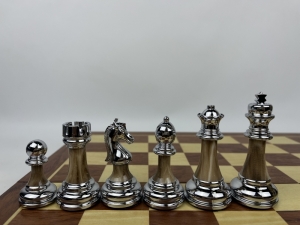
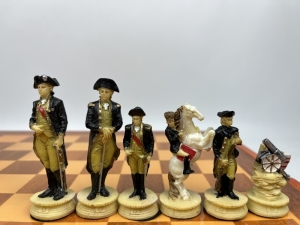
  • The size of the board when folded is 35x17.5 cm. The size of the board when unfolded is 35x35 cm. Cage size is 3x3 cm  King height 6.6 cm. Base diameter 2.2 cm. Pawn height 3.1 cm. Base diameter 2 cm. Backgammon - checker 2.1 cm. Weight 830 g. Includes backgammon chips and dice Chess board and backgammon chips can be used to play checkers Manufacturer Poland

    148.00 $
  • Author:
    Galkin

    The book by grandmaster and experienced coach Alexander Galkin is dedicated to the strongest piece on the chessboard – to the queen. Using the example of episodes from games of modern grandmasters (the vast majority of games date back to 2020-2023) and his own grandmaster practice, the author tries to generalize, and in some places even clarify the methodology for understanding and playing queen endings, as well as other types of endgames with the presence of queens ) On the desk. The book presents various ratios of material – “queen against queen”, “queen and minor piece against queen and minor piece”, “queen and rook against queen and rook”, “queen against two rooks”, “queen against rook and pawns”, “ queen against a rook and a minor piece”, “two queens against two queens” – practically the entire spectrum of encountered endgames of this type. The material is structured in such a way that the reader can get maximum benefit from studying the examples of queen endings and its other derivatives offered by the author. The book is aimed at advanced chess players, is useful for coaches and can be recommended to a wide range of chess fans.

    18.33 $
  • Author:
    Tal

    21.67 $
  • Author:
    Fisher

    15.00 $
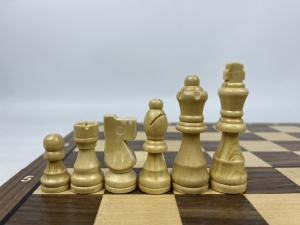
  • Chess was invented in the 5th century AD in India and spread throughout the world. The uniqueness of this game is that it still covers the minds of everyone - from young to old! Chess combines elements of science and sports. They develop logic, perseverance, attentiveness, analytical thinking and memory.  Checkers is a fun, dynamic and relatively simple game. Every country in the world has it. It is comparatively easier to find a partner here than in chess. Backgammon – one of the oldest known board games. It is known that it came to us from the East. First, you need to master the basic techniques, so that later you can boldly apply various tricks during the game.  Cage length: 4.5 cm. King height: 8.8cm King base diameter: 2.8 cm The length and width of the field when unfolded: 44 X 44 cm. Material: wood Country of origin: China.

    84.48 $
  • Author:
    Getmanchuk

    16.67 $
  • Author:
    Kapengut

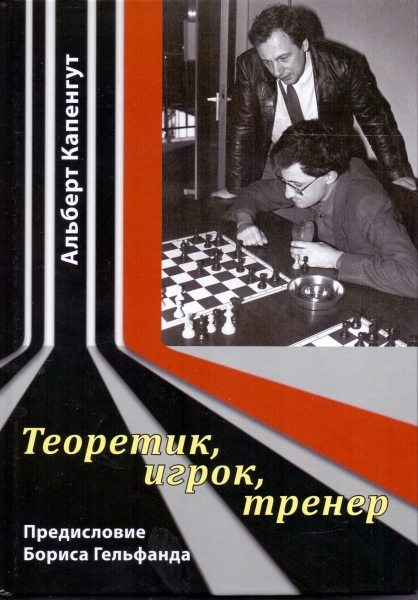
    An outstanding theorist and successful coach shares his memories of communication and cooperation with Mikhail Tal, Anatoly Karpov, Isaac Boleslavsky, Elena Akhmylovskaya and other outstanding chess players. Separate large chapter – a story about many years of work with Boris Gelfand: over these years (1980-1993) the student went from a 12-year-old candidate for master to the holder of the 3rd rating in the world. Albert Kapengut – winner of 6 gold medals at the World Student Olympics, seven-time champion of Belarus, participant in the individual and team championships of the USSR among men, champion of the USSR as part of the Burevestnik team. The book includes 70 games commented in detail by the author, a careful study of which will help the reader not only better understand popular opening schemes, but also get a taste for serious analytical work. “My story is not so much about a career, although “you can’t erase words from a song,” but about memorable situations, often funny, sometimes absurd, and dotted about people I met along the way, sometimes with touches of biography, prompting readers to become interested in more complete information.” ;" (A. Kapengut). For a wide range of chess lovers.

    43.33 $
  • Author:
    Galkin

    The book by grandmaster and experienced coach Alexander Galkin is  the final link in a series of publications by the author, directed  to study the classical endgame using examples of modern games   grandmasters. This time the subject of the study – light piece endgames. Clarification of the methodology for working on this stage of the game, as well as the main features and methods of playing such endings. Examples  taken from the practice of modern grandmasters and dated back to 2020-2023. The author offers the reader the most recent and unique information. The material is structured in such a way that the reader can get the maximum  benefit from studying the examples offered by the author  queen endings and its  other derivatives. The book is aimed at advanced chess players, is useful for coaches and can be recommended to a wide range of chess fans

    18.33 $
  • Author:
    Bologan

    The Caro-Kann defense is one of the most popular modern openings, which is firmly included in the repertoire of most elite chess players. The author of the book, a well-known grandmaster and theorist, offers a full repertoire for black in response to 1.e4, explains in detail the main strategic ideas of each option and gives the exact order of moves, offers a number of novelties in current schemes. In each chapter, alternative plans for black are considered, so that the reader can make a choice according to his taste, and it was more difficult for the opponent to prepare. Much attention in the monograph is paid to correspondence games in which players use all the achievements of modern technology. All analyses during the work on the manuscript are checked on powerful computers. Carefully selected positions for the solution will help the reader to consolidate the acquired knowledge. The 2nd edition supplements the section with the 10 most interesting current parties. The book is addressed to chess players of any level – from amateurs to professionals.  

    21.67 $
  • more

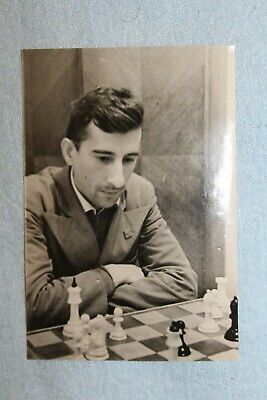
Soviet Photo. Igor Bondarevsky. 12 Chess Championship of the USSR. 1940

40 $

RUB

Description:

Igor Bondarevsky

SIZE OF THE PHOTO - approx. 8 cm x 5,5 cm

12TH SOVIET CHESS CHAMPIONSHIP:

This is a photograph from the famous 12th Soviet Chess Championship held in the Grand Hall of the Moscow Conservatory from September 4th through October 3rd, 1940. The 12th Soviet Chess Championship was truly a battle of the titans. Outstanding players such as Mikhail Botvinnik, Paul Keres, Vasily Smyslov, Alexander Kotov, Isaac Boleslavsky, Igor Bondarevsky, and Andre Lilienthal took part. This so-called "absolute championship" is rightfully considered one of the strongest USSR chess championships ever held. Here’s an excerpt from Mikhail Botvinnik’s memoirs. "It was a tough tournament. There were many participants and very few off-days. The Grand Hall of the Conservatory has excellent acoustics. The spectators behaved impudently, made a great deal of noise, and clapped all the time. The excellent acoustics only made matters worse. Supposedly, Sergei Prokofiev applauded Keres vigorously after the latter won a game. The other people in his box reprimanded him,, and then the composer remarked, "I have every right to express my feelings." Would my friend Mr. Prokofiev be happy if he were playing a trio and spectators applauding the violinist’s performance drowned out his piano piece? Chess players are in a worse position, though. A pianist can afford to play a few false notes amid booming applause, something a chess player isn’t allowed to do." The results of the 12th Soviet Chess Championship were truly sensational, since two young players, Andre Lilienthal and Igor Bondarevsky, came in first and second, respectively, leaving grandmasters Mikhail Botvinnik and Paul Keres, the tournament favorites, far behind. The unprecedented hype surrounding this tournament matched its historical significance. After all, the unofficial right to contend for the world championship crown, as well as the prestigious title of USSR champion were on the line. "The most difficult and most monumental tournament in which I’ve ever taken part has come to a close," Andre Lilienthal wrote. "I have no reason to be displeased with myself. First off, my win over Botvinnik himself wasn’t too bad. Secondly, I snatched what seemed to be an irrevocably lost point from Bondarevsky in the last round. Thirdly, I managed not to lose a single game. Fourthly, I wound up in the wonderful young company of Bondarevsky and Smyslov at the top of the leaderboard. A decisive match for the title of USSR champion is up next. I have to prepare thoroughly for it, which, first and foremost, means getting some much needed rest." Three months after the tournament was completed, on January 14th, 1991, the Soviet Committee on Physical Culture and Sports issued an order approving the tournament results and awarding Bondarevsky and Lilienthal, the tournament winners, grandmaster titles; however, this order was missing a key point, since it did not mention any sort of match between the two victors. That strange inconsistency came to light a month later when it was decided - through a behind-the-scenes power struggle - that one more tournament for the title of absolute USSR champion would be held, a tournament Mikhail Botvinnik won.

Art PK4


To leave comments, sign in or register on the site.
There are no comments on this record yet.