menu
top sales
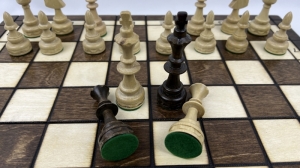
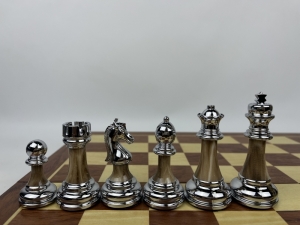
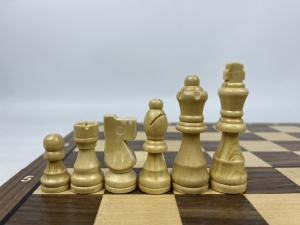
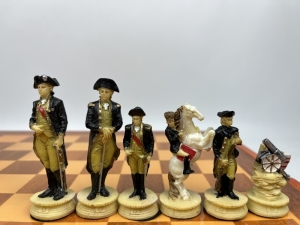
  • Chess was invented in the 5th century AD in India and spread throughout the world. The uniqueness of this game is that it still covers the minds of everyone - from young to old! Chess combines elements of science and sports. They develop logic, perseverance, attentiveness, analytical thinking and memory.  Checkers is a fun, dynamic and relatively simple game. Every country in the world has it. It is comparatively easier to find a partner here than in chess. Backgammon – one of the oldest known board games. It is known that it came to us from the East. First, you need to master the basic techniques, so that later you can boldly apply various tricks during the game.  Cage length: 4.5 cm. King height: 8.8cm King base diameter: 2.8 cm The length and width of the field when unfolded: 44 X 44 cm. Material: wood Country of origin: China.

    84.48 $
  • Author:
    Yanvarev

    Igor Yanvarev "Tactical Mastery of a Chess Player. Volume 2. Basics of Calculation Techniques". Andrey Elkov Publishing House, Moscow, 2025 - 392 p. Before you is the second book from the three-volume work by International Master I.K. Yanvarev, a famous trainer, author of the fundamental work "The Old Indian Played by Tigran Petrosian" (2010), which received recognition from readers and was republished abroad. The three-volume work is united by a common idea - tactics and combinations in chess. In fact, this is a turnkey textbook, it explains everything from scratch to an advanced level. The second volume is devoted to the basics of calculation techniques, such topics as the tactical "spectrum" of a position, concentration of attention, inclusion of imagination are considered, the "tree of variations" is interpreted in a new way, the practical component is emphasized - the economy of calculation. A separate chapter allows the reader to assess their ability to calculate variations and outline ways to eliminate weaknesses. Each chapter ends with a large number of carefully selected examples for independent solution. Unlike other similar publications, the author examines chess tactics as a single whole, in combination with strategy and elements of psychology. It is based on the original author's methodology, which has proven itself well when working with chess players of various qualifications. Excellently selected examples, a clear logical structure and consistency in the presentation simplify the understanding of the material. For a wide range of chess fans.

    19.00 $
  • Author:
    Fine

    In the vast ocean of chess literature there are relatively few books about the endgame, and only a few of them can be considered true chess classics. And the most outstanding among the classics — Reuben Fine's book "Basic Chess Endings". Reuben Fine (1914−1993) was for a long time one of the best chess players in the world. As an author, Fine showed himself to be an excellent analyst who understood the full depth and peculiarities of the endgame. Having studied various types of standard positions, Fine established useful rules for practical play and proved himself to be an experienced teacher who, using skillfully chosen examples, was able to teach the reader all the necessary lessons and introduce him to the basic ideas of the endgame. Many generations of chess players in different countries of the world keep copies of “Basic Chess Endings”. For example, Mikhail Botvinnik considered Fine's work the most worthy of all that had ever been written on endgame theory.

    35.00 $
  • Author:
    Franco

    In his new book, grandmaster Zenon Franco deeply analyzes the 69 instructive victories of the 11th world champion Robert Fischer. The book is not overloaded with options, the emphasis – with detailed explanations in a move-by-move style, creating an ideal platform for learning chess. In the "reference" At points in each game, the reader is offered test questions, which helps both the practical study of key techniques of the chess game and the reliable assimilation of acquired knowledge. Questions and answers engage the reader in the learning process and help him track his growth in chess strength. The appendix provides a critical analysis of the unsatisfactory translation of Robert Fisher's famous book “My 60 Memorable Games.”

    23.33 $
  • Author:
    Getmanchuk

    16.67 $
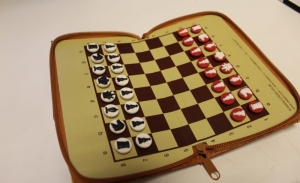
  • Magnetic road chess: folding board-case made of artificial leather, tablet-figures with a convex image. Wallet size 19x22 cm. The playing field is 15.5 x 15.5 cm. Cell 2x2 cm.

    51.72 $
  • Author:
    Galkin

    16.67 $
  • A limited edition of the most famous electronic chess clock. Design & quot; under the tree & quot ;. Released for the 25th anniversary of the DGT. & Nbsp; These watches are used in all major tournaments, world championships and World Cups, World Chess Olympiads. Installation of any time controls, including Fisher and Bronstein controls (with added time). & Nbsp;

    237.50 $
  • Author:
    Eive

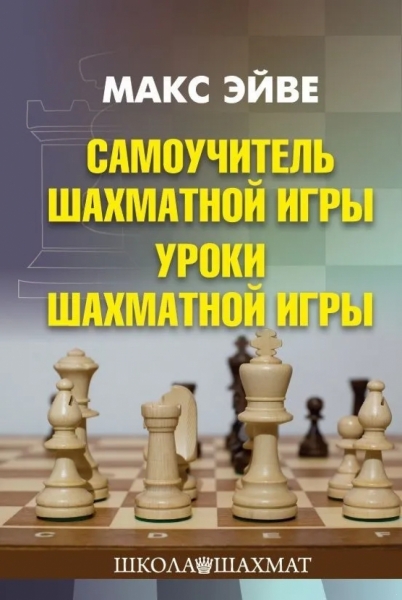
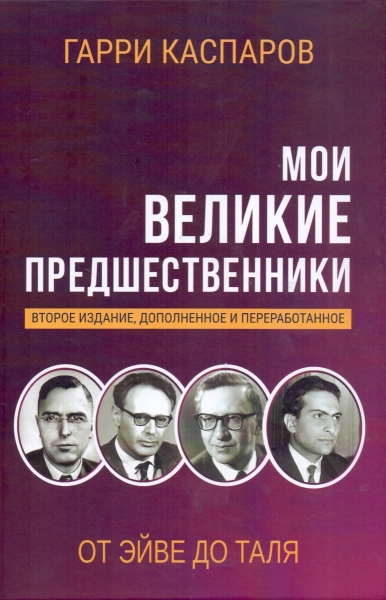
    The corpus of this textbook includes two significant works by the world chess champion, scientist and prominent teacher Max Euwe — "Self‑help chess game", created in collaboration with G. Den-Hertog, and "Chess Lessons". The first work is designed for beginners, the second for more experienced chess players. The book is a real chess tutorial in the true sense of the word. This is expressed not only in the appropriate distribution of the material and the method of presentation, designed to awaken the initiative of the student, but also in numerous practical exercises offered to the reader after explaining each new concept or technique.The textbook primarily attracts the methodology of presentation of the material, the principles of which will be useful for coaches and teachers of chess sections and circles. For a wide range of chess fans.

    25.00 $
  • Author:
    Karoii

    50.00 $
  • more

Krog

Книги автора:

  • book

    14.89 $

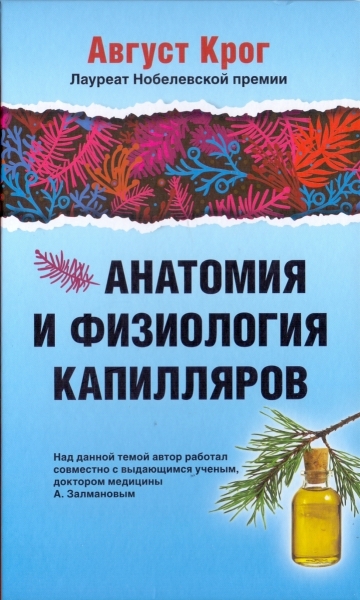
    August Krog & ndash; outstanding scientist, Nobel laureate & nbsp; Award in Physiology and Medicine. Its main & nbsp; research on breathing and capillary circulatory system.

    A wonderful Russian doctor and scientist A. Zalmanov under & nbsp; influenced by the work of A. Krog carried out the study of physiology & nbsp; capillaries and was the last one invited to Copenhagen for & nbsp; work together. They examined turpentine emulsions these and their effects on the body as a whole. The result & nbsp; Augustus Kroog received the Nobel Prize & laquo; for & nbsp; discovery of the mechanism for regulating capillary lumen & raquo ;.

    August Krog proved that the human body has & nbsp; huge potential and ability for self-regulation and ca recovery during various & laquo; breakdowns & raquo ;.