 Русский
  Английский

Debut theory
-

20.00 $
A detailed study of the acute variant in the Spanish party 1. e4 e5 2.Kf3 Kc6 3. Bb5 f5!?
-
24.83 $
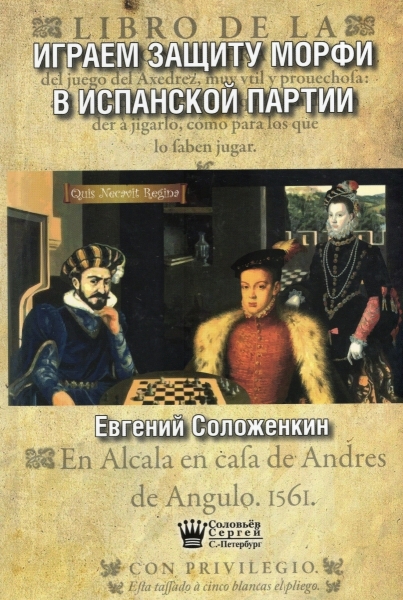
In this book, St. Petersburg grandmaster and coach Evgeny Solzhennikin tells of one of the most difficult schemes in the Spanish party - the Zaitsev system. It represents an optimal combination of the reliability of the position and the opportunity to engage in a complex struggle. Learning to play it correctly, the reader at the same time will improve the understanding of chess as a whole, since he will need to be able to orient himself in double-edged middlegame positions, and competently play in the endgame. The book gives a complete repertoire for Black, starting with 3 ... a6 and ending with a super-fashionable version of Svidler. Based on many years of independent application and training of Zaitsev's system of his students, the author makes a conclusion about the reliability of the position of black
-
-
-
-
-
8.28 $
REPRINT in cardboard binding.
-
20.15 $
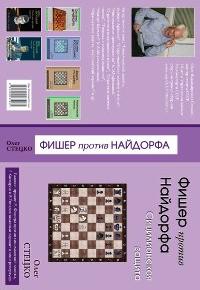
The Sicilian Defense variant 1.e4 c5 2.Nf3 d6 3.d4 cxd4 4.Nxd4 Nf6 5.Nc3 Nc6 6.Bc4 is named after the Russian master Sozin, who introduced him to the tournament practice in 1929. But the main contribution to the study of this option made the legendary Robert Fisher. He not only included it in his debut repertoire, but also made him the main weapon against the version of Najdorf 1.e4 c5 2.Nf3 d6 3.d4 cxd4 4.Nxd4 Nf6 5.Nc3 a6, most popular in the Sicilian defense. And so option 5 ... a6 6.Bc4 should rightfully bear the name of Fisher. This is the reason for the title of the book “Fisher vs. Najdorf”. Variant survived a real boom after a very serious run-in in the match for the title of world champion in 1993, Kasparov - Short, where Harry Kasparov himself had to come forward as an opponent of the ideas of Fisher. And only sports happiness helped the world champion save a number of difficult positions. After that, “Fisher's Option 6.Bc4” appeared in the repertoire of not only Kasparov, but Topalov, Ivanchuk and other famous chess players. The book is based on the parties of Fisher and Kasparov, which determine the development of the variant, and is supported by the theory presented in an accessible form.
-
20.94 $
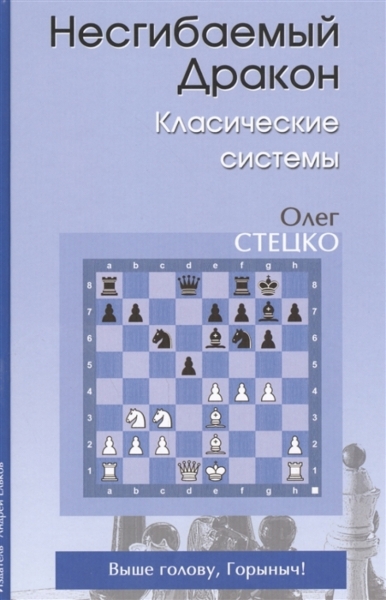
The “Dragon Option” in the Sicilian Defense is consistently included in the repertoire of active-style chess players. His one-and-a-half-century practice shows that adherents of the development of an elephant on g7 do not surrender their borders. There is a "Dragon" in the field of view of the modern elite - world champion Magnus Carlsen, Teimour Radjabov and others. “Dragon Option” is one of the most difficult debuts used in modern tournament practice. The author examines classical and other systems (a separate volume is devoted to the “Rauser attack” - the same author in 2014) that the world champions Em.Lasker, Alekhin, Botvinnik and others used or fought against. Without their knowledge, players using the “Dragon” would not have had complete information about this debut as a whole. Considered the main directions, including the development of the 21st century. The book is designed for chess players "club" level and above.
-

20.94 $
The Dragon variant "in the Sicilian defense is stably included in the repertoire of chess players of an active style of the game. His fifteen-century practice shows that devotees of the elephant's development on g7 are not going to surrender their frontiers. I knew "Dragon" and the star clock, when it was used by elite grandmasters. In the match for the world championship Kasparov-Anand in 1995, the position of the black was successfully defended by the 13th world champion. There is a "Dragon" and in the field of view of the modern elite - it is enough to name the names of Teymur Rajabov, world champion Magnus Carlsen. "Variant of the Dragon" - among the most difficult debuts, used in modern tournament practice. The author considers the main weapon against the Dragon - "Rauser attack". The book examines the main directions in this version, including the development of the 21st century, including the so-called "Chinese dragon"
-
20.00 $
The classical system in the French defense is a reliable weapon in the repertoire of such famous grandmasters as Victor Korchnoi, Evgeny Bareev, Alexander Chernin, Sergey Dolmatov, Alexander Morozevich & hellip; Theoretical research will help you better understand and study this complex and interesting version of the French defense. The second part of the monograph is devoted to the attack of Shatar-Alekhin, which is used as a means of fighting the classical system.
-
The life of a chess player in the system. Memories of the grandmaster
Author:
Averbah 45.00 $ -
 Три матча Ботвинник-Смыслов
Author:
Три матча Ботвинник-Смыслов
Author:
Botvinnik 45.00 $ -
 Russians vs Fisher
Author:
Russians vs Fisher
Author:
Voronkov 65.00 $ -
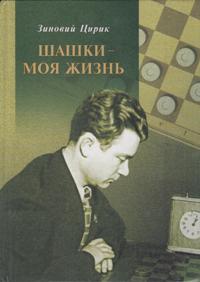 Checkers is my life
Author:
Checkers is my life
Author:
Ciric 87.50 $ -
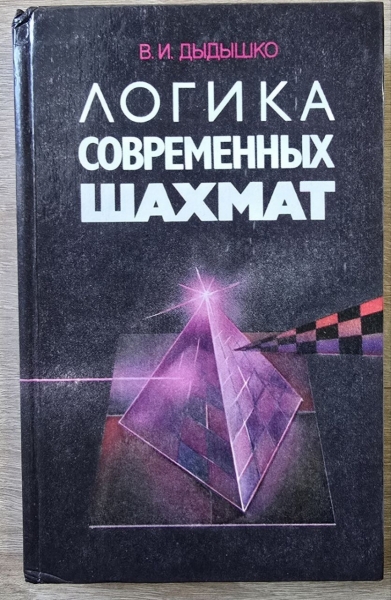 The logic of modern chess
Author:
The logic of modern chess
Author:
Dydyshko 72.50 $ -
 Siegbert Tarrasch. The Queen
Author:
Siegbert Tarrasch. The Queen
Author:
Tarrash 72.50 $ -
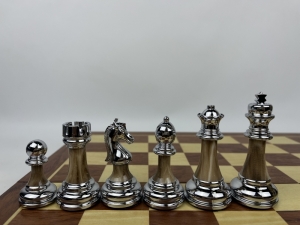 High quality acrylic metal heavy chess pieces with wooden board
202.50 $
High quality acrylic metal heavy chess pieces with wooden board
202.50 $
-
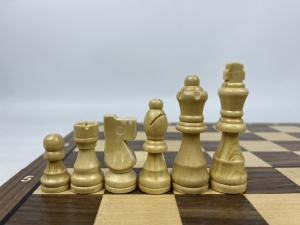 Wooden magnetic Staunton chess with a lock (silver)
56.25 $
Wooden magnetic Staunton chess with a lock (silver)
56.25 $
-
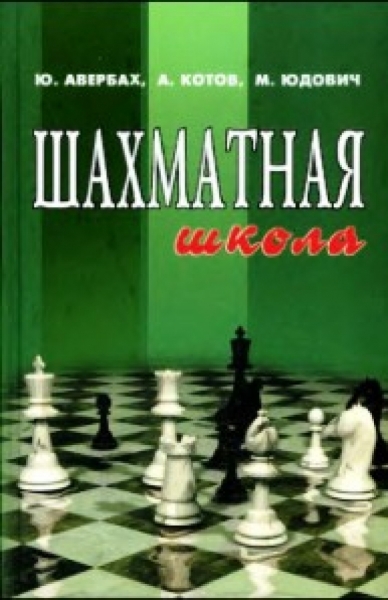 Chess school
Author:
Chess school
Author:
Averbah 15.00 $ -
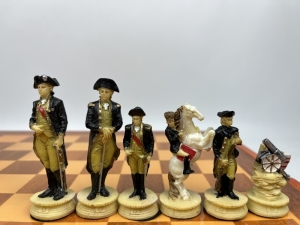 The chess set of The Chessmen. US war - Great Britain
325.00 $
The chess set of The Chessmen. US war - Great Britain
325.00 $