menu
top sales
  • Author:
    Eive

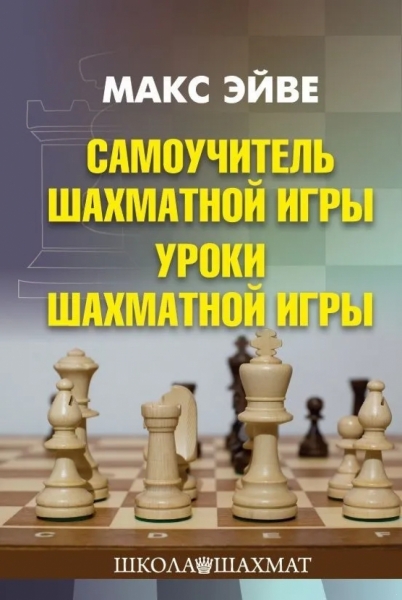
    The corpus of this textbook includes two significant works by the world chess champion, scientist and prominent teacher Max Euwe — "Self‑help chess game", created in collaboration with G. Den-Hertog, and "Chess Lessons". The first work is designed for beginners, the second for more experienced chess players. The book is a real chess tutorial in the true sense of the word. This is expressed not only in the appropriate distribution of the material and the method of presentation, designed to awaken the initiative of the student, but also in numerous practical exercises offered to the reader after explaining each new concept or technique.The textbook primarily attracts the methodology of presentation of the material, the principles of which will be useful for coaches and teachers of chess sections and circles. For a wide range of chess fans.

    25.00 $
  • Author:
    Bologan

    The 2nd edition, revised and supplemented, of the popular monograph, which is dedicated to one of the most combat modern debuts – the Old Indian defense. The author meticulously builds the entire defensive line of black (including on the territory of "adjacent" openings, such as the English beginning or the London system), explains standard plans and tactical techniques, offers a number of novelties in current schemes. Carefully selected positions for the solution will help the reader to consolidate the acquired knowledge. The book is addressed to chess players of any level, since the laws of Old Indian are the same for both amateurs and super grandmasters.

    21.67 $
  • Author:
    Kasparov

    41.67 $
  • Author:
    Bezgodov

    The youngest first–grader in the USSR, the world champion among young men, a participant in the candidates tournament at the age of 19 - Boris Spassky's rise was rapid. And then fate gave the brilliant chess player a test of strength: he stumbled twice at the decisive moment and remained beyond the threshold of interzonal tournaments ... Only ten years after his first great success, Spassky managed to pass all the qualifying tests and earn the right to a match for the crown, but he failed to defeat the Iron Tigran Petrosian the first time. It took three more years of super–efforts: by Sisyphus he rose again to the foot of Olympus and did not miss a second chance - in 1969 he became the Tenth king of chess! An essay about the life of Boris Vasilyevich and his sporting path full of ups and downs was written by Dmitry Oleynikov, Candidate of Historical Sciences, curator of the Chess Museum of the Chess Federation of Russia. 70 beautiful and instructive games of Spassky were commented on by the champion of Russia in 1993, the famous author and theorist grandmaster Alexey Bezgodov, as well as grandmaster Dmitry Kryakvin and FIDE master Steve Giddins. The preface was written by the 14th world champion Vladimir Kramnik. For a wide range of chess fans.

    21.67 $
  • Author:
    Bologan

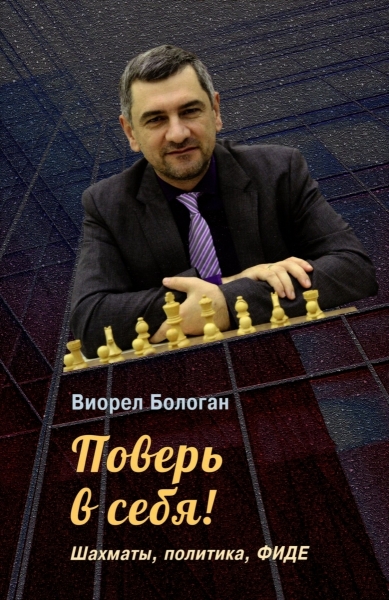
    «The idea of continuing the autobiographical book “Steps” has been in the air almost since the moment it was written. Despite the bullet point at the end of the book in the form of a victory over Magnus Carlsen, my chess career continued for another full 14 years, and the subsequent stormy socio-political career is only gaining momentum.” (V. Bologan).  The book contains 75 games commented in detail and a number of fragments. A frank story about the life and professional path, about cooperation with the leading grandmasters and coaches of the world (among them - A. Karpov, G. Kasparov, Yu. Polgar, Zhu Chen, R. Ponomarev, A. Shirov, A. Morozevich, A. Onischuk, A. Ryazantsev, E. Inarkiev, M. Al-Mudakhka, M. Dvoretsky, M. Podgaets, V. Chebanenko, Z. Lanka and others), about political activities in the Parliament of Moldova and about work in FIDE are complemented by numerous photographs.   For a wide range of chess lovers.

    36.67 $
  • Author:
    Galkin

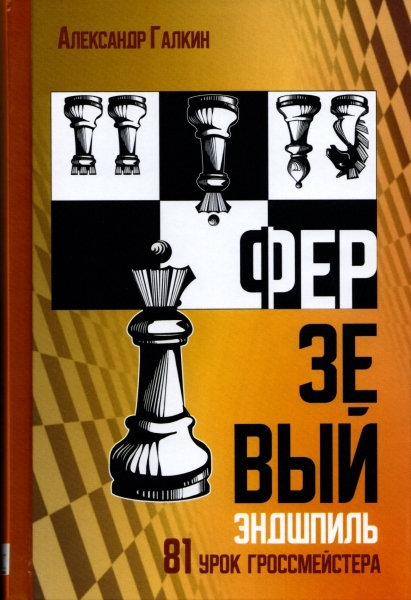
    The book by grandmaster and experienced coach Alexander Galkin is dedicated to the strongest piece on the chessboard – to the queen. Using the example of episodes from games of modern grandmasters (the vast majority of games date back to 2020-2023) and his own grandmaster practice, the author tries to generalize, and in some places even clarify the methodology for understanding and playing queen endings, as well as other types of endgames with the presence of queens ) On the desk. The book presents various ratios of material – “queen against queen”, “queen and minor piece against queen and minor piece”, “queen and rook against queen and rook”, “queen against two rooks”, “queen against rook and pawns”, “ queen against a rook and a minor piece”, “two queens against two queens” – practically the entire spectrum of encountered endgames of this type. The material is structured in such a way that the reader can get maximum benefit from studying the examples of queen endings and its other derivatives offered by the author. The book is aimed at advanced chess players, is useful for coaches and can be recommended to a wide range of chess fans.

    18.33 $
  • Author:
    Ezhov

    Grandmaster Carlos Torre – like a chess comet; his genius flashed dazzlingly and quickly went out in the chess firmament! He – the author of the most famous “mill” in the history of chess, the 2nd world champion Emanuel Lasker fell into its merciless millstones. The authors spoke about the life and work of the Mexican genius (the book contains 25 commentated games by K. Torre). Torre’s book “How a Chess Player is Formed” is presented, an essay by international master Yaroslav Prizant about Torre’s attack in modern practice. In the section "Play like Torre" – 36 instructive examples from his practice to solve. Finally, there is an interview with Carlos Torre, conducted by Gabriel Velasco in 1977. Working with the book will give readers not only aesthetic pleasure, but will also help improve their skills.

    18.33 $
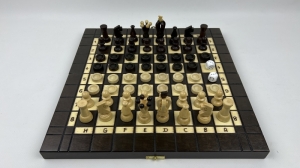
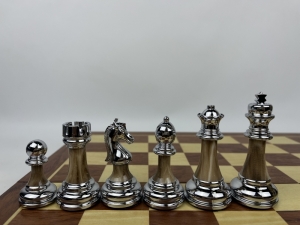
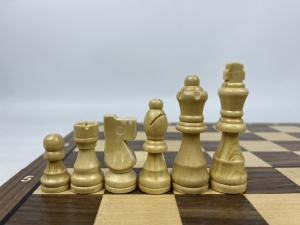
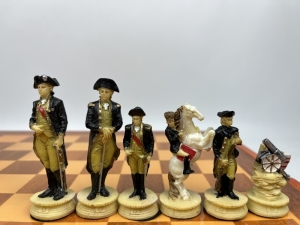
  • The size of the board when folded is 35x17.5 cm. The size of the board when unfolded is 35x35 cm. Cage size is 3x3 cm  King height 6.6 cm. Base diameter 2.2 cm. Pawn height 3.1 cm. Base diameter 2 cm. Backgammon - checker 2.1 cm. Weight 830 g. Includes backgammon chips and dice Chess board and backgammon chips can be used to play checkers Manufacturer Poland

    148.00 $
  • Chess was invented in the 5th century AD in India and spread throughout the world. The uniqueness of this game is that it still covers the minds of everyone - from young to old! Chess combines elements of science and sports. They develop logic, perseverance, attentiveness, analytical thinking and memory.  Checkers is a fun, dynamic and relatively simple game. Every country in the world has it. It is comparatively easier to find a partner here than in chess. Backgammon – one of the oldest known board games. It is known that it came to us from the East. First, you need to master the basic techniques, so that later you can boldly apply various tricks during the game.  Cage length: 4.5 cm. King height: 8.8cm King base diameter: 2.8 cm The length and width of the field when unfolded: 44 X 44 cm. Material: wood Country of origin: China.

    84.48 $
  • Author:
    Franco

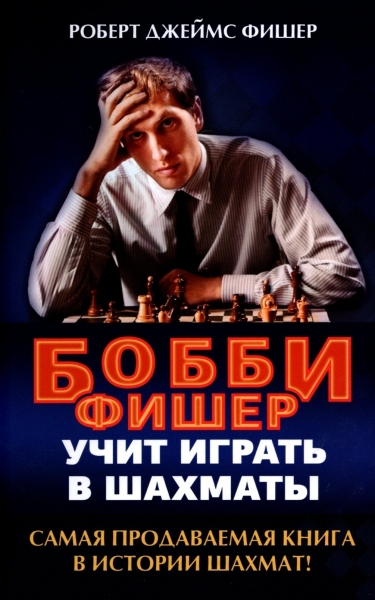
    In his new book, grandmaster Zenon Franco deeply analyzes the 69 instructive victories of the 11th world champion Robert Fischer. The book is not overloaded with options, the emphasis – with detailed explanations in a move-by-move style, creating an ideal platform for learning chess. In the "reference" At points in each game, the reader is offered test questions, which helps both the practical study of key techniques of the chess game and the reliable assimilation of acquired knowledge. Questions and answers engage the reader in the learning process and help him track his growth in chess strength. The appendix provides a critical analysis of the unsatisfactory translation of Robert Fisher's famous book “My 60 Memorable Games.”

    23.33 $
  • more

Debut theory

  • book

    30.00 $

    RUB

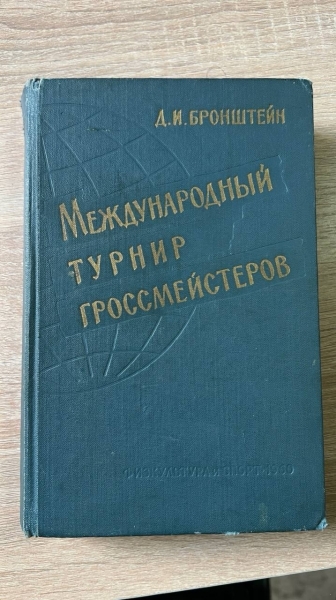
    The author has set himself a difficult goal: to create a kind of middlegame manual based on the material of the international grandmaster tournament. Grandmaster Bronstein is famous for his depth of play and his original understanding of the laws of chess. This is manifested in the grandmaster's games that have made the rounds of the world press and fully applies to his comments. Numerous positive and sometimes laudatory reviews of D. Bronstein’s first literary work, the benefits brought by the book according to reader reviews, indicated that the author had successfully completed the task set for himself. The second edition is slightly shortened compared to the first by excluding outdated material. The introductory article has been supplemented, and the errors noted in the first edition have been corrected.

  • book

    54.70 $

    RUB

    In hardly any other opening does the second player get so many chances for an early initiative as in the Chigorin Defense 1.d4 d5 2.c4 Nc6. Among its practitioners are A. Morozevich and I. Miladinovic, as well as various other strong grandmasters. Nevertheless, for a long time the Chigorin Defense had a dubious reputation. Only the success of the players just mentioned, combined with the appearance of the first German edition of this book in 2001 gradually changed this. This now thoroughly updated essential work on the Chigorin offers 115 games scrutinised in detail, explains all the strategic principles and therefore creates a solid theoretical basis for the defense. The author is a Ukrainian IM who now lives in Stuttgart / Germany. This book founded his reputation as a respected theoretician. “The contents are first-class and the author has put a tremendous amount of work into the book. Material is drawn from nearly all possible sources and the author has added an abundance of original analysis, improvements, and sug-gestions of his own. ” (Carsten Hansen on Chesscafe, Checkpoint May 2005) “It will not only become the Chigorin Defense bible for many years to come, but it establishes the Chigorin as a sound defense deserving respect.” (John Watson, The Week in Chess, Book Reviews # 46)

  • book

    38.00 $

    RUB

    The Colle-Koltanowski System with d4, Nf3, e3, Bd3, c3, 0-0, Nbd2 is very popular among club players. White builds up a kind of & bdquo; fortress & ldquo ;, but at the same time prepares to hand out some blows himself, e.g. the typical bishop sacrifice on h7. In other cases he can rely on the characteristic queenside pawn majority and go for the endgame. This is a book about a typical & bdquo; amateur opening & ldquo ;, but nevertheless Bronznik refuses to go for the transfigured & ldquo; Winning with & ldquo; approach. He does a very thorough research and shows that, in fact, in many lines the best moves are still untested - when many believe that in our computer age everything can be found in the omniscient databases. Fascinating are Bronznik & rsquo; s analysis of the various sacrifices on the kingside (Bxh7 +, Bxh6 and so on), clear and fundamental is his explanation of the positional themes. Due to the blend of basic things with advanced material this book should be useful for average players, as well as for masters. Originating from Ukraine and now living in Stuttgart (Germany), IM Valerij Bronznik is working as a chess teacher. & Nbsp; His first book about the Chigorin Defense (published in German language in 2001) was much acclaimed. But especially in terms of teaching methods this one is even better

  • book

    Репринт в картонном переплете.

  • book

    Reprint in cardboard binding.

  • book

    Репринт в картонном переплете.

  • book

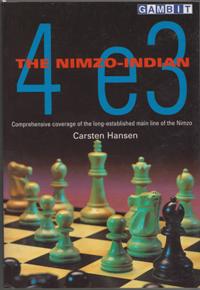
    Ever since Nimzowitsch has been a dynamic pact, the debate has raged over White's best reply. It has been shown that it has been the Rubinstein Variation. The 4 e3 Nimzo is extraordinarily rich in strategy. All manner of different central pawn-structures can arise, such as the IQP positions. Moreover, in some lines the central tension persists well into the middlegame. It’s not a problem.

  • book

    Editions of the series with the draft title & laquo; Revision (!) of chess & raquo; You may already be aware. In this issue: Valentin Tarakanov & laquo; No one is safe from this. The Paradox of Albina & raquo ;. Valery Chashikhin & laquo; Diamond Party & raquo ;. Georgy Sobolev & laquo; Moscow wind & raquo ;. Elshad ibn Ramadan & laquo; Persian variant & raquo ;. And Nina Podgorichani & laquo; Roma