 Русский
  Английский
Personalities
-
28.97 $
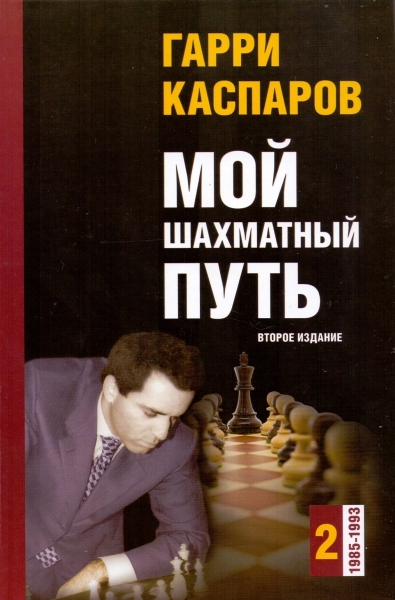
Garry Kasparov's long-awaited autobiographical three-volume booklet "My chess path & raquo; continues large-scale projects & laquo; My great predecessors & raquo; and & la modern chess & raquo ;. It includes about 300 best and most memorable games and endings of the 13th world champion with detailed comments. The second volume contains 100 parts and covers the period of Kasparov's championship in the framework of FIDE (1985-1993). Each chapter of this fascinating book is a milestone in his athletic career. & nbsp;
-
40.00 $
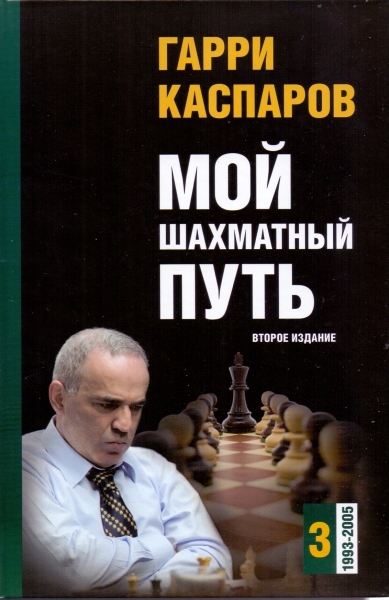
Garry Kasparov's long-awaited autobiographical three-volume booklet "My chess path & raquo; continues large-scale projects & laquo; My great predecessors & raquo; and & la modern chess & raquo ;. It includes about 300 best and most memorable games and endings of the 13th world champion with detailed comments. The third volume contains more than 100 parts and covers the late period of Kasparov's creative work (1993 & ndash; 2005). Each chapter of this fascinating book & ndash; a whole milestone in his athletic career. & nbsp;
-
22.60 $
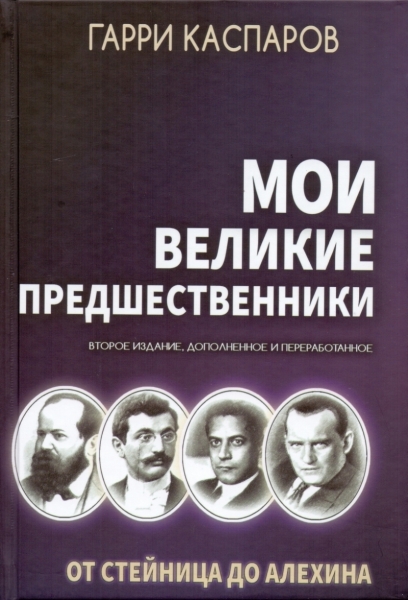
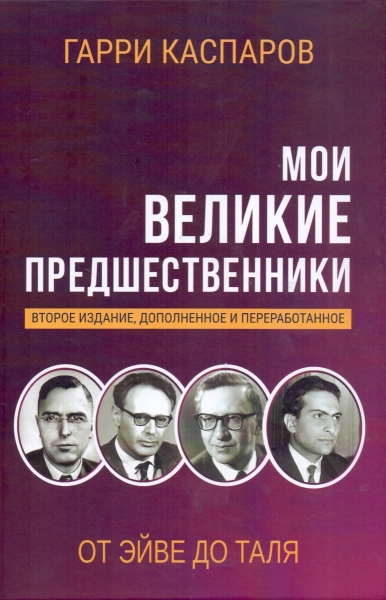
Commentary by Dmitry Plisetskiy: - In the new edition of the 1st volume of the book by Garry Kasparov & quot; My great predecessors & quot; a number of historical facts are clarified and comments on all (!) 148 parties are thoroughly revised. Many previous ratings have changed in the games of Andersen, Morphy, Steinitz, Chigorin, Tarrash, Lasker, Capablanca, Alekhine ... For example, in such famous games as the 7th game of the match Lasker - Steinitz (1894) or Pilsbury - Lasker (Petersburg 1896) , and indeed in all key parties of the Capablanca-Alekhine match (Buenos Aires 1927). Garry Kasparov’s five volumes & laquo; My great predecessors & raquo; has no analogues in chess literature: the 13th world champion talks about the fate and work of the twelve previous champions and their rivals, about a century and a half struggle for world championship. Exploring the famous games under the microscope of powerful computer programs, the author changes many previous estimates and, in essence, summarizes the development of chess in the 20th century. The first volume is about & laquo; uncrowned kings & raquo; past and the first four official world champions & mdash; Steinitz, Lasker, Capablanca and Alekhine. Here is the second edition, radically supplemented and revised. 48 pages of artwork on coated paper. This is an e-book, a link to which will be available in your account after payment. & nbsp;
-
272.00 $
Mnemotomnik Gappi Kapparova & Mo and the Greater Presence & raquo; Do not seek out an analogs in the memory of a diplomat: The 13th Champion of the world pays attention to the fences and the strength of the two previous Chap- pions and their co-sponsors, a pathetic encampment for the sake of a peaceful past. Previously known patriotions under the miracle of powerful commemorative programs, the engine has changed many times and, in a nutshell, has paved the development of a 20-meter cycle.
-
-
36.67 $
The second volume is devoted to four world champions Euwe, Botvinnik, Smyslov and Tahl, as well as candidates for the title Keres, Bronstein and Geller.
-
-
66.67 $
In this book, Garry Kasparov devotes the reader to the secrets of brilliant strategic thinking, creating an advantage not only in chess, but also in everyday life. With the skill and charm of a true connoisseur, examining fascinating and instructive stories that reflect not only the most tense and decisive moments of his impressive chess career, but also the experience of great innovators and outstanding politicians and businessmen, the author explains how to achieve victory even in the most difficult situations, defeat rivals and achieve success in the most tough competition. Hardcover, Dust Cover, 352 sec., Moscow 2007
-
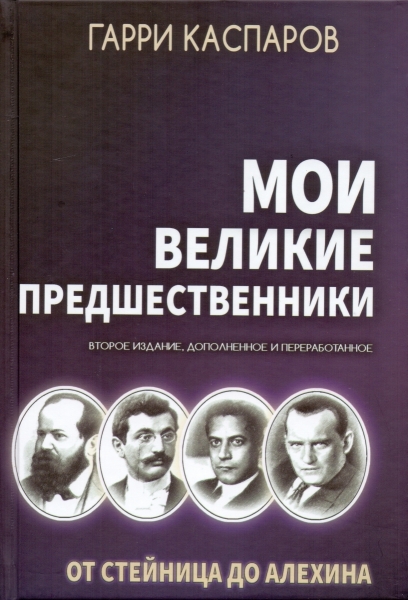
43.33 $
Dmitry Plisetskiy's comment: - In the new edition of the 1st volume of the book by Garry Kasparov & quot; My great predecessors & quot; a number of historical facts were clarified and comments on all (!) 148 parties were thoroughly revised. Many previous estimates have changed in the games of Andersen, Morphy, Steinitz, Chigorin, Tarrash, Lasker, Capablanca, Alekhine ... For example, in such famous games as the 7th game of the match Lasker - Steinitz (1894) or Pilsbury - Lasker (Petersburg 1896) , and indeed in all key parties of the match Capablanca - Alekhine (Buenos Aires 1927). Garry Kasparov’s five volumes & laquo; My great predecessors & raquo; has no analogues in chess literature: the 13th world champion talks about the fate and work of the twelve previous champions and their rivals, about a century and a half struggle for world championship. Exploring the famous games under the microscope of powerful computer programs, the author changes many previous estimates and, in essence, summarizes the development of chess in the 20th century. The first volume is about & laquo; uncrowned kings & raquo; past and the first four official world champions & mdash; Steinitz, Lasker, Capablanca and Alekhine. Here is the second edition, radically supplemented and revised. 48 pages of artwork on coated paper. & nbsp;
-
33.11 $
Promotional price! The five-volume book of Garry Kasparov has no analogues in chess literature: the 13-world champion reflects on the fate and work of twelve previous champions and their rivals, on the one-and-a-half century-long struggle for world championship. Investigating the famous games under the microscope of powerful computer programs, the author changes many previous assessments and, in essence, sums up the development of chess in the 20th century. The third volume is dedicated to two world champions Petrosyan and Spassky, as well as contenders for this title Gligorich, Polugaevsky, Portisch and Stein.
-
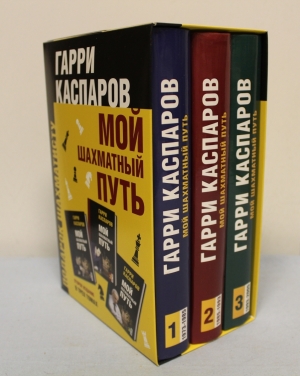
93.75 $
& nbsp; & nbsp; The long-awaited autobiographical three-volume book by Garry Kasparov & laquo; My Chess Way & raquo; continues large-scale projects & laquo; My great predecessors & raquo; and & laquo; Modern Chess & raquo ;. It includes about 300 of the best and most memorable games and the endings of the 13th world champion with detailed comments. gift wrapped. & nbsp; The first volume contains 100 games and covers the pre-spy period of Kasparov’s work (1973– 1985). Each chapter of this fascinating book & ndash; a milestone in his sports career. The second volume contains 100 games and covers the period of Kasparov's championship in the FIDE (1985-1993). Each chapter of this fascinating book is a milestone in his sports career. The third volume contains more than 100 batches and covers the late period of Kasparov’s work (1993 & ndash; 2005). Each chapter of this fascinating book & ndash; a milestone in his sports career. & nbsp;
-
 The life of a chess player in the system. Memories of the grandmaster
Author:
The life of a chess player in the system. Memories of the grandmaster
Author:
Averbah 45.00 $ -
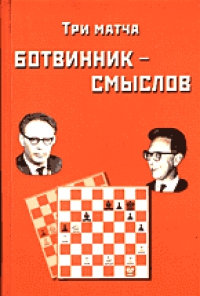 Три матча Ботвинник-Смыслов
Author:
Три матча Ботвинник-Смыслов
Author:
Botvinnik 45.00 $ -
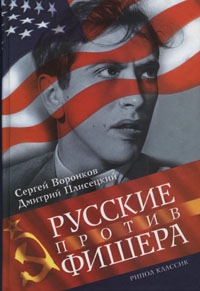 Russians vs Fisher
Author:
Russians vs Fisher
Author:
Voronkov 65.00 $ -
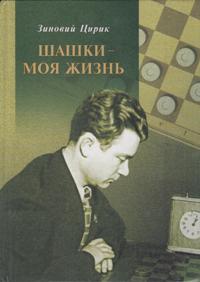 Checkers is my life
Author:
Checkers is my life
Author:
Ciric 87.50 $ -
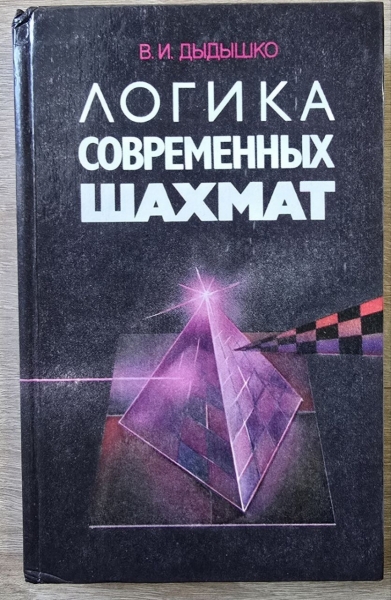 The logic of modern chess
Author:
The logic of modern chess
Author:
Dydyshko 72.50 $ -
 Siegbert Tarrasch. The Queen
Author:
Siegbert Tarrasch. The Queen
Author:
Tarrash 72.50 $ -
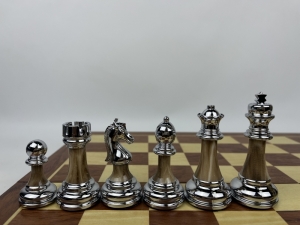 High quality acrylic metal heavy chess pieces with wooden board
202.50 $
High quality acrylic metal heavy chess pieces with wooden board
202.50 $
-
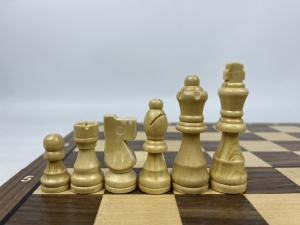 Wooden magnetic Staunton chess with a lock (silver)
56.25 $
Wooden magnetic Staunton chess with a lock (silver)
56.25 $
-
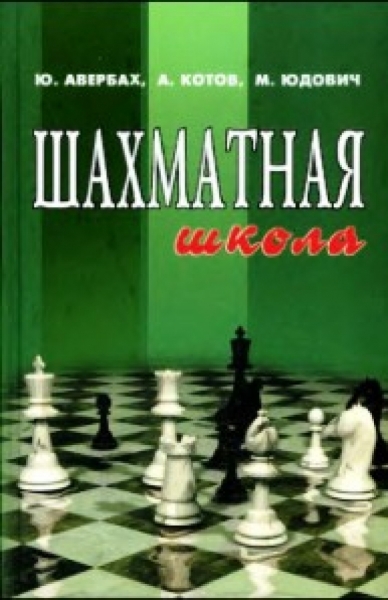 Chess school
Author:
Chess school
Author:
Averbah 15.00 $ -
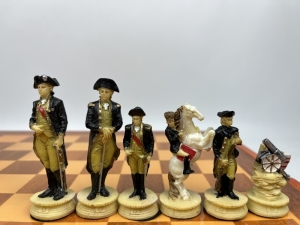 The chess set of The Chessmen. US war - Great Britain
325.00 $
The chess set of The Chessmen. US war - Great Britain
325.00 $