menu
top sales
  • Author:
    Fisher

    15.00 $
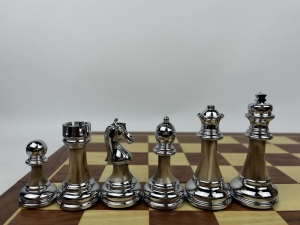
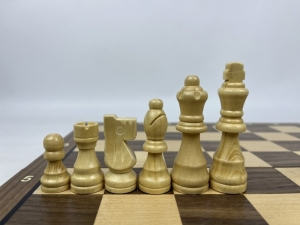
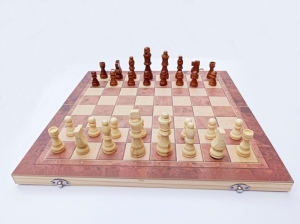
  • Chess was invented in the 5th century AD in India and spread throughout the world. The uniqueness of this game is that it still covers the minds of everyone - from young to old! Chess combines elements of science and sports. They develop logic, perseverance, attentiveness, analytical thinking and memory.  Checkers is a fun, dynamic and relatively simple game. Every country in the world has it. It is comparatively easier to find a partner here than in chess. Backgammon – one of the oldest known board games. It is known that it came to us from the East. First, you need to master the basic techniques, so that later you can boldly apply various tricks during the game.  Cage length: 4.5 cm. King height: 8.8cm King base diameter: 2.8 cm The length and width of the field when unfolded: 44 X 44 cm. Material: wood Country of origin: China.

    84.48 $
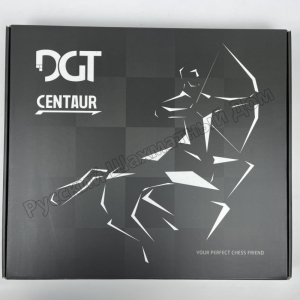
  • Made in Holland. Chess computer "Centaur" easy to use. You can easily install any language. Using the touch panel  40x40 cm (cell size 48 x 48 mm) you can easily move the figures. The sensors will record strokes. The board has a capacious rechargeable internal battery. The uniqueness of the computer is that it quickly adapts to  your playing strength (from beginner to grandmaster) so that you have the right opponent. Centaur will help you analyze the game so as not to make the same mistakes and improve your chess skill. Please note, computer is not compatible to connect to your PC or online chess. The set includes USB cable and DGT electronic chess pieces . Height of the king is 86mm.  

    1553.60 $
  • Author:
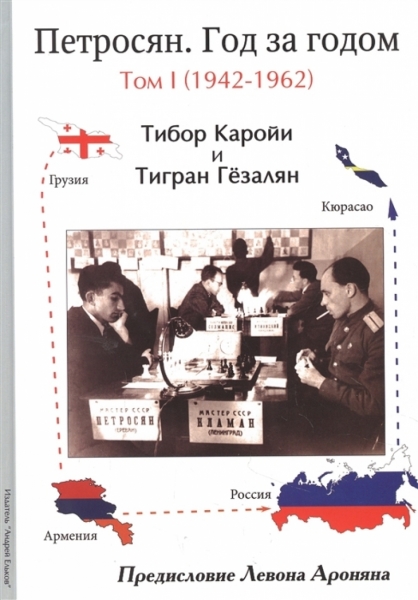
    Karoii

    50.00 $
  • Author:
    Ezhov

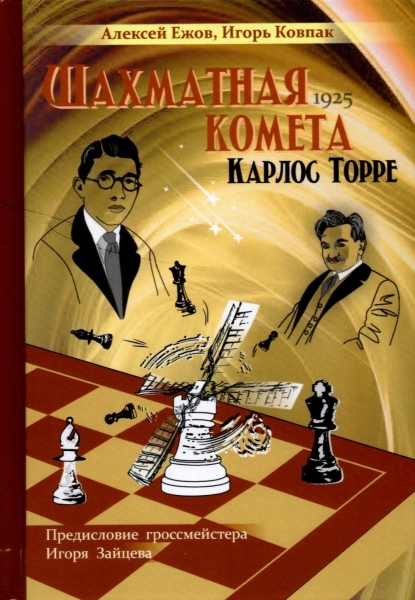
    Grandmaster Carlos Torre – like a chess comet; his genius flashed dazzlingly and quickly went out in the chess firmament! He – the author of the most famous “mill” in the history of chess, the 2nd world champion Emanuel Lasker fell into its merciless millstones. The authors spoke about the life and work of the Mexican genius (the book contains 25 commentated games by K. Torre). Torre’s book “How a Chess Player is Formed” is presented, an essay by international master Yaroslav Prizant about Torre’s attack in modern practice. In the section "Play like Torre" – 36 instructive examples from his practice to solve. Finally, there is an interview with Carlos Torre, conducted by Gabriel Velasco in 1977. Working with the book will give readers not only aesthetic pleasure, but will also help improve their skills.

    18.33 $
  • Author:
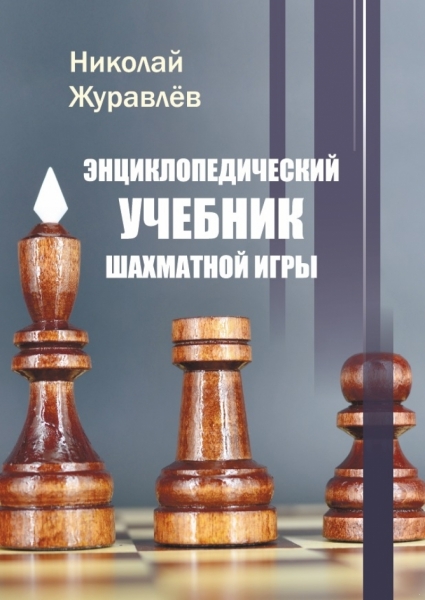
    Zhuravlev

    This tutorial is addressed to those who want to learn to play chess on their own and improve further. The lesson-based method of presentation, as well as numerous exercises, contribute to the consistent assimilation of the rules and laws that form the basis of the chess game. The book contains extensive educational material, which is presented to the reader in accordance with modern pedagogical principles. The purpose of this manual is to train chess players of the III category (rating up to 1800). The textbook can also be used for classes in groups - it covers the material of existing programs of the first year of study in children's and youth chess schools.

    23.33 $
  • Author:
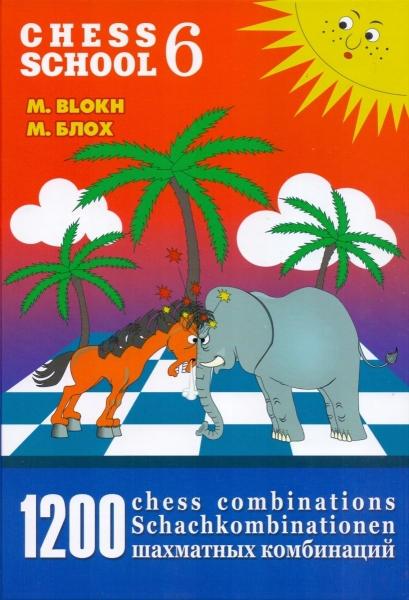
    Blokh

    The answer book of an international grandmaster and an experienced coach (among whose students is A. Grischuk) Bloch's Maxim contains over 1200 combinations from practical games and specially compiled examples. All tasks are characterized by intense struggle, in which the goal is achieved by single moves. The book is intended for both young and adult amateurs, and for masters. The arrangement of examples by topic allows you to use the book not only as a task book, but also as a textbook. Of particular interest are over two hundred specially compiled by the author overstressed positions in which white wins the only way during the course of white, and black wins during the course of black. These examples, as well as over 50 fragments from the parties of the author and his students, are published for the first time.

    21.67 $
  • Author:
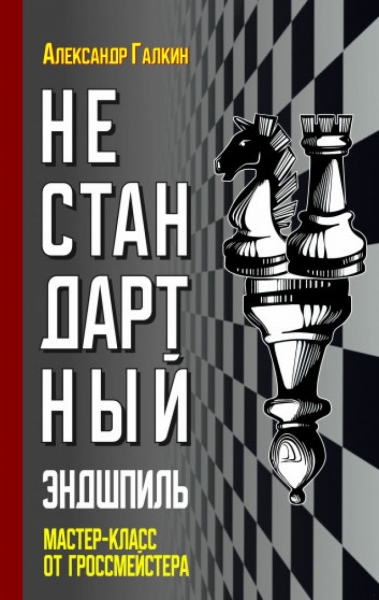
    Galkin

    16.67 $
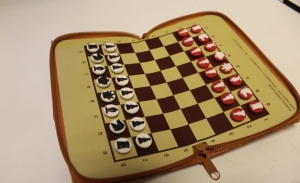
  • Magnetic road chess: folding board-case made of artificial leather, tablet-figures with a convex image. Wallet size 19x22 cm. The playing field is 15.5 x 15.5 cm. Cell 2x2 cm.

    51.72 $
  • Author:
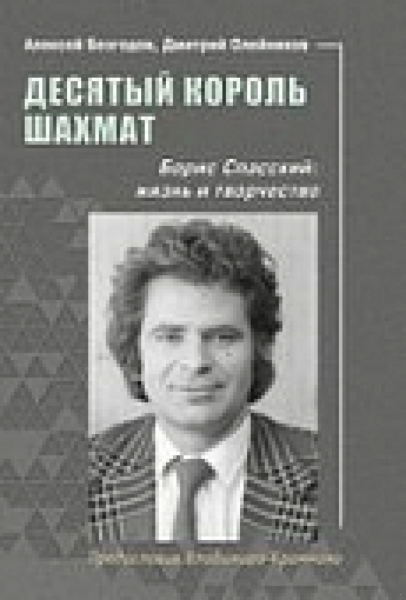
    Bezgodov

    The youngest first–grader in the USSR, the world champion among young men, a participant in the candidates tournament at the age of 19 - Boris Spassky's rise was rapid. And then fate gave the brilliant chess player a test of strength: he stumbled twice at the decisive moment and remained beyond the threshold of interzonal tournaments ... Only ten years after his first great success, Spassky managed to pass all the qualifying tests and earn the right to a match for the crown, but he failed to defeat the Iron Tigran Petrosian the first time. It took three more years of super–efforts: by Sisyphus he rose again to the foot of Olympus and did not miss a second chance - in 1969 he became the Tenth king of chess! An essay about the life of Boris Vasilyevich and his sporting path full of ups and downs was written by Dmitry Oleynikov, Candidate of Historical Sciences, curator of the Chess Museum of the Chess Federation of Russia. 70 beautiful and instructive games of Spassky were commented on by the champion of Russia in 1993, the famous author and theorist grandmaster Alexey Bezgodov, as well as grandmaster Dmitry Kryakvin and FIDE master Steve Giddins. The preface was written by the 14th world champion Vladimir Kramnik. For a wide range of chess fans.

    21.67 $
  • more

miscellanea

  • book

    (in Bulgarian). Almanac - tables, parties, articles.

  • book

    19.34 $

    RUB

    In the collection of more than 120 commented parties, the work of Petrosian, Bronstein, Kotova, Boleslavsky and others. Overview of the most important competitions of 1948-1952.

  • book

    11.75 $

    RUB

    To the history of women's chess competitions.

  • book

    3.41 $

    RUB

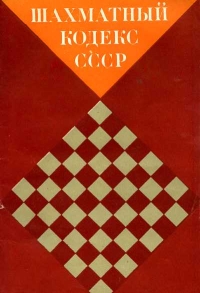
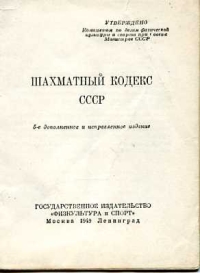
    This edition has been brought into line with the rules of the game, approved by FIDE (in particular, the discrepancies between the rules adopted in the USSR and the international rules of the game by correspondence were eliminated). For the first time, rules on a chess composition are included in the USSR Chess Code.

  • book

    3.14 $

    RUB

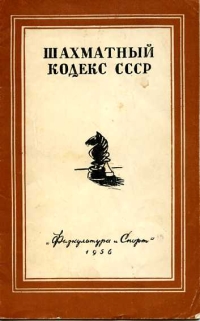
    The USSR Chess Code contains the Rules for the Game of Chess, the Rules of Competition, the Rules of the Game of Correspondence (correspondence competitions), the Rules of Chess Composition (composing and solving problems and etudes), as well as the appendices. In this edition of the Code, the rules of the game of chess fully comply with the rules of the International Chess Federation (FIDE), and the notes develop them, helping the judges to make the right decisions in those cases that are not specified in the articles of the code.

  • book

    3.14 $

    RUB

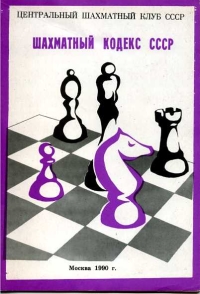
    The official text of the Chess Code of the USSR (1981), which sets out the rules of chess games, the preparation and conduct of competitions, games by correspondence, chess composition with all the necessary applications (chess notation and recording of games; tables for playing members of the Society of the Blind; Additions and changes to the Rules of a chess game for competitions in lightning speed; Rules of simultaneous play sessions.

  • book

    3.66 $

    RUB

    The Chess Code contains the rules of the chess game, the rules of chess competitions (tournaments and matches), and the management of the competition. The appendix contains additions to the USSR Chess Code for blind chess players, the rules and regulations of the game of correspondence, tables of the game queue in tournaments, chess notation and record keeping of the game.

  • book

    6.54 $

    RUB

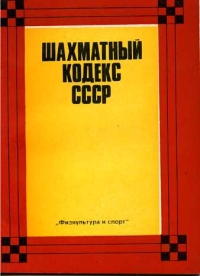
    The USSR Chess Code addresses the issues of judging and organizing competitions, the work of the judiciary. This edition has been harmonized in many matters with the rules of the game approved by FIDE (International Chess Federation). The publication is designed for organizers of competitions, coaches, judges, for a wide range of chess players.

  • book

    4.97 $

    RUB

    The main changes and additions made to this edition of the code clarify: the concept of progress; incorrectness in the conduct of the party; rules of using chess clocks; draw order; the procedure for postponing and playing the game; order of recognition for a draw with a triple repetition of the position.

  • book

    8.38 $

    RUB

    The USSR Chess Code addresses the issues of judging and organizing competitions, the work of the judiciary. This edition has been harmonized in many matters with the rules of the game approved by FIDE (International Chess Federation). The publication is designed for organizers of competitions, coaches, judges, for a wide range of chess players.