menu
top sales
  • Author:
    Vysotsky

    20.00 $
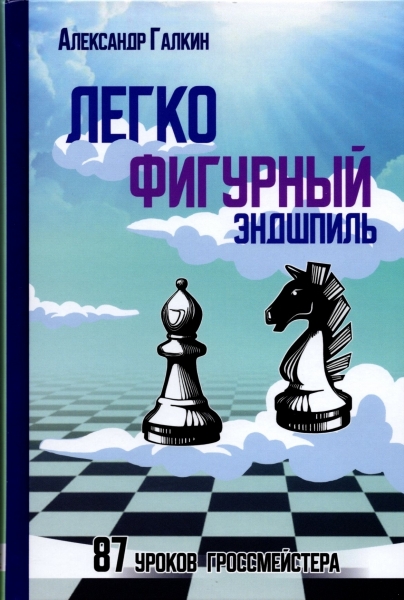
  • Author:
    Galkin

    The book by grandmaster and experienced coach Alexander Galkin is  the final link in a series of publications by the author, directed  to study the classical endgame using examples of modern games   grandmasters. This time the subject of the study – light piece endgames. Clarification of the methodology for working on this stage of the game, as well as the main features and methods of playing such endings. Examples  taken from the practice of modern grandmasters and dated back to 2020-2023. The author offers the reader the most recent and unique information. The material is structured in such a way that the reader can get the maximum  benefit from studying the examples offered by the author  queen endings and its  other derivatives. The book is aimed at advanced chess players, is useful for coaches and can be recommended to a wide range of chess fans

    18.33 $
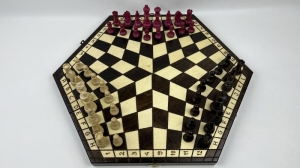
  • Magnetic road chess: folding board-case made of artificial leather, tablet-figures with a convex image. Wallet size 19x22 cm. The playing field is 15.5 x 15.5 cm. Cell 2x2 cm.

    51.72 $
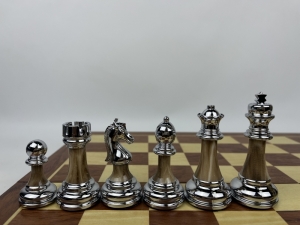
  • The size of the board when folded is 35x17.5 cm. The size of the board when unfolded is 35x35 cm. Cage size is 3x3 cm  King height 6.6 cm. Base diameter 2.2 cm. Pawn height 3.1 cm. Base diameter 2 cm. Backgammon - checker 2.1 cm. Weight 830 g. Includes backgammon chips and dice Chess board and backgammon chips can be used to play checkers Manufacturer Poland

    148.00 $
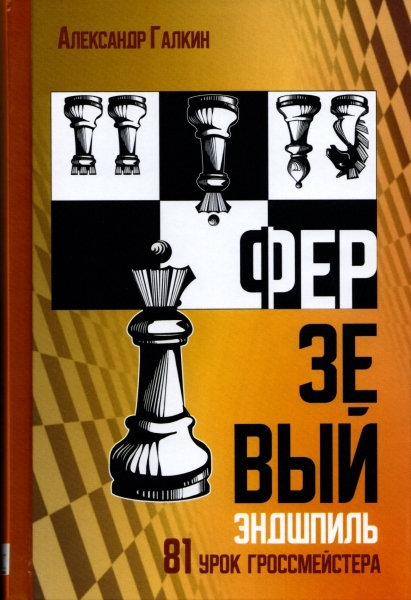
  • Author:
    Galkin

    The book by grandmaster and experienced coach Alexander Galkin is dedicated to the strongest piece on the chessboard – to the queen. Using the example of episodes from games of modern grandmasters (the vast majority of games date back to 2020-2023) and his own grandmaster practice, the author tries to generalize, and in some places even clarify the methodology for understanding and playing queen endings, as well as other types of endgames with the presence of queens ) On the desk. The book presents various ratios of material – “queen against queen”, “queen and minor piece against queen and minor piece”, “queen and rook against queen and rook”, “queen against two rooks”, “queen against rook and pawns”, “ queen against a rook and a minor piece”, “two queens against two queens” – practically the entire spectrum of encountered endgames of this type. The material is structured in such a way that the reader can get maximum benefit from studying the examples of queen endings and its other derivatives offered by the author. The book is aimed at advanced chess players, is useful for coaches and can be recommended to a wide range of chess fans.

    18.33 $
  • Author:
    Gezalyan

    International Master Tibor Karolyi and FIDE Master Tigran Gozalyan have prepared a major work (in two volumes) about the life and work of the 9th world chess champion Tigran Petrosyan (he held the title from 1963 to 1969).  Volume II (1963-1984) tells about Petrosyan's victory in the 1963 world title match over Mikhail Botvinnik, about the grandiose two-match confrontation with Boris Spassky in 1966 and 1969, about all his candidates' matches after losing the title – against Bobby Fischer, Viktor Korchnoi and other world-class opponents. All tournaments and matches of the second half of Petrosian's chess career are presented, up to his last performances in 1983. The authors subjected 175 complete games and fragments to an in-depth analysis (using modern computers). Not all of them have been deeply studied and commented on before, but even then the book provides a significantly improved analysis. Among Petrosyan’s opponents – world champions and contenders Kasparov, Karpov, Fischer, Spassky, Tal, Smyslov, Botvinnik, Korchnoi and Bronstein, as well as Timman, Larsen, Reshevsky, Belyavsky, Polugaevsky, Portisch, Romanishin and many others. Special attention is paid to his coaches – Alexey Suetin and Igor Zaitsev. 

    50.00 $
  • Author:
    Zhuravlev

    This tutorial is addressed to those who want to learn to play chess on their own and improve further. The lesson-based method of presentation, as well as numerous exercises, contribute to the consistent assimilation of the rules and laws that form the basis of the chess game. The book contains extensive educational material, which is presented to the reader in accordance with modern pedagogical principles. The purpose of this manual is to train chess players of the III category (rating up to 1800). The textbook can also be used for classes in groups - it covers the material of existing programs of the first year of study in children's and youth chess schools.

    23.33 $
  • Author:
    Eive

    The corpus of this textbook includes two significant works by the world chess champion, scientist and prominent teacher Max Euwe — "Self‑help chess game", created in collaboration with G. Den-Hertog, and "Chess Lessons". The first work is designed for beginners, the second for more experienced chess players. The book is a real chess tutorial in the true sense of the word. This is expressed not only in the appropriate distribution of the material and the method of presentation, designed to awaken the initiative of the student, but also in numerous practical exercises offered to the reader after explaining each new concept or technique.The textbook primarily attracts the methodology of presentation of the material, the principles of which will be useful for coaches and teachers of chess sections and circles. For a wide range of chess fans.

    25.00 $
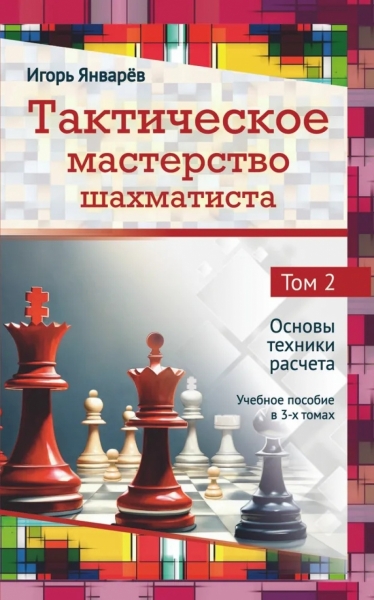
  • Author:
    Yanvarev

    Igor Yanvarev "Tactical Mastery of a Chess Player. Volume 2. Basics of Calculation Techniques". Andrey Elkov Publishing House, Moscow, 2025 - 392 p. Before you is the second book from the three-volume work by International Master I.K. Yanvarev, a famous trainer, author of the fundamental work "The Old Indian Played by Tigran Petrosian" (2010), which received recognition from readers and was republished abroad. The three-volume work is united by a common idea - tactics and combinations in chess. In fact, this is a turnkey textbook, it explains everything from scratch to an advanced level. The second volume is devoted to the basics of calculation techniques, such topics as the tactical "spectrum" of a position, concentration of attention, inclusion of imagination are considered, the "tree of variations" is interpreted in a new way, the practical component is emphasized - the economy of calculation. A separate chapter allows the reader to assess their ability to calculate variations and outline ways to eliminate weaknesses. Each chapter ends with a large number of carefully selected examples for independent solution. Unlike other similar publications, the author examines chess tactics as a single whole, in combination with strategy and elements of psychology. It is based on the original author's methodology, which has proven itself well when working with chess players of various qualifications. Excellently selected examples, a clear logical structure and consistency in the presentation simplify the understanding of the material. For a wide range of chess fans.

    19.00 $
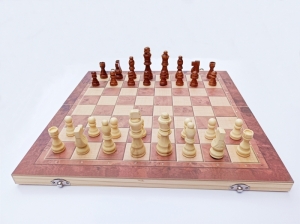
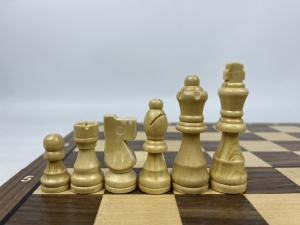
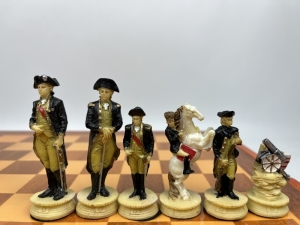
  • The size of the board when folded is 46x23x5 cm. The size of the board when unfolded is 35x35 cm. Cage size is 4.6x4.6 cm  The height of the king is 10 cm. The diameter of the base is 3 cm. Pawn height 5.5 cm. Base diameter 2.8 cm. Weight 1380 g. ART 123 Manufacturer Poland

    183.15 $
  • more

Chess textbook 1946-1990

  • book

    15.89 $

    RUB

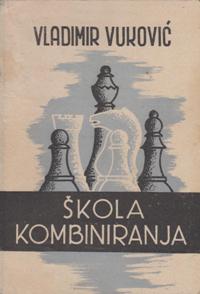
    (in Serbohorse.).

  • book

    23.33 $

    RUB

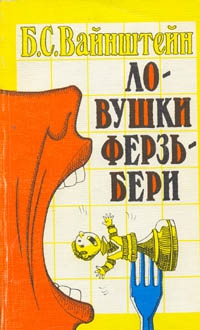
    Non-trivial examples and cases from practice with very lively comments. How to play the debut? How to develop combination vision? What should be done to avoid falling into traps? How to learn to set tricky traps yourself? This book will help you find all the answers. She is a direct descendant of the book “Combinations and Traps in Debut”, released in the 60s. Its author is a well-known chess writer and publicist. Designed for a wide range of chess lovers.

  • book

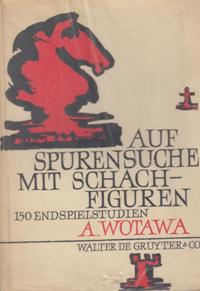
    Dieses Buch bringt 150 Schachstudien aus der Werkstatt des Verfassers und einen Beitrag zur Theorie des Studien-Schachs. Die gebotenen Aufgaben stellen eine Auswahl aus den mehr als 300 bisher in verschiedenen Tageszeitungen des In- und Auslandes, in der „österreichischen Schachzeitung“, im „Schach-Magazin“ und vor allem in der „Deutschen Schachzeitung“ erstmalig veröffentlichten Studien dar. Arbeiten, deren Ursprünglichkeit dem Autor nunmehr zweifelhaft erscheint oder deren Inhalt ihn nicht mehr befriedigt, wurden nicht berücksichtigt. Und wäre der Verfasser nicht auf den Widerstand befreundeter Experten gestoßen, er hätte so manche Aufgabe von der Wiederveröffentlichung gleichfalls ausgeschlossen. An den ausgewählten Studien wurden, wo erforderlich, Änderungen, Erweiterungen und auch Richtigstellungen vorgenommen. Psychologische Gründe machten es ratsam, mit wenigen Ausnahmen auf die Wiedergabe allzu weitläufiger Aufgaben zu verzichten und in einer gewissen Ausgewogenheit neben schwieriger lösbaren Studien auch leichtere zu bringen und damit der Erfahrungstatsache Rechnung zu tragen, dass der überwiegende Teil der Löser von sehr schwierigen und reichlich verzweigten Aufgaben nicht angezogen wird. Weiter wurde die persönliche Vorliege des Autors für Turmspiele einigermaßen gezügelt und überhaupt manches versucht, Einseitigkeit zu vermeiden