menu
top sales
  • Author:
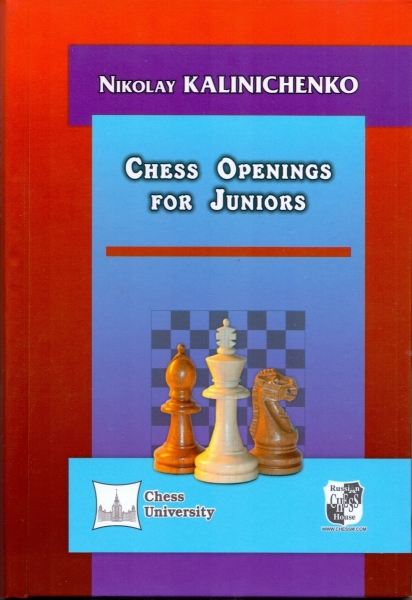
    Kalinichenko

    The vast majority of opening guides are written for adult readers. This book is also devoted to the theory but it is junior. The structure of the book is simple and attractive: openings are examined using examples from actual games, each of which is presented in the form of a lesson with its own name. Several such lessons form an opening theme, and the examination of each theme concludes with exercises. In each opening, attention is drawn to its characteristic tactical and strategic ideas of combinations for independent solution strictly corresponds to the opening theme. Written in clear and easy language, the book is furnished with a large number of diagrams. Colored explanatory arrows on the diagrams and the selection of individual pages with a colored background make the book easier to understand. Regular work solve two problems: deepen the student's knowledge and develop his tactical vision, thus improving his skill and results.

    28.80 $
  • Author:
    Fisher

    15.00 $
  • Author:
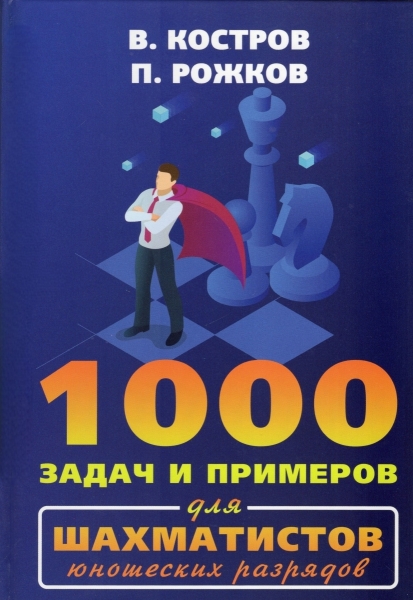
    Kostrov

    Hundreds of thousands of novice chess players have held in their hands the solution books of “1000 chess problems” for the 1st, 2nd and 3rd years of study. These collections became winners of the “Chess Vseobuch of Russia” competition. We decided to combine our three books into one so that the future grandmaster would have more opportunities for improvement and choice of material. It will also be easier for students and coaches to regulate the speed of the material. In the first parts of our book, novice chess players will get acquainted with all possible types of checkmates. Then, future grandmasters will learn to deliver magnificent double blows with a queen and a knight, promote a pawn to a queen. Studying according to this solution book, you will also master the pin, learn to cover yourself from the enemy's pieces, block the enemy's forces, destroy the most reliable fortresses, distract and entice his royal majesty and much more. Work with the book as with a textbook, and do not forget to write down the solutions under each diagram! The correct solutions are at the end of the book. For the widest range of chess fans.

    15.75 $
  • Author:
    Ezhov

    Grandmaster Carlos Torre – like a chess comet; his genius flashed dazzlingly and quickly went out in the chess firmament! He – the author of the most famous “mill” in the history of chess, the 2nd world champion Emanuel Lasker fell into its merciless millstones. The authors spoke about the life and work of the Mexican genius (the book contains 25 commentated games by K. Torre). Torre’s book “How a Chess Player is Formed” is presented, an essay by international master Yaroslav Prizant about Torre’s attack in modern practice. In the section "Play like Torre" – 36 instructive examples from his practice to solve. Finally, there is an interview with Carlos Torre, conducted by Gabriel Velasco in 1977. Working with the book will give readers not only aesthetic pleasure, but will also help improve their skills.

    18.33 $
  • Author:
    Golenishchev

    Like other titles in the Training Program for Chess Players series, this volume is both an excellent textbook for independent study and a powerful training aid for chess coaches. In the view of many experts, no better work of this kind has ever been written. coach and Master of Sport. Golenishchev's programs are still considered. critically important and are successfully employed in chess schools. His teaching methods remain popular in Russia and around the world. Supervised by Editor-in-Chief and former Karpov, this new edition of Golenishchev's classic work is updated to include important games from the recent high-level chess competitions, reflecting modern approaches to the game. OPENING Fragment 1 OPENING Fragment 2

    30.00 $
  • Author:
    Franco

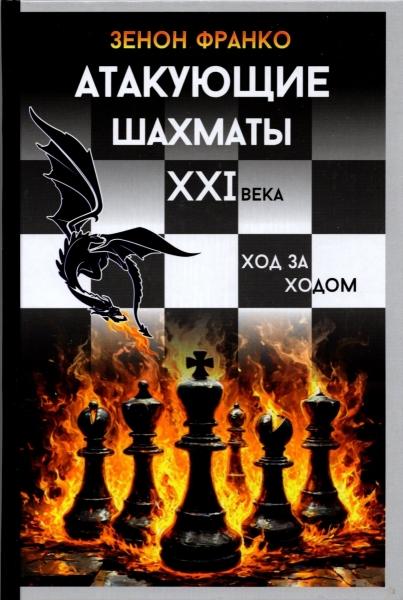
    The book by grandmaster and experienced chess coach Zenon Franco includes 36 instructive attacking games and is divided into four chapters - the king in the center, one-sided castling, opposite-sided castling, and attack-defense-counterattack. Before each game, the opponents are introduced, and a brief description of the events that took place in it is given. Based on the results of the struggle in the game, lessons that are useful to learn from what has been read are listed in a concise form. The book is not overloaded with variations, the emphasis is on detailed explanations in the "move by move" format, which creates an ideal platform for studying chess. At the "support" points of each game, the reader is offered test questions, which helps both the practical study of key chess techniques and the reliable assimilation of the acquired knowledge. Questions and answers involve the reader in the learning process and help him track the growth of his chess strength. For a wide range of chess fans.

    19.00 $
  • Author:
    Fine

    In the vast ocean of chess literature there are relatively few books about the endgame, and only a few of them can be considered true chess classics. And the most outstanding among the classics — Reuben Fine's book "Basic Chess Endings". Reuben Fine (1914−1993) was for a long time one of the best chess players in the world. As an author, Fine showed himself to be an excellent analyst who understood the full depth and peculiarities of the endgame. Having studied various types of standard positions, Fine established useful rules for practical play and proved himself to be an experienced teacher who, using skillfully chosen examples, was able to teach the reader all the necessary lessons and introduce him to the basic ideas of the endgame. Many generations of chess players in different countries of the world keep copies of “Basic Chess Endings”. For example, Mikhail Botvinnik considered Fine's work the most worthy of all that had ever been written on endgame theory.

    35.00 $
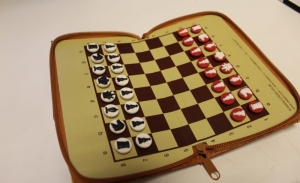
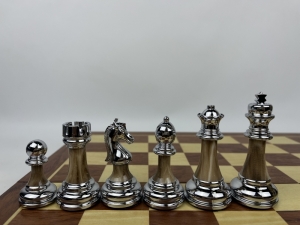
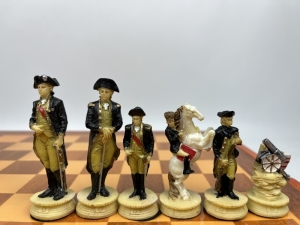
  • The size of the board when folded is 46x23x5 cm. The size of the board when unfolded is 35x35 cm. Cage size is 4.6x4.6 cm  The height of the king is 10 cm. The diameter of the base is 3 cm. Pawn height 5.5 cm. Base diameter 2.8 cm. Weight 1380 g. ART 123 Manufacturer Poland

    183.15 $
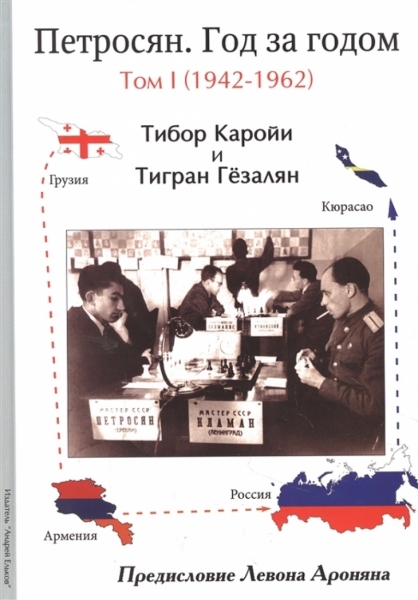
  • Author:
    Karoii

    50.00 $
  • Author:
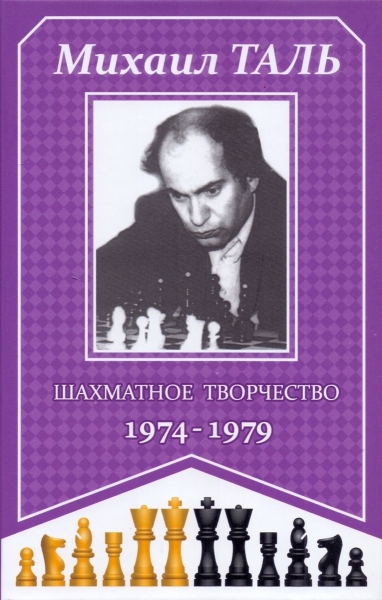
    Tal

    21.67 $
  • more

Books 1946-1990

  • book

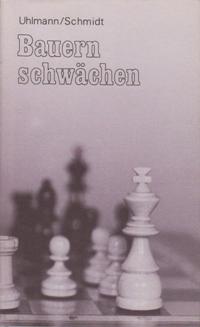
    Bauernschwächen entscheiden in unzähligen Schachpartien über Sieg und Niederlage. Jeder Spieler muß sich im praktischen Kampf wieder und immer wieder mit Bauernschwächen im eigenen und gegnerischen Lager auseinandersetzen. Deshalb kommt der vorliegenden fundamentalen Untersuchung von Bauernschwächen und allen damit zusammenhängenden Problemen höchste Bedeutung zu. Wolfgang Uhlmann, der bekannte Internationale Großmeister, hat seine in langjähriger Spielpraxis gewonnenen Erfahrungen in dieses Buch eingebracht, um für den Leser die Beschäftigung mit der Theorie so gewinnbringend und leicht wie nur irgend möglich zu machen. Anhand von 139 Partien aus der älteren und modernen Meisterpraxis wird das Thema Bauernschwächen erschöpfend abgehandelt. Die Autoren erörtern eingehend die drei Grundformen der Bauernschwächen: den isolierten Bauern, den rückständigen Bauern und den Doppelbauern. Die verschiedenen strategischen Zusammenhänge werden leichtverständlich herausgearbeitet und die davon für beide Spieler stellungsgerechten Pläne abgeleitet. Ausführlich dargelegt sind die engen Beziehungen zwischen Eröffnungssystemen und den Formen von Bauernschwächen. Auf diese Weise erfährt der Schachfreund alles, was er wissen muß, um feindliche Bauernschwächen optimal auszunutzen bzw. eigene Bauernschwächen bestmöglich zu verteidigen. Der Band ist übersichtlich und anschaulich angelegt, daß ihn Schachspieler jeglicher Spielstärke mit Gewinn nutzen können. Jedes Kapitel wird mit allgemeinen Gesichtspunkten zur Bewertung eingeleitet und ist nach sachlichen Gesichtspunkten sehr übersichtlich gegliedert. Über 230 Diagramme erhöhen die Anschaulichkeit. Den Abschluß bilden Partien mit Punktbewertung, so daß die Leser ihren Kenntnisstand und Wissenszuwachs selbst kontrollieren können.

  • book

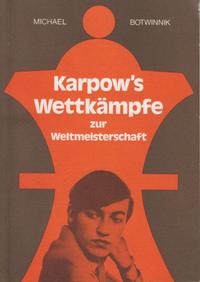
    Karpow´s Wettkämpfe zur Weltmeisterschaft - Originaltitel der russischen Ausgabe: "3 Spiele des Anatoly Karpow"