 Русский
  Английский
PERIODICALS
-
53.89 $
Riga Annual set 24 issues Ch. ed. – A. Gipslis If available in hardcover, additional payment is 400 rubles. per set
-
51.82 $
annual set of 12 issues Ch. ed. Averbakh Hardcover set for 400 rubles. more expensive
-
51.82 $
Annual kit. 52 issues Editor-in-Chief Petrosyan For a set in hardcover for 400 rubles. more expensive
-
51.82 $
annual set of 12 issues Ch. ed. Averbakh Hardcover set for 400 rubles. more expensive
-
51.82 $
Annual kit. 12 rooms. Head. ed. V. Ragozin If available in hardcover, additional payment of 400 rubles. per set
-
51.82 $
Annual kit. 12 rooms. Head ed. Yu. Averbakh If available in hardcover, additional payment of 400 rubles. per set
-
51.82 $
Annual kit. 12 rooms. Head ed. Yu. Averbakh If available in hardcover, additional payment of 400 rubles. per set
-
51.82 $
Annual kit. 12 rooms. Head ed. Yu. Averbakh If available in hardcover, additional payment of 400 rubles. per set
-

51.82 $
annual set of 12 issues For a set in hardcover for 400 rubles. more expensive
-
51.82 $
Annual kit Main ed. Petrosyan 52 issues For a set in hardcover for 400 rubles. more expensive
-

51.82 $
NIC Forum Readers from all over the world join in discussions of previous surveys. Both (grand) masters and club players shed their light on new discovery and search together for the truth. With contributions by Viktor Kortchnoi, Jose Vilela, Bogdan Lalic, and many others. Sosonko & Corner Editor Genna Sosonko was leafing through his old notebooks when he came across a venomous novelty he had used in a blitz game against John van der Wiel back in 1987. This provided enough ammunition for an article on the piece sacrifice Nc3-d5 often seen in the English Opening and of course the Sicilian. The final example is by Donner, who once more had his facts wrong. Book Review The ultimate "macho" opening repertoire consists of two openings: the Sicilian Najdorf against 1.e4 and the King & s Indian against everything else. In his previous column the Najdorf came under scrutiny, so it & amp; s somehow appropriate that it & amp; s now the turn of the King & s Indian to receive special attention. Chris Ward, Joe Gallagher and Andrew Martin. Glenn Fear reviews three new KID books by English masters who he has known for longer than he & amp; d care to say: Chris Ward, Joe Gallagher and Andrew Martin. 31 NIC Surveys Yearbook 74 Sicilian Defense: Nameless Variation 5.Bd3, by Fogarasi Sicilian Defense: English Attack, by Stohl Sicilian Defense: Sozin Variation, by Tukmakov Sicilian Defense: Velimirovic Attack, by Van der Weide Sicilian Defense: Sveshnikov Variation, by Morgado Sicilian Defense: Sveshnikov Variation, by Scherbakov Sicilian Defense: Taimanov Variation, by Mortensen Sicilian Defense: Grand Prix Attack, by Scherbakov French Defense: Winawer Variation, by Nikitin Caro-Kann Defense: Pseudo-Panov Attack, by Vilela Caro-Kann Defense: Fantasy Variation, by Gavrilov Scandinavian Defense: Main Line 5 ... Bg4, by Tiviakov Petroff Defense: Jaenisch Variation, by Tzermiadianos Ruy Lopez: Chigorin Variation, by Marin Ruy Lopez: Open Variation, by Van der Tak Italian Opening: Game Canal Variation, by Jeroen Bosch King & amp; Gambit: Classical Variation, by Jensen Slav: Krause Variation, by Karolyi Slav: Botvinnik Variation, by Olthof Slav: Semi-Slav Variation, by Ehlvest Catalan: Bogo-Indian Variation, by Lalic Nimzo-Indian Defense: Sdmisch Variation, by Lukacs / Hazai Nimzo-Indian Defense: Vienna Variation, by Scherbakov Nimzo-Indian Defense: Vienna Variation, by Van der Stricht Grünfeld Indian Defense: Anti-Grundfeld Variation, by Van der Tak Grünfeld Indian Defense: Exchange Variation, by Fogarasi King & s Indian Defense: Fianchetto Variation, by Greenfeld Benoni: The Snake, by Anka Benoni: Classical Variation, by Lukacs / Hazai Queen & amp; Pawn Opening: Trompowsky Attack, by Gavrilov Dutch Defense: Leningrad Variation, by Rogozenko
-

51.82 $
NIC Forum YB / 75: Readers from all over the world join in discussions of previous surveys. Both (grand) masters and club players shed their light on new discovery. With contributions by Ruslan Scherbakov and an afterthought by Viktor Kortchnoi, who solves an intriguing riddle around a 1963 game against Matanovic! Sosonko & Corner YB / 75: In this extended column, Genna Sosonko provides us with a bird's eye view of the enormous impact that Garry Kasparov has had on opening theory. From his younger years, through his famous World Championship matches with Karpov, right to his last novelties in Linares 2005. Kasparov's ringtone theory was revolutionary. He used his computer skills. The man from Baku could beat all his rivals with his home preparation, which was an extraordinary broad mixture of modern, ancient and half-forgotten opening lines. Kasparov has stopped playing chess, but his work was able to keep top grandmasters, who can not sit still for one week as it is, busy for years. And like many of his colleagues, Sosonko does not rule out a comeback ... Book Review YB / 75: Supply and demand has motivated a proficient writer Stefan Kindermann to write his 'The Spanish Exchange Variation' in English instead of his mother tongue, as Glenn Flear explains. Admiring its clarity, Flesh regrets that this book is too thin! In Konstantin Sakaev and Semko Semkov's profound ', in the Semi-Slav: ANTI-MERAN, Flear has spotted some amazing insights. And he finds Gary Lane's 'Ideas Behind Modern Chess Openings: Black' more relevant than Lane's version for White. Who could better review 'Play the Sicilian Dragon' by Edward Dear Sergey Tiviakov? Read his expert opinion, but you should read the book first! 33 NIC Surveys Yearbook 75 Sicilian Defense: Moscow Variation 3 ... Bd7, by Boersma Sicilian Defense: English Attack 6.Be3, by L & amp; Ami / Smeets Sicilian Defense: Sozin Variation 6.Bc4, by Van der Weide Sicilian Defense: Rauzer Variation 9 ... h6, by Avrukh Sicilian Defense: Rossolimo Variation 3 ... g6, by Greenfeld Sicilian Defense: Taimanov Variation 5 ... a6, by Langeweg Sicilian Defense: Paulsen Variation 6 ... Qb6, by Fogarasi Pirc Defense: Shirov Gambit 5.g4, by Olthof Pirc Defense: Austrian Attack 6.e5, by Afek Pirc Defense: Austrian Attack 6.Bd3, by Tzermiadianos King & amp; Fianchetto: Anti-Maroczy 4 ... d6, by Marin French Defense: Rubinstein Variation 4 ... Nd7, by Fogarasi Ruy Lopez: Anti-Marshall 8.d4, by Karolyi Ruy Lopez: Breyer Variation 9 ... Nb8, by Olthof Ruy Lopez: Open Variation 9.Be3, by Van der Tak Scotch Opening: Mieses Variation 8 ... Nb6, by Van der Wiel Scotch Opening: Classical Variation 4 ... Bc5, by Panczyk / Ilczuk Two Knights Defense: 5 ... Nd5, by De Zeeuw King & amp; Gambit: Bishop & amp; Gambit 3 ... Nc6, by Narings Various Openings: English Defense 3.e4, by Stohl Various Openings: Chigorin Defense 3 ... e5, by Karolyi Queen & amp; Gambit Declined: Blackburne Variation 5.Bf4, by Karolyi Queen & amp; Gambit Declined: Anti-Tartakower Variation 8.Qc2, by Morgado Slav Defense: Chameleon Variation 4 ... a6, by Lukacs / Hazai Slav Defense: Krause Variation 6.Ne5, by Lukacs / Hazai Slav Defense: Meran Variation 8 .... Bb7, by Nikitin Nimzo-Indian Defense: Classical Variation 4 ... c5, by Anka Nimzo-Indian Defense: Classical Variation 4 ... d5, by Van der Stricht Nimzo-Indian Defense: Queen-Nimzo Hybrid 6.Nd2, by Scherbakov Bogo-Indian Defense: 4.Bd2 Qe7, by Hansen Grünfeld Indian Defense: Exchange Variation 7.Nf3, by Van der Tak King & s Indian Defense: Fianchetto Variation 3.g3, by Dautov English Opening: Double Fianchetto Variation, by Marin
-
The life of a chess player in the system. Memories of the grandmaster
Author:
Averbah 45.00 $ -
 Три матча Ботвинник-Смыслов
Author:
Три матча Ботвинник-Смыслов
Author:
Botvinnik 45.00 $ -
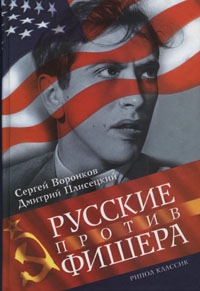 Russians vs Fisher
Author:
Russians vs Fisher
Author:
Voronkov 65.00 $ -
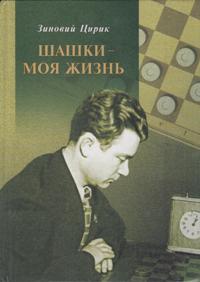 Checkers is my life
Author:
Checkers is my life
Author:
Ciric 87.50 $ -
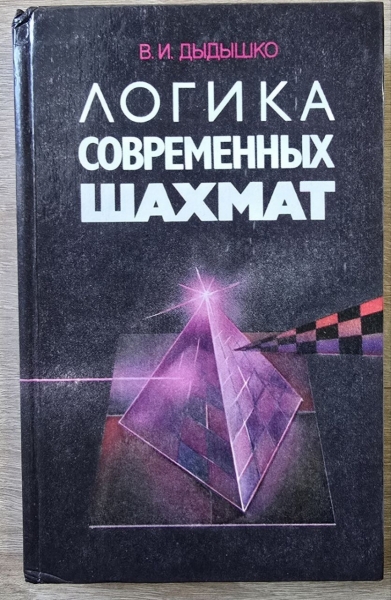 The logic of modern chess
Author:
The logic of modern chess
Author:
Dydyshko 72.50 $ -
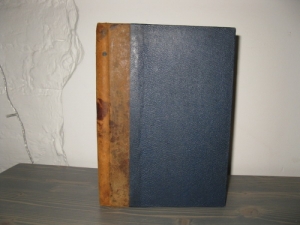 Siegbert Tarrasch. The Queen
Author:
Siegbert Tarrasch. The Queen
Author:
Tarrash 72.50 $ -
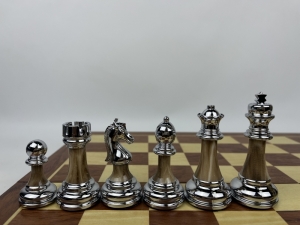 High quality acrylic metal heavy chess pieces with wooden board
202.50 $
High quality acrylic metal heavy chess pieces with wooden board
202.50 $
-
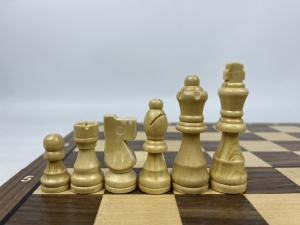 Wooden magnetic Staunton chess with a lock (silver)
56.25 $
Wooden magnetic Staunton chess with a lock (silver)
56.25 $
-
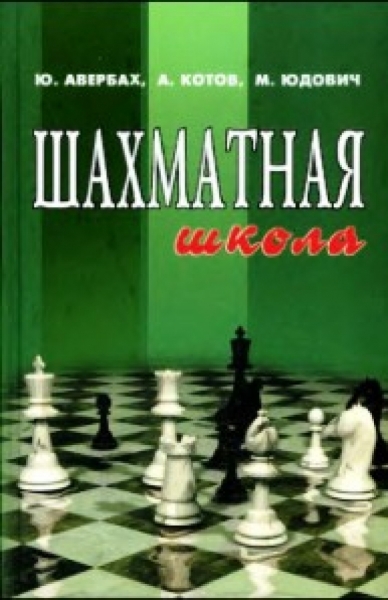 Chess school
Author:
Chess school
Author:
Averbah 15.00 $ -
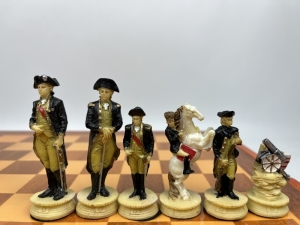 The chess set of The Chessmen. US war - Great Britain
325.00 $
The chess set of The Chessmen. US war - Great Britain
325.00 $