 Русский
  Английский
eBay items
-

59.00 $
Chess Book in 3 volumes: Title: World Chess Championship Matches. 3 vols.Editor-In-Chief: Igor Berdichevsky Language: English, German, Spanish, Russian Binding: Hardcover Publisher: Moscow, Russian Chess House, 2021 311 + 327 + 295 pages Kirsan Ilyumzhinov: «This three-volume anthology contains the collected and annotated games of all the matches for the world chess championship between 1886 and 1998. In the overwhelming majority of cases, these matches were battles between genuine chess giants. In 1947 the organization of the world championships, including qualifying competitions, was taken on by the International Chess Federation (FIDE). This strengthened both the prestige of the title itself, and also the prestige of FIDE, which competently arranged these events for half a century. Among the games presented in this work are a number of genuine masterpieces, the study of which will afford great pleasure to lovers of the game. It can be confidently stated that this publication gives the most vivid impression of the state of chess skill and chess knowledge at various stages in the history of our game throughout the last hundred years. Such material cannot age and cannot be consigned to oblivion»
-
13.00 $
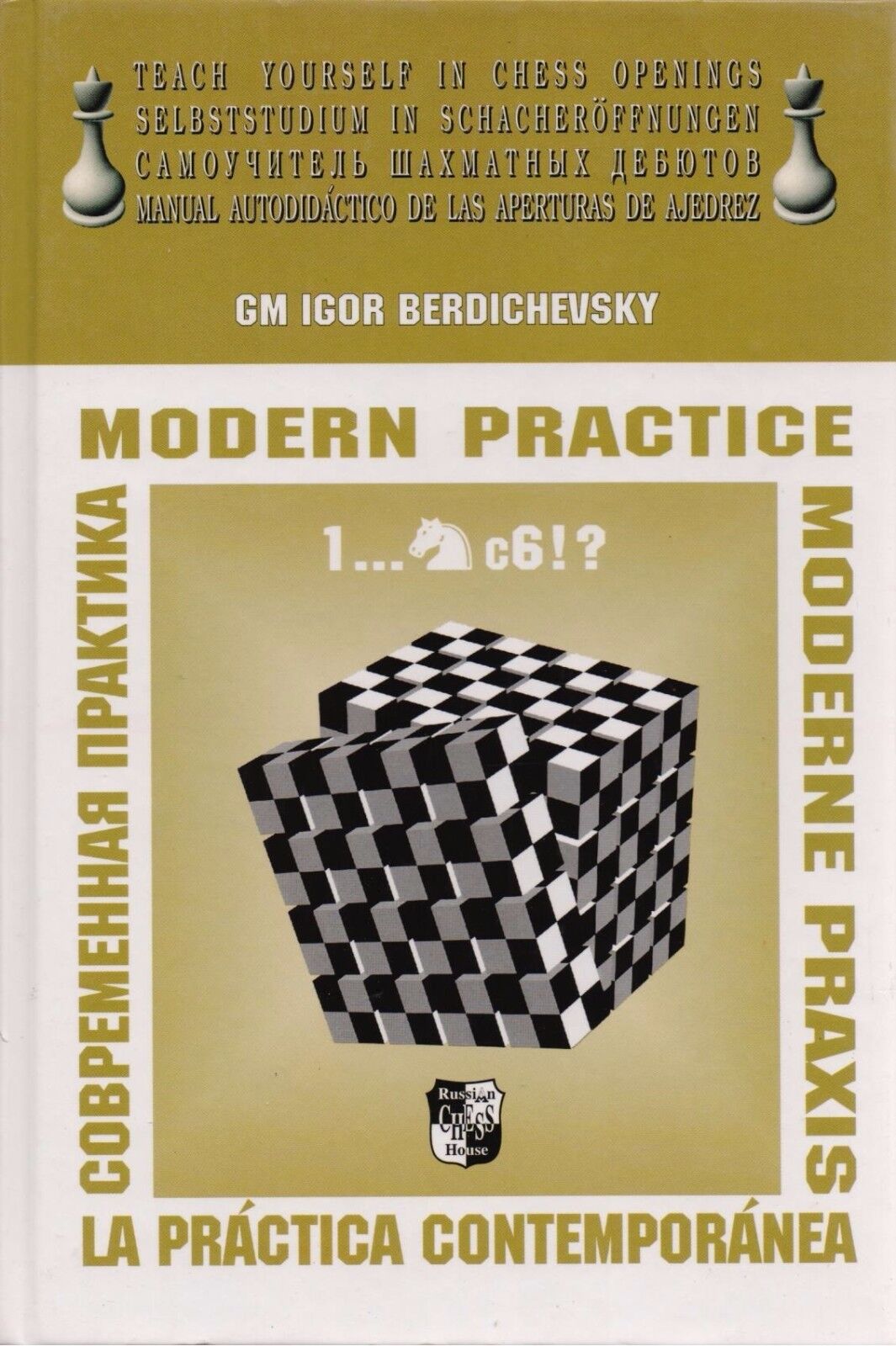
Russian Chess Book: Author: Igor Berdichevsky Title: Modern Practice. 1 … Nc6!?Language: English, German, Spanish, RussianBinding: HardcoverPublisher: Moscow, Russian Chess House, 2004 200 pages
-
10.00 $
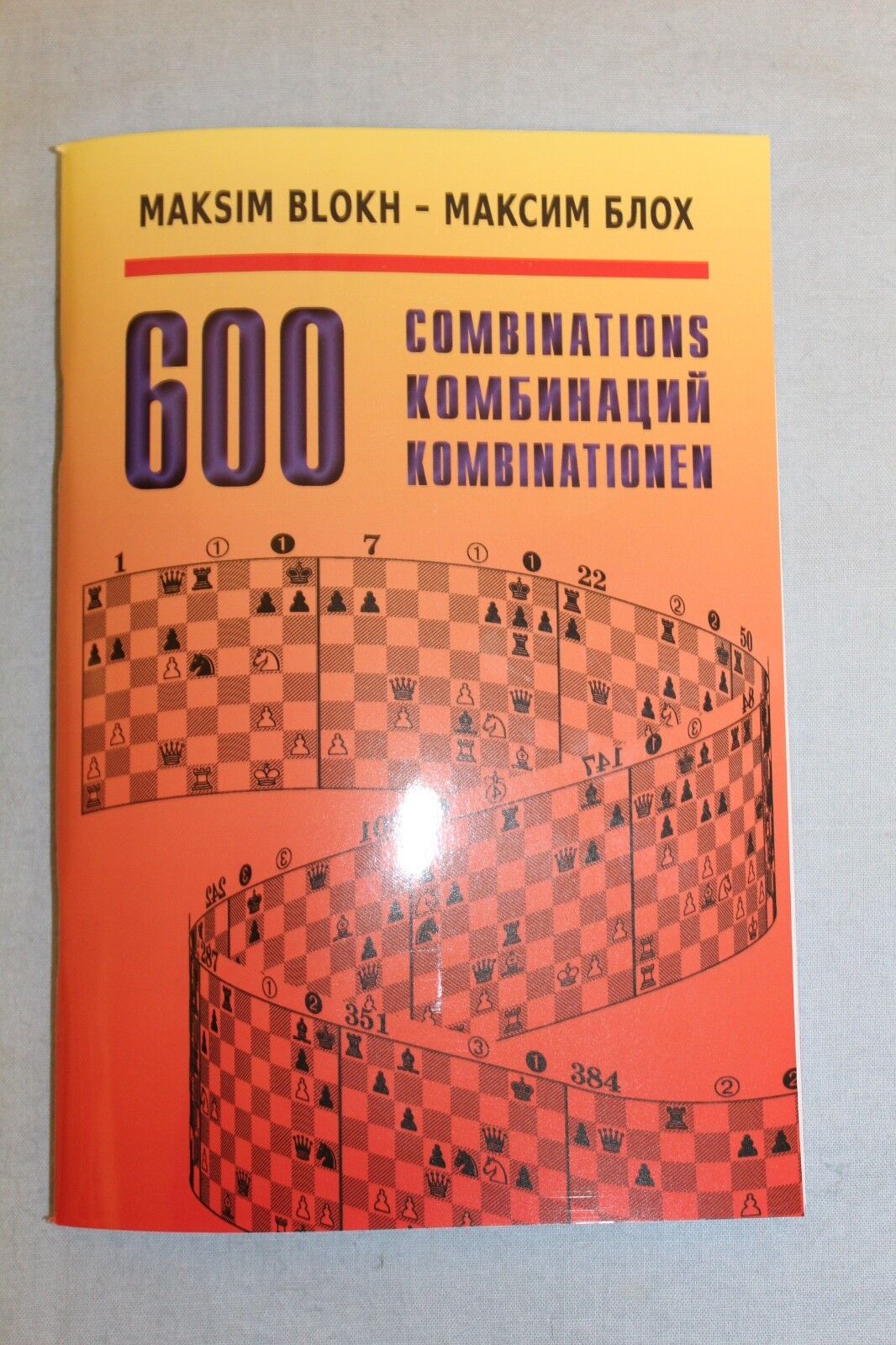
Author: Maksim BlokhTitle: 600 Chess CombinationsPublished: Russian Chess House Publishing House, Moscow 2019Binding: PaperbackLanguage: English, Russian, German (The foreword and the index only in English and Russian)Pages: 96This book of chess exercises has been written by an experienced coach, Maksim Blokh, an International Correspondence Grandmaster. It contains more than 600 exercises, classified by combinative motifs. This carefully planned approach aids the development of combinative vision and enables the book to be used as a chess manual. The exercises are distinguished by a tense fight, and usually there is only one way to the goal.The book is intended for ordinary schools and colleges, as well for specialist chess courses, and it can also be used as a self-tutor. In both cases a certain basic chess knowledge is assumed.Dieses Schach-Übungsbuch wurde vom ICCF-Großmeister Maksim Bloch geschrieben. Es enthält mehr als 600 Übungen, die nach verschiedenen kombina-torischen Motiven geordnet sind. Dieser kluge Ansatz erleichtert den Prozess der Entwicklung des kombinatorischen Sehens, das Buch kann vom Leser sehr gut als Handbuch verwendet werden.Die Übungen sind durch spannende Lösungen charakterisiert, und normalerweise gibt es nur einen Weg, der zum Ziel führt. Das Buch ist für spezielle Schach-gruppen in Mittel- und Hochschulen geeignet und kann auch zum Selbststudium verwendet werden. In beiden Fällen ist ein bestimmtes schachliches Anfangs-wissen notwendig. FOREWORDDear chess friends! One of the most important components of chess mastery is the ability to conduct a tactical fight. Therefore it is essential to study the theory of chess tactics, to develop your combinative vision, and to improve the technique of calculating variations. In this book the author continues his researches in this field, which were initiated in his previous books (1200 Combinations; The Art of Combination; and Chess Manual). This book is devoted to a classification of combinative motifs (weaknesses in the position, and also features of the placement and coordination of the pieces) which suggest the possibility of finding and carrying out a combination. Such a classification enables the book to be used not only as a set of exercises, but also as a manual. The detailed table of enables trainers to select examples for instruction, while for less experienced players it can serve as a subtle hint in case of difficulties. For successful work with the book, a certain level of knowledge of basic tactical methods is required. Therefore I strongly recommend, particularly younger readers, to first study the chapter ‘Basics of Chess Tactics’ in my Chess Manual. Most of the 384 positions offered here are so sharp, that only a single solution for White exists when it is him to move, while Black, when it is him to move, can also achieve success in a single possible way! (Incidentally, in some positions the second player carries out a combinative motif relating to another section of the book). Hence the total number of combinations exceeds 600. The author has endeavoured to gather positions that are characterised by a unique solution (therefore some positions from practical games have been slightly modified), creative richness, and instructive value. Positions that are given without mentioning their source have been composed by the author and used by him in his classes for young players. The numeric value in circles (at the top right of every diagram) indicates its level of complexity. The author recommends first trying to find a solution, making written notes, but without moving the pieces on the board. Those examples that could not be solved at the first attempt should be thoroughly studied later, after the first reading of the book is completed. I hope that you will enjoy the book and substantially improve your play through studying it. Later you may wish to study my more detailed book Combinative Motifs, on the same topic, which contains 1206 diagrams with exercises. Maksim BIokh
-
50.00 $
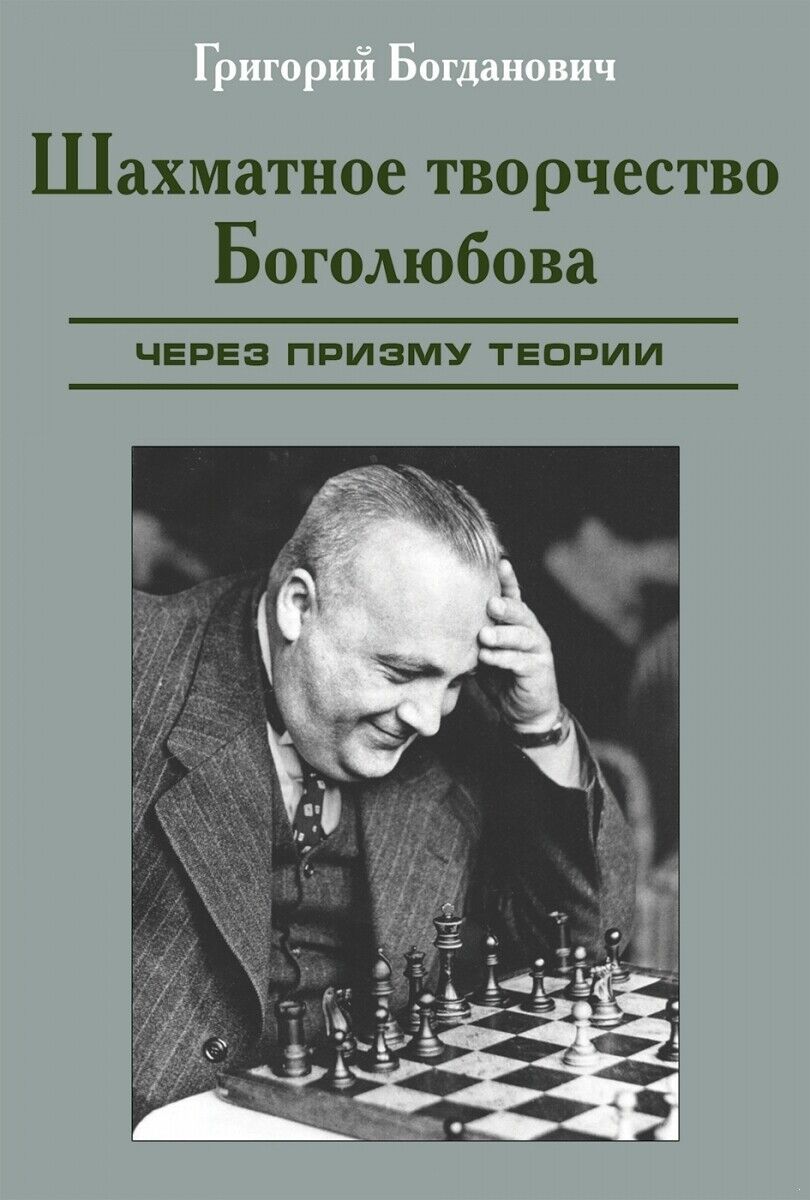
Title: Bogolubov's Chess Creativity Through the Prism of TheoryPublisher: Andrey ElkovAuthor(s): BogdanovichLanguage: RussianBinding: HardcoverFormat: LargeVolume: 720Date: 2021The first major work dedicated to the remarkable chess player Efim Dmitrievich Bogolyubov, who twice played a match for the title of world champion. Bogolyubov's work is not widely represented in chess literature. Meanwhile, the chess legacy of one of the greatest chess players of the first half of the twentieth century is a storehouse of chess ideas and techniques.The first part of the book is a biographical sketch, supplemented by rare, previously unknown documents and photographs. In the second part, where the chess creativity of Bogolyubov is considered, his creative portrait is given. Bogolyubov's work is so many-sided that you can choose an example from his games on any topic of General chess theory.Detailed comments and distribution of material by topic make the book a real textbook.
-
29.00 $
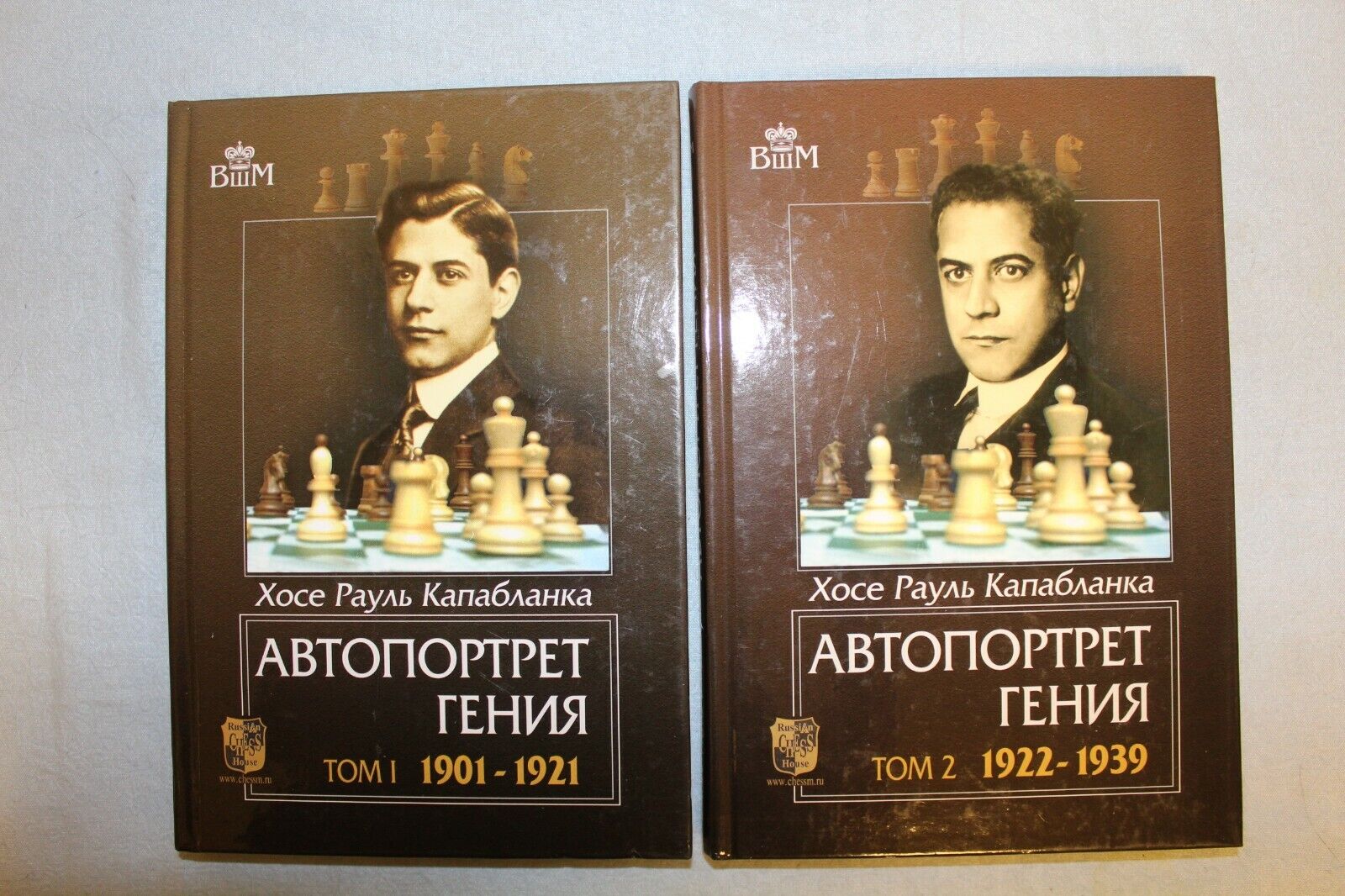
Editor: S. VoronkovTitle: J. R. Capablanca. Self-Portrait of a GeniusPublished: Russian Chess House, MoscowBinding: HardcoverLanguage: RussianPages: 262Capablanka doesn't have a book called "self-portrait Of a genius". And yet it is all - from beginning to end - written by him! This two-volume is truly unique. It contains for the first time all the games of the third world champion with his own comments, which have passed the computer test "Kasparov", as well as memories, interviews, articles, reviews and notes of capablanka, mostly translated into Russian, too, for the first time (as a great essay by O. Chagodaeva "Young years of capablanka"). In fact, it is "My chess career", only covering the entire creative path of the great Cuban!Thus, in front of you and the wonderful tutorial chess, and one of a kind autobiography of Capablanca.The first volume covers the period from 1901 to 1921, including a match with Marshall, tournaments in San Sebastian and St. Petersburg, as well as a world championship match with Lasker.The drafters of S. Voronkov and M. Sokolov.
-
10.00 $
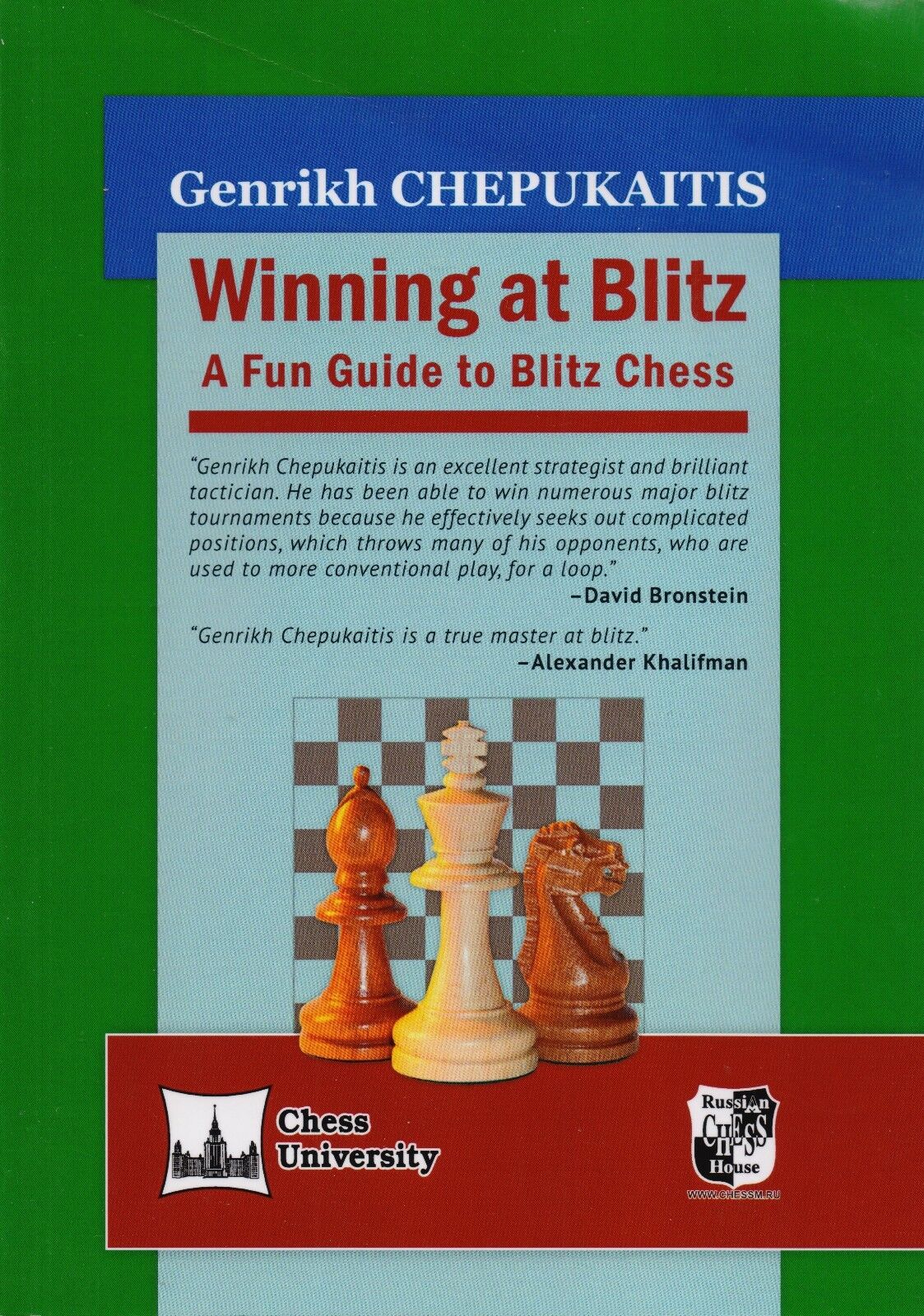
Chess Book: Author: Genrikh Chepukaitis Title: Winning at Blitz. A Fun Guide to Blitz ChessLanguage: English Binding: Softcover Publisher: Moscow, Russian Chess House, 2016 110 pages Abstract. David Bronstein: «Genrikh Chepukaitis is an excellent strategist and brilliant tactician. He has been able to win numerous major blitz tournaments because he effectively seeks out complicated positions, which throws mane of nis opponents, who are used to more conventional play, for a loop»
-
9.00 $
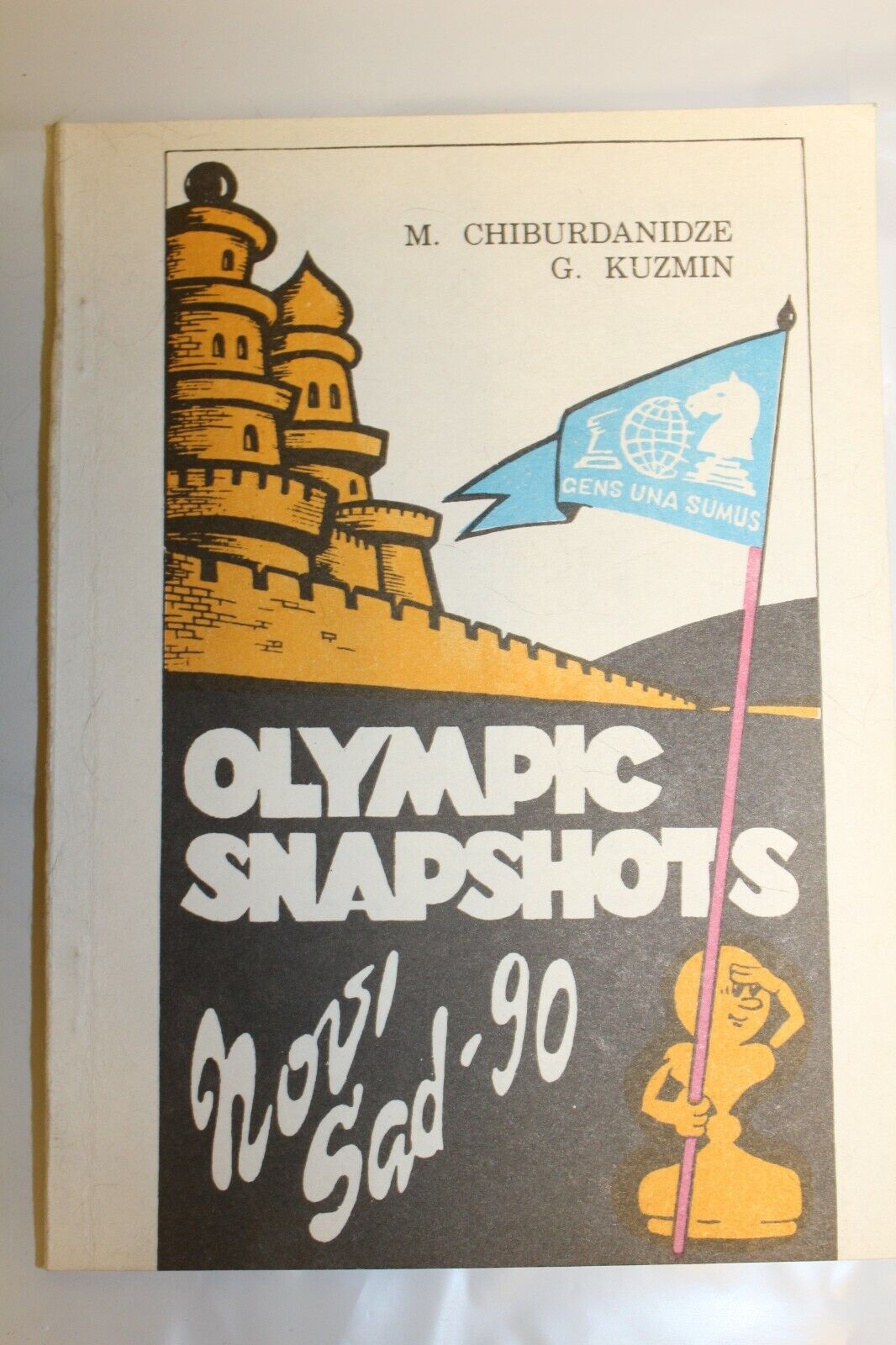
Author: M. Chiburdanidze, G. KuzminTitle: Olympic Snapshots, Novi Sad - 90Published: Togliatty 1991Binding: SoftcoverLanguage: EnglishPages: 140Selection of interesting and instructive games played at the 29th World Chess Olympiad in Novi Sad, Yugoslavia, 1990The book is new but has signs of wear from a long storageArt MN
-
35.00 $
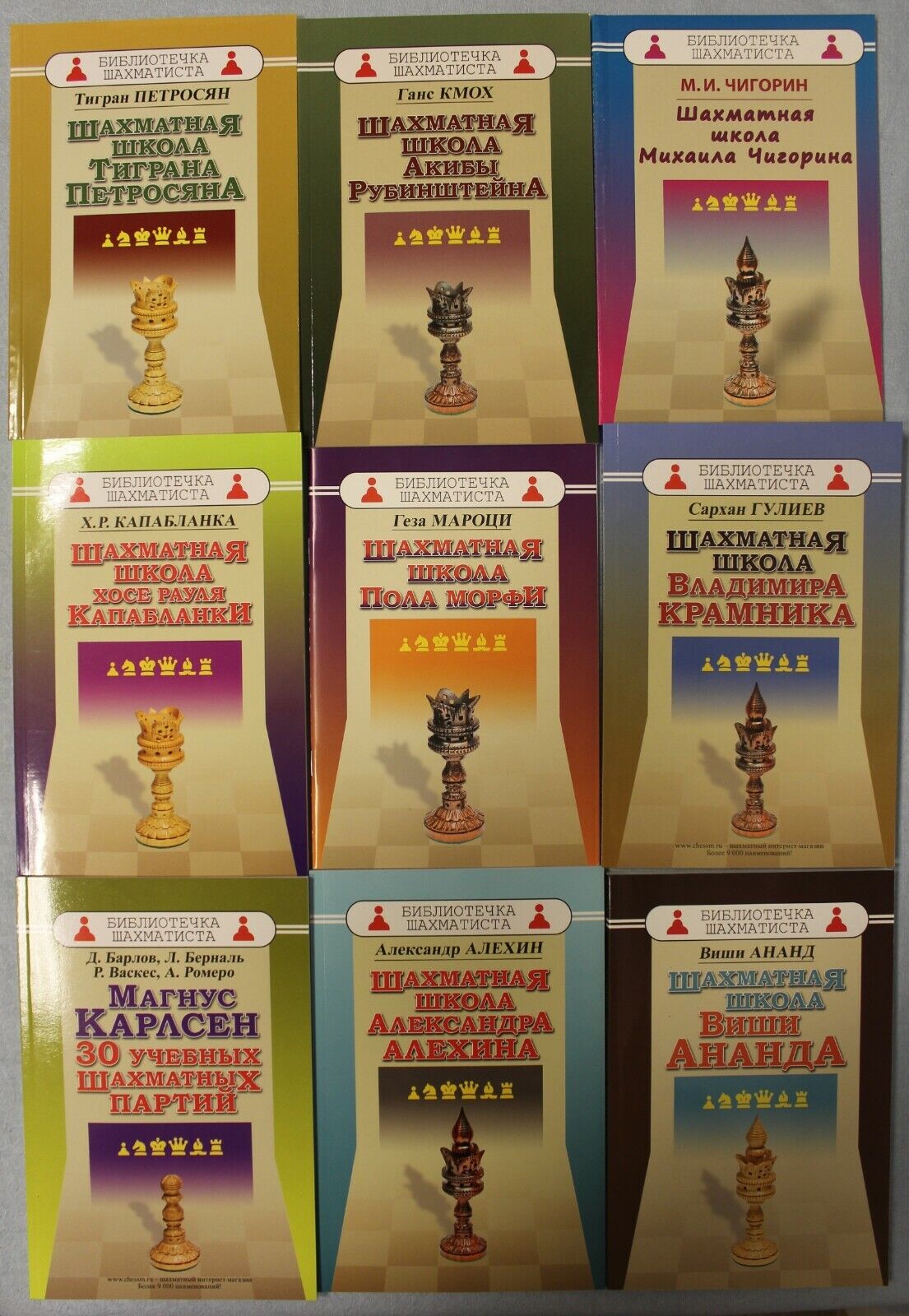
The Set of 9 Books: Chess Player Library SeriesPublisher: Russian Chess House1. Tigran Petrosyan's Chess SchoolAuthor(s): T. PetrosyanYear of issue: 2018Format: NormalPages: 112Binding: SoftThe work of the ninth world champion Tigran Petrosyan is a bright and original page of chess art. Petrosyan's unique style of play was distinguished by strategic depth, subtle understanding of the position and inimitable art of prevention. However, the ninth world champion had an excellent sense of dynamics and sharp combinational vision, as evidenced by the numerous parties-diamonds included in this collection.The works of T. Petrosyan, commented by himself, will be an excellent tool for readers to study the positional game. For educational purposes, the parties are divided into thematic sections, each of which is preceded by a brief introduction.2. Akiba Rubinstein's Chess SchoolAuthor(s): Kmoch Year of issue: 2018Language: RussianFormat: NormalPages 88Binding: SoftBrilliant Polish grandmaster Akiba Rubinstein made zna-contribution to the development of chess art. Posie principles-tional school V. Stanicek proclaimed and developed in the writings ofZ. Tarrasch, has reached its perfect harmonious embodimentin the work of the "great Akiba".30 batches of Rubinstein, characterized by extreme clarity and La-konechnostey constitute the "essence" of creative achievementsgreat Maestro. They are without a doubt an excellent schoolpositional play and deliver great aesthetic pleasurechess fan.For educational purposes, the material is divided into thematic sections.For a wide range of chess fans.3. Chess school of Mikhail ChigorinAuthor(s): ChigorinLanguage: RussianFormat: NormalPages: 88Binding: SoftYear of issue: 2017The name of M. I. Chigorin is inscribed in the history of chess art in gold letters. The work of the outstanding Russian master, who had a great influence on the next generation of chess players, still amazes with its beauty and richness of ideas. 30 parties Chigorin, we offer the reader, are the "essence" of the creative achievements of the Russian masters. In order to give the material a training orientation, the parties are divided into thematic sections "Attack", "Strategy", "Endgame", "Debut prophecies". The book will be useful to all chess fans, as well as qualified chess players and coaches.4. Jose Raul Capablanca's Chess SchoolAuthor(s): CapablancaLanguage: RussianFormat: NormalPages: 112Binding: Softyear of issue: 2018The creativity of the third world champion Jose Raul Capablanca isone of the brightest pages of chess art.On the technical perfection of the game Cuban genius, his consummate lift-way-togendai intuition and quick thinking were legends. Capab-Lanka has achieved in his work a harmonious combination of deep posture-strategy and combinational skill. Even in the endgamethe technique of "chess machine" was colored "small" com-binations.30 parties Capablanca with his own review, feature-corresponding clarity and brevity, make "kvintes-sentia" creative achievements of the great Maestro. They are, without a doubt,will bring great aesthetic pleasure to chess fans.For educational purposes, the parties are divided into thematic sections, eachof which is prefaced by a brief introduction.5.Paul Morphy's Chess SchoolAuthor(s): MaroqiLanguage: RussianFormat: NormalPages: 48Binding: Softyear of issue: 2017The name of the outstanding American chess player Paul Morphy is covered with legendary fame. Just three years (1857-1859) Morphy acted on the official chess scene, proving his clear superiority over the best masters of the New and Old world and becoming, in fact, "uncrowned" world champion. 30 games of one of the greatest chess geniuses of all time, offered to the reader, are the most vivid productions of Morphy and, without a doubt, will bring great aesthetic pleasure to chess fans. For educational purposes, the parties are divided into thematic sections, each of which is preceded by a brief introduction. According to most experts, classical chess education is unthinkable without studying the work of Morphy, as it is from him that the chess world has learned the correct understanding of the game. His games will be extremely useful and interesting to learn chess - tist of any qualification, from beginner to master.6. Chess School of Vladimir KramnikAuthor(s): GulievLanguage: RussianFormat: NormalPages: 176Binding: SoftYear of issue: 2019The fourteenth world champion Vladimir Kramnik is a bright representative of the classical direction in chess art. In his work harmoniously combines a subtle understanding of the position, impeccable possession of combination weapons and honed endgame technique. 30 games of V. Kramnik, presented in this book and commented on by grandmaster S. Guliyev, will give readers great aesthetic pleasure. For educational purposes, the parties are divided into thematic sections, each of which is preceded by a brief introduction7. Chess School of World Champion Magnus CarlsenAuthor(s): Barlov, Bernal, Vasquez, CoYear of issue: 2018Language: RussianFormat: NormalPages: 472Binding: SoftThe book is devoted to the work of the strongest chess player of our time-nosti, the world champion, the owner of the highest rating MagnusCarlsen.The emphasis is on the educational component. A separate Chapter devoted to-Sena frequently used Norwegian genius this subtle reception,as the "positional pawn sacrifice". Another Chapter analyzes the Evo-Lucius of Carlsen's chess ideas. His elected parties are givenwith detailed comments of grandmasters (more than 100 examples),including discussed matches for the world championship, including the winningthe match of 2016 against Sergey Karyakin.This work, according to the Spanish publishers of this book, is excellentcomplements the work of A. Mikhalchishin and O. Stetsko "60 parties of the leader of the owls-belt chess."For a wide range of chess players.8. Alexander Alekhine's Chess SchoolAuthor(s): AlekhineLanguage: RussianFormat: NormalVolume: 104Binding: SoftYear of issue: 201830 elected parties of Alexander Alexandrovich Alekhine, included-these in this collection are the real gems of chess.creativity, in all its brilliance revealing a bright combination offantasy, fine strategic skills, filigree endgame-ing equipment and consummate art commentary fourthworld champion.Studying the work of the Russian chess genius, you will certainly rise-sit your skills and get great aesthetic pleasure.For educational purposes, the parties are divided into thematic sections, eachof which is prefaced by a brief introduction.9. Vichy Anand's Chess SchoolAuthor(s): AnandYear of issue: 2018Language: RussianPages: 160Binding: SoftFive-time world champion Vishy Anand for the past three decades WMOs-dit is among the strongest players in the world. His initiative,beautiful style of play, as well as impeccable sports quality,we have won the hearts of many chess fans.Thirty parties included in this book will deliver to readers not onlygreat aesthetic pleasure. Special methodological valuepresent the comments of the Indian grandmaster, harmoniouslycombining General reasoning and concrete analysis.For educational purposes, the parties are divided into thematic sections.For a wide range of chess fans.
-
40.00 $
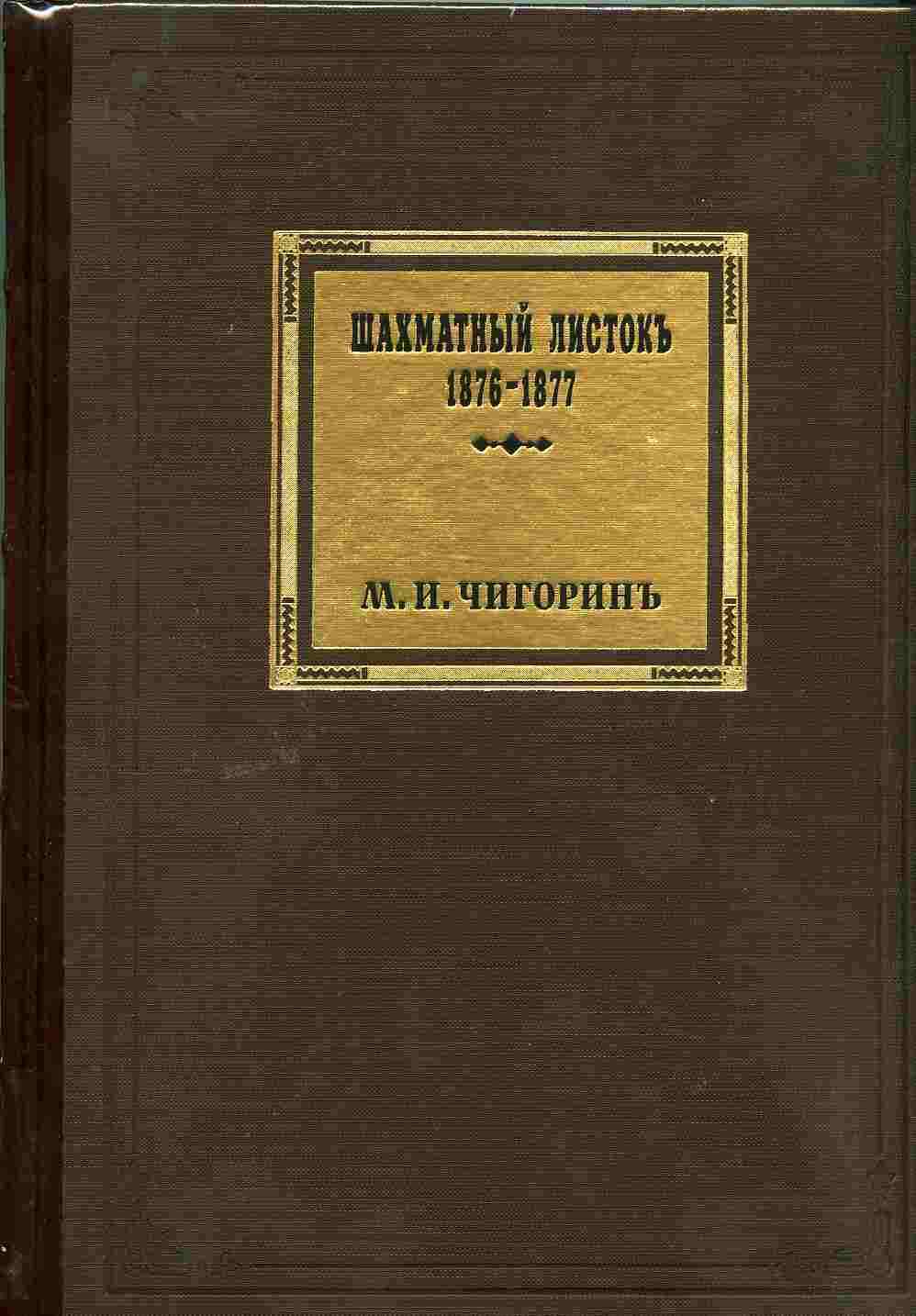
The first volume includes two years: 1876-1877 (was published in 3 volumes)Publisher: Russian Chess HouseAuthor(s): ChigorinFormat: enlarged format552 pages.Cover: Hardcover with gold and blind embossing, book marks , paper antiqueDate: 2010Description:A monthly magazine dedicated to the game of chess and its literature. Published By M. Chigorin 1876-1877. St. Petersburg, Russia. Printing House Of V. O. Demakov.The great Russian chess player, the founder of the Russian chess school Mikhail Ivanovich Chigorin for ten years published the magnificent magazines "Chess leaf" (1876-1881) and "Chess Bulletin" (1885-1887). He was the main and sometimes the only author there. Needless to say, these most striking examples of Russian chess thought have long been virtually inaccessible to modern readers. Thanks to this work, it is possible to get acquainted with our priceless chess, historical and literary heritage."It is pleasant to note that the luxurious, elite performance of this three - volume edition has no analogues in the world chess literature, "writes multiple world champion Anatoly Karpov in" Word to the reader".The first volume includes two years: 1876-1877.WORD TO THE READER"Chigorin is the founder of the Russian chess school, an outstanding theorist, and a contender for the world crown." How often we had to read and hear these words, which from frequent use were lost, began to seem an empty banality. Meanwhile, Mikhail Ivanovich Chigorin (1850-1908) was really the brightest creative personality. A gambling, fascinating person, he spared no effort and time to find the truth of chess, to solve the mysteries of an intricate opening or seemingly simple endgame position. In those early years, universality had not yet become a "vital necessity" in chess, and therefore every major master had a clearly defined individual style, with its own advantages and disadvantages. The Russian champion believed in the dynamic potential of figures, aspired to an open figure game, and willingly sacrificed material for initiative. His powerful opponent, Wilhelm Steinitz, put unshakable positional values above all else: the reliability of the pawn structure, the predominance in the center, the preponderance in space. Chigorin and Steinitz played two matches for the world championship, a lot of tournament and light games, but their fundamental dispute was not only at the chessboard. Polemically sharp, uncompromising discussions of these titans and their followers graced the pages of Newspapers and magazines of those years.Chigorin passionately loved chess, and he was depressed by the lack of public interest in this wise game in our country. He wanted to prove that chess is not an empty sport; it can become a life's work, a real profession. To show chess in the most favorable light and attract the attention of an enlightened public, Chigorin for ten years published, mostly at his own expense, the magazines "Chess leaf" (1876-81) and "Chess Bulletin" (1885-87). He was the main and sometimes the only author there. Needless to say, these most striking examples of Russian chess thought have long since become a bibliographic rarity.The modern reader is spoiled by an abundance of chess literature. However, without the historical aura that envelops the creative essence of the chess player, our inner world would be much poorer. The Russian chess house publishing house performs a real feat, giving everyone the opportunity to get acquainted with our priceless chess, historical and literary heritage. It is pleasant to note that the luxurious, elite performance of this four-volume edition has no analogues in the world chess literature.Anatoly Karpov,multiple world championThe great Russian chess player, the founder of the national chess school Mikhail Ivanovich Chigorin for ten years published the magnificent magazines "Chess leaf" (1876-1881) and "Chess Bulletin" (1885-1887). He was the main and sometimes the only author there. Needless to say, these most striking examples of Russian chess thought have long been virtually inaccessible to modern readers. Thanks to this work, it is possible to get acquainted with our priceless chess, historical and literary heritage.
-
140.00 $
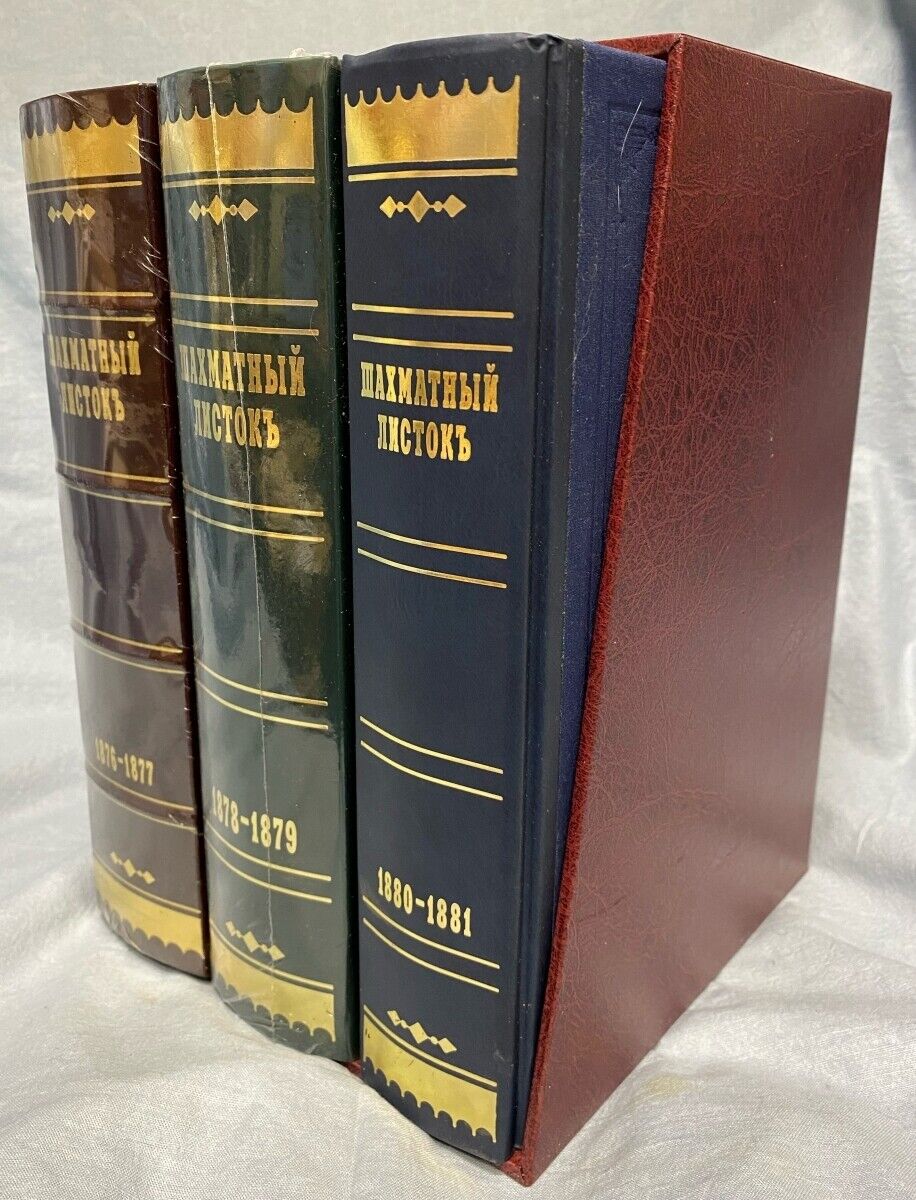
The first volume includes two years: 1876-1877 (was published in 3 volumes)Publisher: Russian Chess HouseAuthor(s): ChigorinFormat: enlarged format552 pages.Cover: Hardcover with gold and blind embossing, book marks , paper antiqueDate: 2010The second volume includes two years: 1878-1879 (was published in 3 volumes)ISBN: 978-5-94693-469-5Publisher: Russian Chess HouseAuthor(s): ChigorinYear of release: 2019Language: RussianFormat: EnlargedPages: 616Cover: Hardcover with gold and blind embossing, book marks , paper antiqueDate: 2019The third volume includes two years: 1880-1881 (was published in 3 volumes)SBN: 978-5-94693-646-0Publisher: Russian Chess HouseAuthor(s): ChigorinYear of release: 2019Language: RussianFormat: EnlargedVolume: 520Cover: Hardcover with gold and blind embossing, book marks , paper antique
-
50.00 $
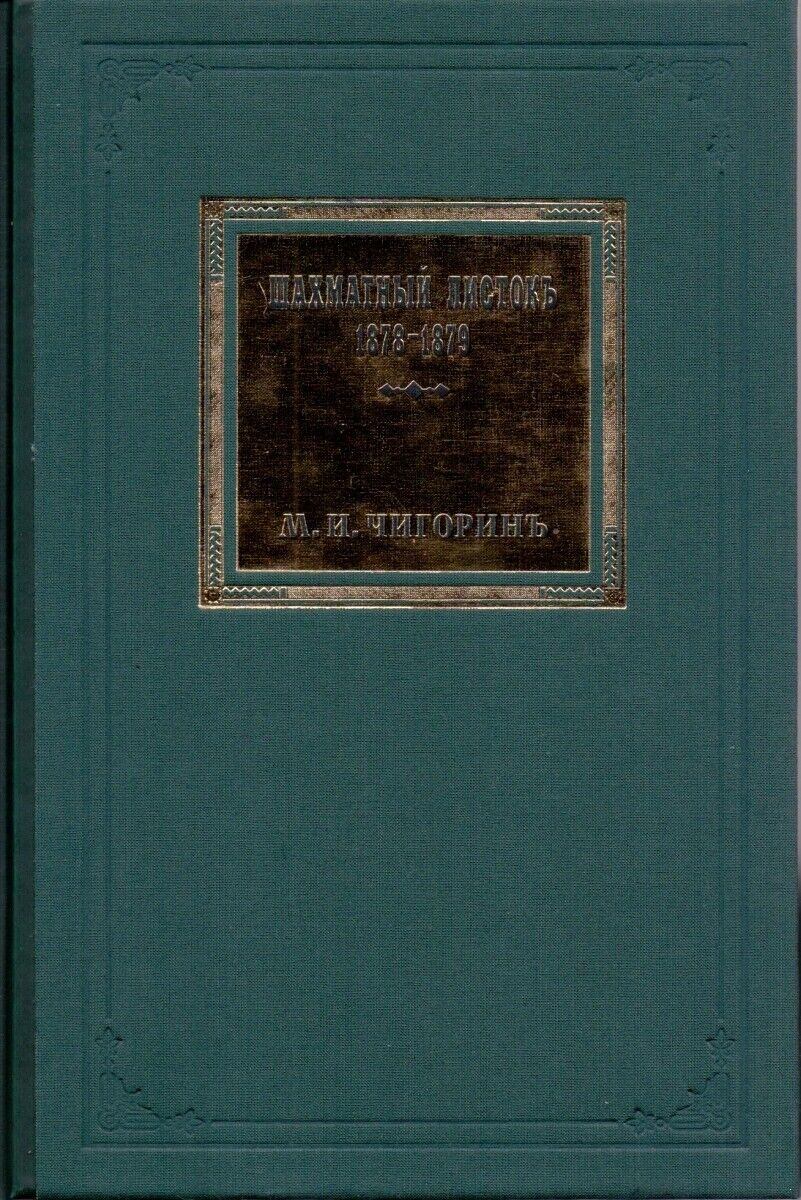
The second volume includes two years: 1878-1879 (was published in 3 volumes)ISBN: 978-5-94693-469-5Publisher: Russian Chess HouseAuthor(s): ChigorinYear of release: 2019Language: RussianFormat: EnlargedPages: 616Cover: Hardcover with gold and blind embossing, book marks , paper antiqueDate: 2019A monthly magazine dedicated to the game of chess and its literature. Published By M. Chigorin 1878-1879. St. Petersburg, Russia. Printing House Of V. O. Demakov.The great Russian chess player, the founder of the national chess school Mikhail Ivanovich Chigorin for ten years published the magnificent magazines "Chess leaf" (1876-1881) and "Chess Bulletin" (1885-1887). He was the main and sometimes the only author there. Needless to say, these most striking examples of Russian chess thought have long been virtually inaccessible to modern readers. Thanks to this work, it is possible to get acquainted with our priceless chess, historical and literary heritage."It is pleasant to note that the luxurious, elite performance of this three - volume edition has no analogues in the world chess literature, "writes multiple world champion Anatoly Karpov in" Word to the reader".The second volume includes two years: 1878-1879.WORD TO THE READER"Chigorin is the founder of the Russian chess school, an outstanding theorist, and a contender for the world crown." How often we had to read and hear these words, which from frequent use were lost, began to seem an empty banality. Meanwhile, Mikhail Ivanovich Chigorin (1850-1908) was really the brightest creative personality. A gambling, exciting person, he spared no effort and time to find the truth of chess, to solve the mysteries of an intricate opening or seemingly simple endgame position. In those early years, universality had not yet become a "vital necessity" in chess, and therefore every major master had a clearly defined individual style, with its own advantages and disadvantages. The Russian champion believed in the dynamic potential of figures, aspired to an open figure game, and willingly sacrificed material for initiative. His powerful opponent, Wilhelm Steinitz, put unshakable positional values above all else: the reliability of the pawn structure, the predominance in the center, the preponderance in space. Chigorin and Steinitz played two matches for the world championship, a lot of tournament and light games, but their fundamental dispute was not only at the chessboard. Polemically sharp, uncompromising discussions of these titans and their followers graced the pages of Newspapers and magazines of those years.Chigorin passionately loved chess, and he was depressed by the lack of public interest in this wise game in our country. He wanted to prove that chess is not an empty sport; it can become a life's work, a real profession. To show chess in the most favorable light and attract the attention of an enlightened public, Chigorin for ten years published, mostly at his own expense, the magazines "Chess leaf" (1876-81) and "Chess Bulletin" (1885-87). He was the main and sometimes the only author there. Needless to say, these most striking examples of Russian chess thought have long since become a bibliographic rarity.The modern reader is spoiled by an abundance of chess literature. However, without the historical aura that envelops the creative essence of the chess player, our inner world would be much poorer. The Russian chess house publishing house performs a real feat, giving everyone the opportunity to get acquainted with our priceless chess, historical and literary heritage. It is pleasant to note that the luxurious, elite performance of this four-volume edition has no analogues in the world chess literature.Anatoly Karpov,multiple world championThe great Russian chess player, the founder of the national chess school Mikhail Ivanovich Chigorin for ten years published the magnificent magazines "Chess leaf" (1876-1881) and "Chess Bulletin" (1885-1887). He was the main and sometimes the only author there. Needless to say, these most striking examples of Russian chess thought have long been virtually inaccessible to modern readers. Thanks to this work, it is possible to get acquainted with our priceless chess, historical and literary heritage.
-
50.00 $
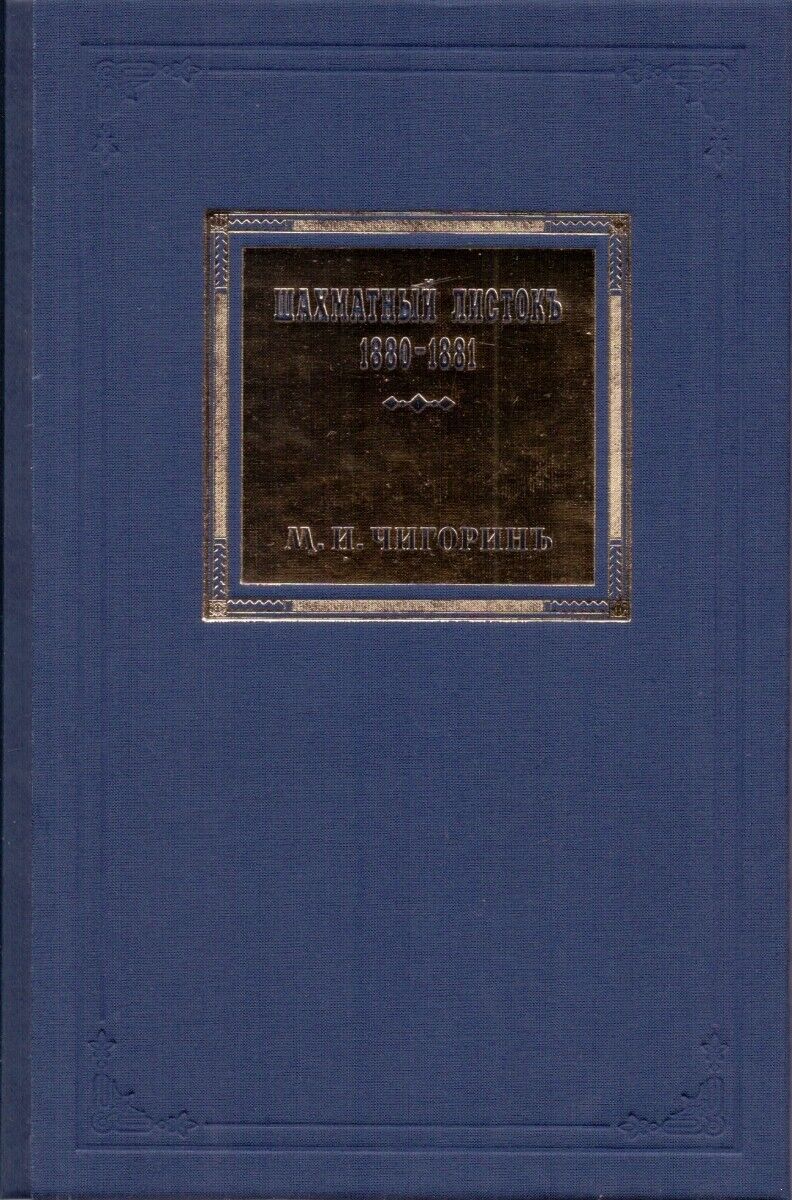
The third volume includes two years: 1880-1881 (was published in 3 volumes)SBN: 978-5-94693-646-0Publisher: Russian Chess HouseAuthor(s): ChigorinYear of release: 2019Language: RussianFormat: EnlargedVolume: 520Cover: Hardcover with gold and blind embossing, book marks , paper antiqueDescription:A monthly magazine dedicated to the game of chess and its literature. Published By M. Chigorin 1880-1881. St. Petersburg, Russia. Printing House Of V. O. Demakov.The great Russian chess player, the founder of the national chess school Mikhail Ivanovich Chigorin for ten years published the magnificent magazines "Chess leaf" (1876-1881) and "Chess Bulletin" (1885-1887). He was the main and sometimes the only author there. Needless to say, these most striking examples of Russian chess thought have long been virtually inaccessible to modern readers. Thanks to this work, it is possible to get acquainted with our priceless chess, historical and literary heritage."It is pleasant to note that the luxurious, elite performance of this three - volume edition has no analogues in the world chess literature, "writes multiple world champion Anatoly Karpov in" Word to the reader".The third volume includes two years: 1880-1881WORD TO THE READER"Chigorin is the founder of the Russian chess school, an outstanding theorist, and a contender for the world crown." How often we had to read and hear these words, which from frequent use were lost, began to seem an empty banality. Meanwhile, Mikhail Ivanovich Chigorin (1850-1908) was really the brightest creative personality. A gambling, fascinating person, he spared no effort and time to find the truth of chess, to solve the mysteries of an intricate opening or seemingly simple endgame position. In those early years, universality had not yet become a "vital necessity" in chess, and therefore every major master had a clearly defined individual style, with its own advantages and disadvantages. The Russian champion believed in the dynamic potential of figures, aspired to an open figure game, and willingly sacrificed material for initiative. His powerful opponent, Wilhelm Steinitz, put unshakable positional values above all else: the reliability of the pawn structure, the predominance in the center, the preponderance in space. Chigorin and Steinitz played two matches for the world championship, a lot of tournament and light games, but their fundamental dispute was not only at the chessboard. Polemically sharp, uncompromising discussions of these titans and their followers graced the pages of Newspapers and magazines of those years.Chigorin passionately loved chess, and he was depressed by the lack of public interest in this wise game in our country. He wanted to prove that chess is not an empty sport; it can become a life's work, a real profession. To show chess in the most favorable light and attract the attention of an enlightened public, Chigorin for ten years published, mostly at his own expense, the magazines "Chess leaf" (1876-81) and "Chess Bulletin" (1885-87). He was the main and sometimes the only author there. Needless to say, these most striking examples of Russian chess thought have long since become a bibliographic rarity.The modern reader is spoiled by an abundance of chess literature. However, without the historical aura that envelops the creative essence of the chess player, our inner world would be much poorer. The Russian chess house publishing house performs a real feat, giving everyone the opportunity to get acquainted with our priceless chess, historical and literary heritage. It is pleasant to note that the luxurious, elite performance of this four-volume edition has no analogues in the world chess literature.Anatoly Karpov,multiple world championThe great Russian chess player, the founder of the national chess school Mikhail Ivanovich Chigorin for ten years published the magnificent magazines "Chess leaf" (1876-1881) and "Chess Bulletin" (1885-1887). He was the main and sometimes the only author there. Needless to say, these most striking examples of Russian chess thought have long been virtually inaccessible to modern readers. Thanks to this work, it is possible to get acquainted with our priceless chess, historical and literary heritage.
-
 The life of a chess player in the system. Memories of the grandmaster
Author:
The life of a chess player in the system. Memories of the grandmaster
Author:
Averbah 45.00 $ -
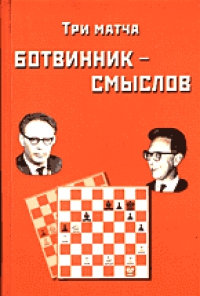 Три матча Ботвинник-Смыслов
Author:
Три матча Ботвинник-Смыслов
Author:
Botvinnik 45.00 $ -
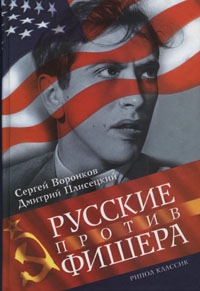 Russians vs Fisher
Author:
Russians vs Fisher
Author:
Voronkov 65.00 $ -
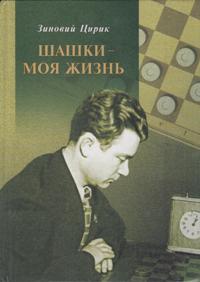 Checkers is my life
Author:
Checkers is my life
Author:
Ciric 87.50 $ -
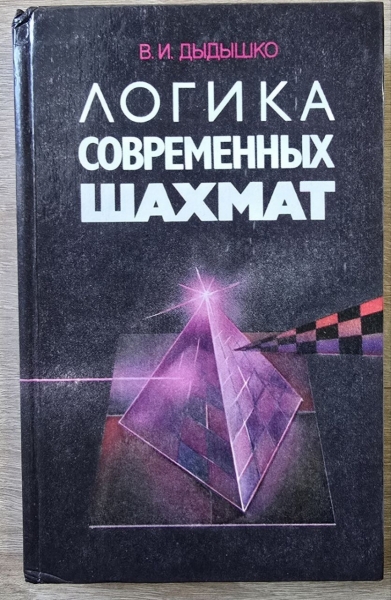 The logic of modern chess
Author:
The logic of modern chess
Author:
Dydyshko 72.50 $ -
 Siegbert Tarrasch. The Queen
Author:
Siegbert Tarrasch. The Queen
Author:
Tarrash 72.50 $ -
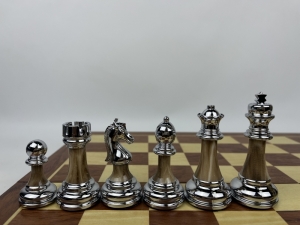 High quality acrylic metal heavy chess pieces with wooden board
202.50 $
High quality acrylic metal heavy chess pieces with wooden board
202.50 $
-
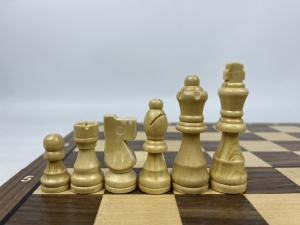 Wooden magnetic Staunton chess with a lock (silver)
56.25 $
Wooden magnetic Staunton chess with a lock (silver)
56.25 $
-
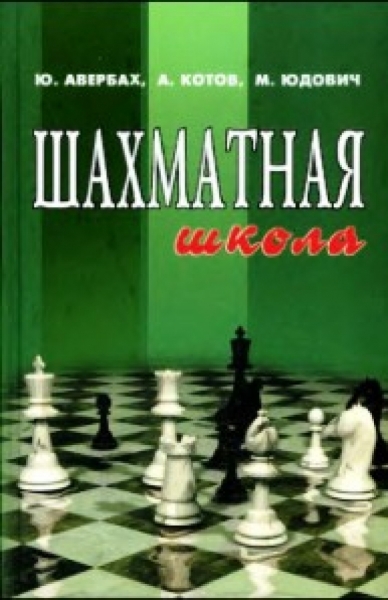 Chess school
Author:
Chess school
Author:
Averbah 15.00 $ -
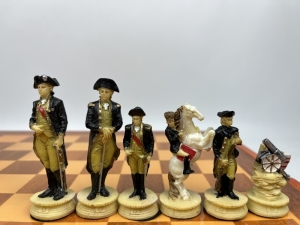 The chess set of The Chessmen. US war - Great Britain
325.00 $
The chess set of The Chessmen. US war - Great Britain
325.00 $