menu
top sales
  • Author:
    Fine

    In the vast ocean of chess literature there are relatively few books about the endgame, and only a few of them can be considered true chess classics. And the most outstanding among the classics — Reuben Fine's book "Basic Chess Endings". Reuben Fine (1914−1993) was for a long time one of the best chess players in the world. As an author, Fine showed himself to be an excellent analyst who understood the full depth and peculiarities of the endgame. Having studied various types of standard positions, Fine established useful rules for practical play and proved himself to be an experienced teacher who, using skillfully chosen examples, was able to teach the reader all the necessary lessons and introduce him to the basic ideas of the endgame. Many generations of chess players in different countries of the world keep copies of “Basic Chess Endings”. For example, Mikhail Botvinnik considered Fine's work the most worthy of all that had ever been written on endgame theory.

    35.00 $
  • Author:
    Galkin

    The book by grandmaster and experienced coach Alexander Galkin is dedicated to the strongest piece on the chessboard – to the queen. Using the example of episodes from games of modern grandmasters (the vast majority of games date back to 2020-2023) and his own grandmaster practice, the author tries to generalize, and in some places even clarify the methodology for understanding and playing queen endings, as well as other types of endgames with the presence of queens ) On the desk. The book presents various ratios of material – “queen against queen”, “queen and minor piece against queen and minor piece”, “queen and rook against queen and rook”, “queen against two rooks”, “queen against rook and pawns”, “ queen against a rook and a minor piece”, “two queens against two queens” – practically the entire spectrum of encountered endgames of this type. The material is structured in such a way that the reader can get maximum benefit from studying the examples of queen endings and its other derivatives offered by the author. The book is aimed at advanced chess players, is useful for coaches and can be recommended to a wide range of chess fans.

    18.33 $
  • Author:
    Chandler

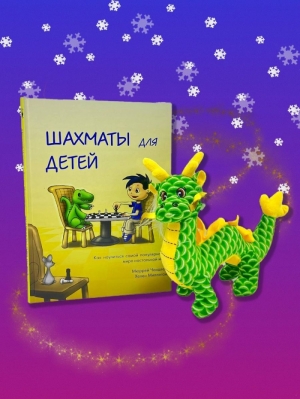
    The set consists of the book Chandler M. Chess for Children (gift edition) and the hero of this book - Marty the dragon (Dragon is the symbol of 2024). LEARN CHESS with the Very Big Dragon Marty! Using this entertaining book, your child will quickly and easily learn to play chess – the world's most popular strategy game that develops logical thinking. The rules are explained clearly and clearly, step by step, from scratch. The lessons reinforce the fun conversations between the boy Petya and his favorite dragon Marty, who calls himself the Very Big Dragon. In many countries, chess is recognized as a useful means of developing creative thinking in children. Although they are considered a complex and even mysterious game, the rules are quite simple. It doesn't take long to understand how the pieces move, and even a five-year-old child can enjoy chess. And children really like to beat their friends and relatives! Enlarged format (210x290 mm) The cute green dragon, the symbol of 2024, symbolizing strength, generosity, courage and endurance, is the hero of the book, which explains the rules of the chess game. The dragon has a suction cup, and you can use it to hang the toy on a glossy surface, on a window or refrigerator. Made of soft fabric,  has a height of 20 cm and a length of 26 cm.

    27.33 $
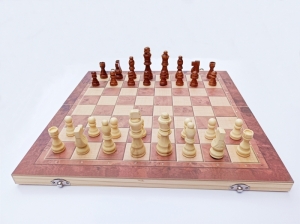
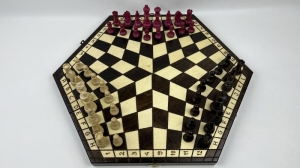
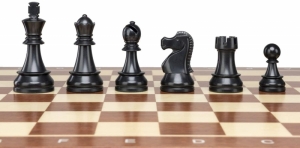
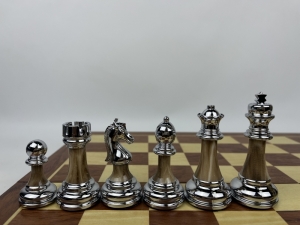
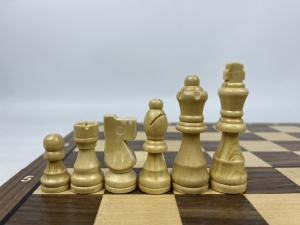
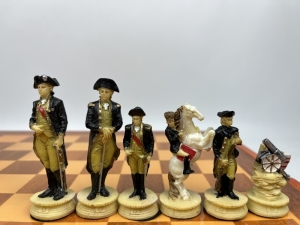
  • Chess was invented in the 5th century AD in India and spread throughout the world. The uniqueness of this game is that it still covers the minds of everyone - from young to old! Chess combines elements of science and sports. They develop logic, perseverance, attentiveness, analytical thinking and memory.  Checkers is a fun, dynamic and relatively simple game. Every country in the world has it. It is comparatively easier to find a partner here than in chess. Backgammon – one of the oldest known board games. It is known that it came to us from the East. First, you need to master the basic techniques, so that later you can boldly apply various tricks during the game.  Cage length: 4.5 cm. King height: 8.8cm King base diameter: 2.8 cm The length and width of the field when unfolded: 44 X 44 cm. Material: wood Country of origin: China.

    84.48 $
  • Author:
    Bologan

    «The idea of continuing the autobiographical book “Steps” has been in the air almost since the moment it was written. Despite the bullet point at the end of the book in the form of a victory over Magnus Carlsen, my chess career continued for another full 14 years, and the subsequent stormy socio-political career is only gaining momentum.” (V. Bologan).  The book contains 75 games commented in detail and a number of fragments. A frank story about the life and professional path, about cooperation with the leading grandmasters and coaches of the world (among them - A. Karpov, G. Kasparov, Yu. Polgar, Zhu Chen, R. Ponomarev, A. Shirov, A. Morozevich, A. Onischuk, A. Ryazantsev, E. Inarkiev, M. Al-Mudakhka, M. Dvoretsky, M. Podgaets, V. Chebanenko, Z. Lanka and others), about political activities in the Parliament of Moldova and about work in FIDE are complemented by numerous photographs.   For a wide range of chess lovers.

    36.67 $
  • Author:
    Gezalyan

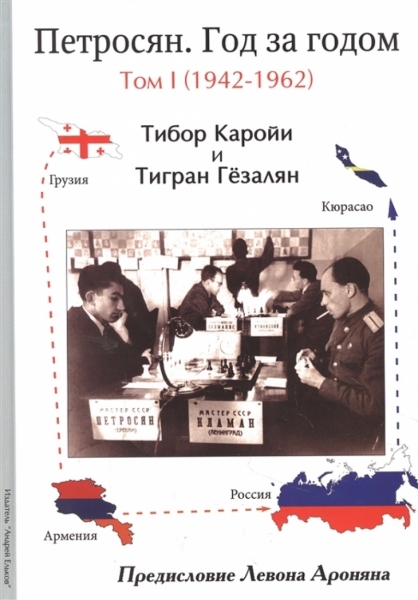
    International Master Tibor Karolyi and FIDE Master Tigran Gozalyan have prepared a major work (in two volumes) about the life and work of the 9th world chess champion Tigran Petrosyan (he held the title from 1963 to 1969).  Volume II (1963-1984) tells about Petrosyan's victory in the 1963 world title match over Mikhail Botvinnik, about the grandiose two-match confrontation with Boris Spassky in 1966 and 1969, about all his candidates' matches after losing the title – against Bobby Fischer, Viktor Korchnoi and other world-class opponents. All tournaments and matches of the second half of Petrosian's chess career are presented, up to his last performances in 1983. The authors subjected 175 complete games and fragments to an in-depth analysis (using modern computers). Not all of them have been deeply studied and commented on before, but even then the book provides a significantly improved analysis. Among Petrosyan’s opponents – world champions and contenders Kasparov, Karpov, Fischer, Spassky, Tal, Smyslov, Botvinnik, Korchnoi and Bronstein, as well as Timman, Larsen, Reshevsky, Belyavsky, Polugaevsky, Portisch, Romanishin and many others. Special attention is paid to his coaches – Alexey Suetin and Igor Zaitsev. 

    50.00 $
  • A limited edition of the most famous electronic chess clock. Design & quot; under the tree & quot ;. Released for the 25th anniversary of the DGT. & Nbsp; These watches are used in all major tournaments, world championships and World Cups, World Chess Olympiads. Installation of any time controls, including Fisher and Bronstein controls (with added time). & Nbsp;

    237.50 $
  • Author:
    Kasparov

    41.67 $
  • Author:
    Tal

    21.67 $
  • Author:
    Getmanchuk

    16.67 $
  • more

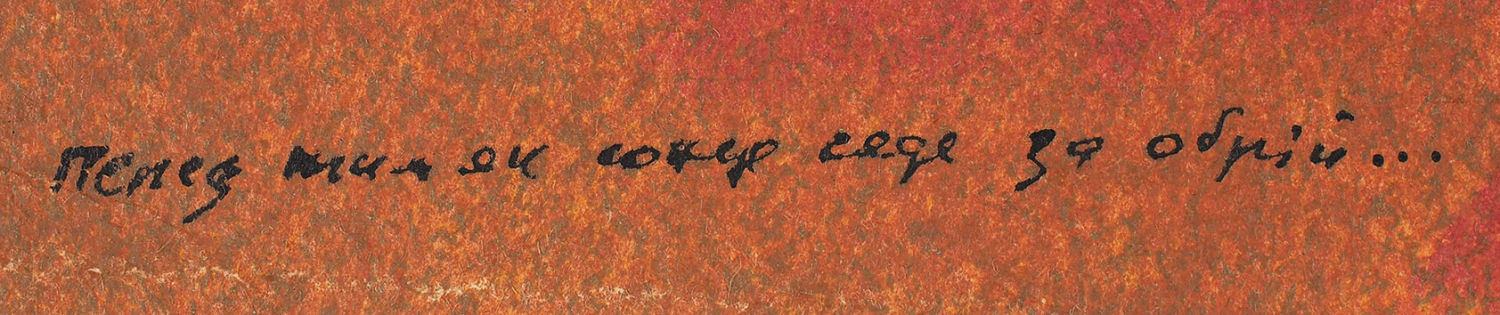
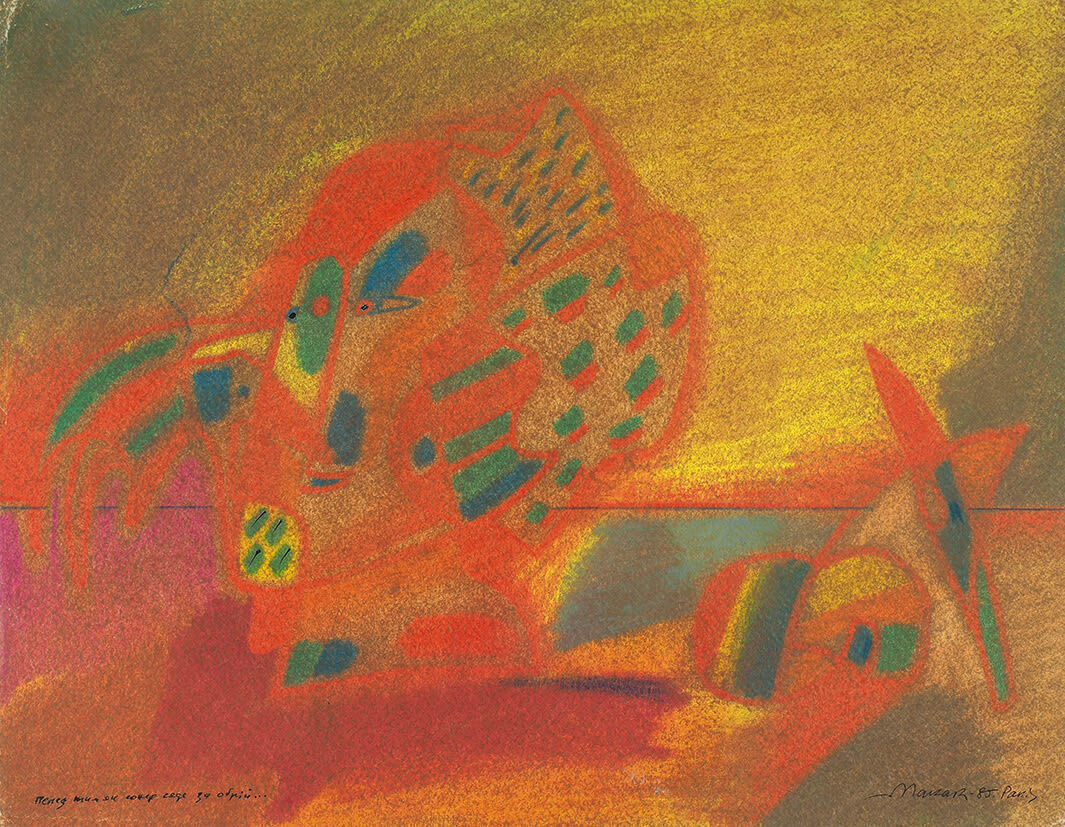
Soviet Nonconformist: Makarenko Vladimir "Composition". 1985 Paper, pastel, ink
360 $

RUB

Description:

Makarenko Vladimir (b. 1943) "Composition". 1985 Paper, pastel, ink, pen, 23,4×29,9 cm. 

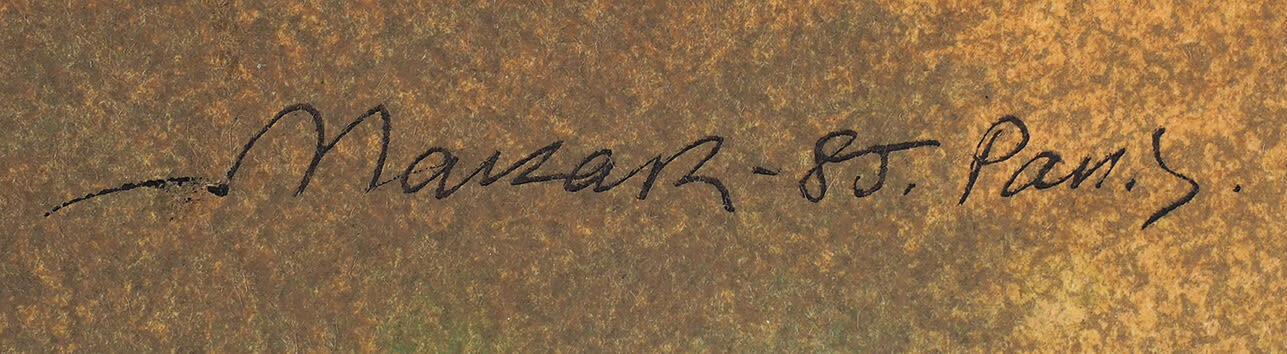
In the lower right corner the author's signature and date: "Makar 85 Paris". 

Nonconformist artist. In 1963 he graduated from the Dnepropetrovsk art school in the Studio of Y. Kalashnik. For his thesis "In the blue land" in the manner of "geometric realism" was accused of formalism, the painting was destroyed, and the artist is deprived of the opportunity to continue his studies in Ukraine. 

He moved to Leningrad, where in 1963 he entered the monumental faculty of the Higher school of monumental art. V. Mukhina. In Leningrad, took private lessons in the studios N. Altman and P. Kondratiev. He was friends with artists M. Shemyakin, E. Rukhlin, V. Mishin, E. Esaulenko, V. Yankilevsky, A. Nemukhin and O. Tselkov. 

In 1969 he graduated and received a diploma of monumental artist. In the same year he became a member of the informal organization of nonconformist artists, known in the West as the "St. Petersburg group". 

In 1973 he was forced to leave Leningrad and move to Tallinn, where he quickly entered the artistic circle and took part in group exhibitions. 

In 1974, together with F. Humeniuk, V. Sazonov and V. by Strelnikov exhibited at the exhibition of Ukrainian nonconformist artists in Moscow in the apartment of a Man. 

In 1976 he held his first solo exhibition in Paris at the gallery Hardy. Living in Tallinn, he worked as a Stoker, refused to join the Union of artists. He worked in a small workshop, sometimes received orders for illustrations for magazines and Newspapers. 

In 1973 — 1980 he annually applied for departure to France, and only in 1981 he received permission and moved to Paris. 
Since then lives and works in Paris.

To leave comments, sign in or register on the site.
There are no comments on this record yet.