menu
top sales
  • Author:
    Fine

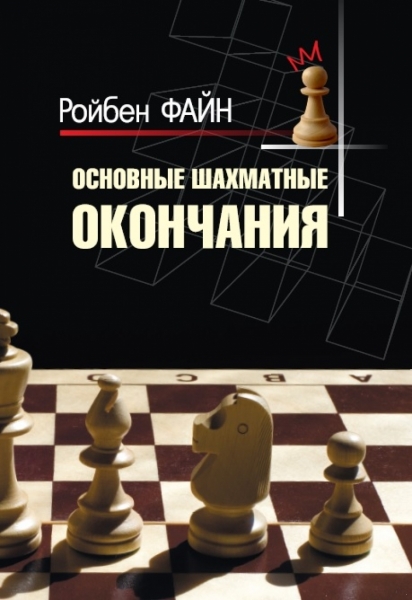
    In the vast ocean of chess literature there are relatively few books about the endgame, and only a few of them can be considered true chess classics. And the most outstanding among the classics — Reuben Fine's book "Basic Chess Endings". Reuben Fine (1914−1993) was for a long time one of the best chess players in the world. As an author, Fine showed himself to be an excellent analyst who understood the full depth and peculiarities of the endgame. Having studied various types of standard positions, Fine established useful rules for practical play and proved himself to be an experienced teacher who, using skillfully chosen examples, was able to teach the reader all the necessary lessons and introduce him to the basic ideas of the endgame. Many generations of chess players in different countries of the world keep copies of “Basic Chess Endings”. For example, Mikhail Botvinnik considered Fine's work the most worthy of all that had ever been written on endgame theory.

    35.00 $
  • Author:
    Tal

    21.67 $
  • Author:
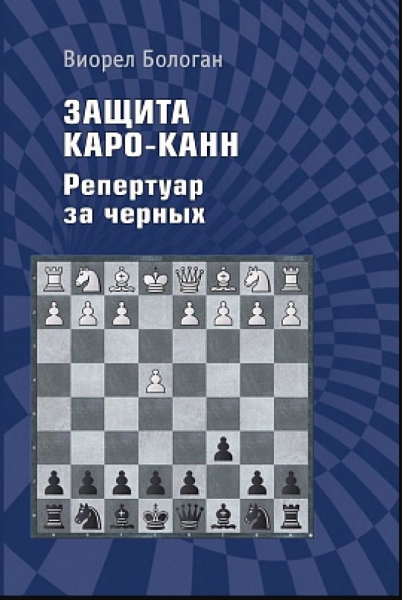
    Bologan

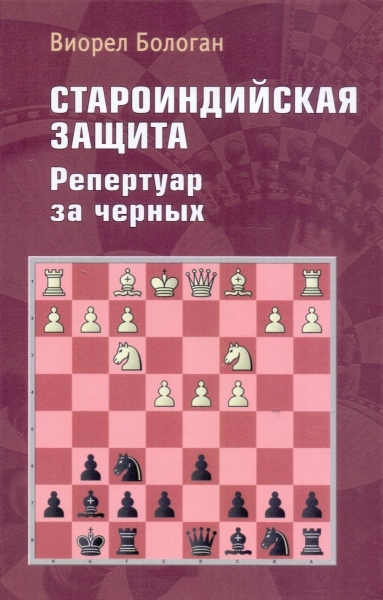
    The 2nd edition, revised and supplemented, of the popular monograph, which is dedicated to one of the most combat modern debuts – the Old Indian defense. The author meticulously builds the entire defensive line of black (including on the territory of "adjacent" openings, such as the English beginning or the London system), explains standard plans and tactical techniques, offers a number of novelties in current schemes. Carefully selected positions for the solution will help the reader to consolidate the acquired knowledge. The book is addressed to chess players of any level, since the laws of Old Indian are the same for both amateurs and super grandmasters.

    21.67 $
  • Author:
    Franco

    The book by grandmaster and experienced chess coach Zenon Franco includes 36 instructive attacking games and is divided into four chapters - the king in the center, one-sided castling, opposite-sided castling, and attack-defense-counterattack. Before each game, the opponents are introduced, and a brief description of the events that took place in it is given. Based on the results of the struggle in the game, lessons that are useful to learn from what has been read are listed in a concise form. The book is not overloaded with variations, the emphasis is on detailed explanations in the "move by move" format, which creates an ideal platform for studying chess. At the "support" points of each game, the reader is offered test questions, which helps both the practical study of key chess techniques and the reliable assimilation of the acquired knowledge. Questions and answers involve the reader in the learning process and help him track the growth of his chess strength. For a wide range of chess fans.

    19.00 $
  • Author:
    Ezhov

    Grandmaster Carlos Torre – like a chess comet; his genius flashed dazzlingly and quickly went out in the chess firmament! He – the author of the most famous “mill” in the history of chess, the 2nd world champion Emanuel Lasker fell into its merciless millstones. The authors spoke about the life and work of the Mexican genius (the book contains 25 commentated games by K. Torre). Torre’s book “How a Chess Player is Formed” is presented, an essay by international master Yaroslav Prizant about Torre’s attack in modern practice. In the section "Play like Torre" – 36 instructive examples from his practice to solve. Finally, there is an interview with Carlos Torre, conducted by Gabriel Velasco in 1977. Working with the book will give readers not only aesthetic pleasure, but will also help improve their skills.

    18.33 $
  • Author:
    Blokh

    The answer book of an international grandmaster and an experienced coach (among whose students is A. Grischuk) Bloch's Maxim contains over 1200 combinations from practical games and specially compiled examples. All tasks are characterized by intense struggle, in which the goal is achieved by single moves. The book is intended for both young and adult amateurs, and for masters. The arrangement of examples by topic allows you to use the book not only as a task book, but also as a textbook. Of particular interest are over two hundred specially compiled by the author overstressed positions in which white wins the only way during the course of white, and black wins during the course of black. These examples, as well as over 50 fragments from the parties of the author and his students, are published for the first time.

    21.67 $
  • Author:
    Vysotsky

    20.00 $
  • Author:
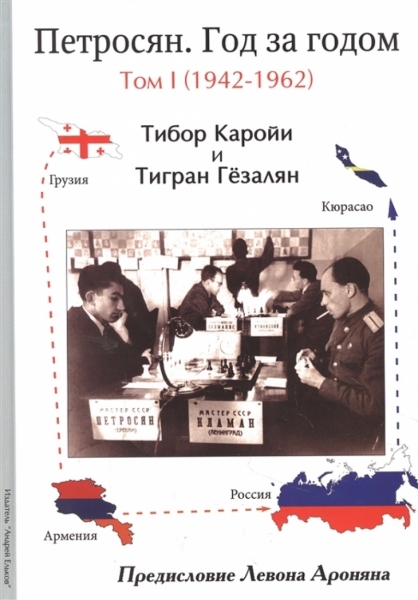
    Karoii

    50.00 $
  • Author:
    Bologan

    «The idea of continuing the autobiographical book “Steps” has been in the air almost since the moment it was written. Despite the bullet point at the end of the book in the form of a victory over Magnus Carlsen, my chess career continued for another full 14 years, and the subsequent stormy socio-political career is only gaining momentum.” (V. Bologan).  The book contains 75 games commented in detail and a number of fragments. A frank story about the life and professional path, about cooperation with the leading grandmasters and coaches of the world (among them - A. Karpov, G. Kasparov, Yu. Polgar, Zhu Chen, R. Ponomarev, A. Shirov, A. Morozevich, A. Onischuk, A. Ryazantsev, E. Inarkiev, M. Al-Mudakhka, M. Dvoretsky, M. Podgaets, V. Chebanenko, Z. Lanka and others), about political activities in the Parliament of Moldova and about work in FIDE are complemented by numerous photographs.   For a wide range of chess lovers.

    36.67 $
  • Author:
    Kasparov

    41.67 $
  • more

Yearbook 77

Publisher: New In Chess
  • Publisher: New In Chess
  • Language: Russian
  • Volume: 248
  • Binding: soft
  • DateOfIssue: 2005

paper book

51.82 $

RUB

Description:

Forum Readers from all over the world join in discussions of previous surveys. Both (grand) masters and club players shed their light on new discovery and search together for the truth. With contributions by Ian Rogers, Dorian Rogozenko, Tibor Karolyi, Geert van der Stricht and many others. Sosonko's Corner In this column, Genna Sosonko takes a look at yet another provocative theme in the opening: the 'delayed' advance of a pawn. In more lines than you would expect, this loss of a tempo that we could call the 'Arabic' method can be surprisingly effective, although the author admits that it would have left the Stars of the Past utterly amazed! '. Except Philidor, of course, who is already taught that 'excellent pawn play is a key characteristic of true craftsmanship'. However it may be, he who uses the "step by step" method. Book Review Non-theory openings are rapidly becoming theory. Glenn Flear investigates James Plaskett's The Queen's Bishop Attack Revealed and Richard Palliser's Tango !. He read the QBA, despite some deficiencies, with a smile on his face and found Tango! to be "fairly objectively analysed" and so these books may serve to popularize these still relatively unknown openings. Next, Flear compares Palliser's The Modern Benoni with Endre Vegh's Starting Out: Modern Benoni. He found quite a few differences. Our ever candid author author Sergey Tiviakov is exceptionally enthusiastic about 'What do you need? 32 NIC Surveys Yearbook 77 Sicilian Defense: Najdorf Variation 7 ... Nbd7, by Olthof Sicilian Defense: Najdorf Variation 6.Be3, by Hoeksema Sicilian Defense: Dragon Variation 9.Bc4, by Anka Sicilian Defense: Scheveningen Variation 6.Be2, by Fogarasi Sicilian Defense: Rauzer Variation 10.e5, by Van der Wiel Sicilian Defense: Rossolimo Variation 4 ... Qc7, by Greenfeld French Defense: Advance Variation 3.e5, by Sveshnikov Caro-Kann Defense: Panov Variation 5 ... Nc6, by Smeets Caro-Kann Defense: Advance Variation 4.h4, by Anka Scandinavian Defense: Main Line 5 ... Bf5, by Priй Petroff Defense: Nimzowitsch Variation 5.Nc3, by A.Kuzmin Ruy Lopez: Exchange Variation 5 ... Bg4, by Van der Tak Ruy Lopez: Neo-Steinitz Variation 6 ... Nge7, by Karolyi Ruy Lopez: Open Variation 9.Nbd2, by Grivas King's Pawn Opening: Elephant Gambit 2 ... d5, by Pliester Two Knights Defense: Fritz Variation 5 ... Nd4, by Van der Tak Queen's Gambit: Declined Exchange Variation 4.cd5, by Bosch Slav Defense: Meran Variation 7.g4, by Lukacs / Hazai Tarrasch Defense: Rubinstein Variation 6.g3, by Vilela Queen's Gambit Accepted: Classical Variation 7.a4, by Yusupov Nimzo-Indian Defense: Kmoch Variation 4.f3, by Cebalo Nimzo-Indian Defense: Romanishin Variation 4.Nf3, by Langeweg Bogo-Indian Defense: 4.Nbd2, by Boersma Queen's Indian Defense: Nimzowitsch Variation 4..Ba6, by Dautov Grünfeld Indian Defense: Exchange Variation 7.Nf3, by Avrukh Grünfeld Indian Defense: Exchange Variation 7.Nf3, by V.Mikhalevski Grünfeld Indian Defense: Exchange Variation 7.Bc4, by Olthof King's Indian Defense: Bayonet Attack 9.b4, by Tzermiadianos / Kotronias King's Indian Defense: 5.Bd3, by Geo.Timoshenko Benoni Defense: Volga Gambit 3 ... b5, by Fogarasi Old Indian Defense: Delayed Benoni 7 ... e6, by Dautov Queen's Pawn Opening: Trompowsky Attack 2.Bg5, by Fogarasi

To leave comments, sign in or register on the site.
There are no comments on this record yet.