menu
top sales
  • Author:
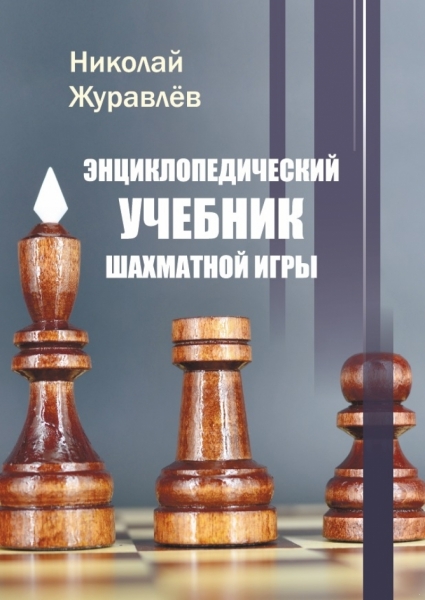
    Zhuravlev

    This tutorial is addressed to those who want to learn to play chess on their own and improve further. The lesson-based method of presentation, as well as numerous exercises, contribute to the consistent assimilation of the rules and laws that form the basis of the chess game. The book contains extensive educational material, which is presented to the reader in accordance with modern pedagogical principles. The purpose of this manual is to train chess players of the III category (rating up to 1800). The textbook can also be used for classes in groups - it covers the material of existing programs of the first year of study in children's and youth chess schools.

    23.33 $
  • Author:
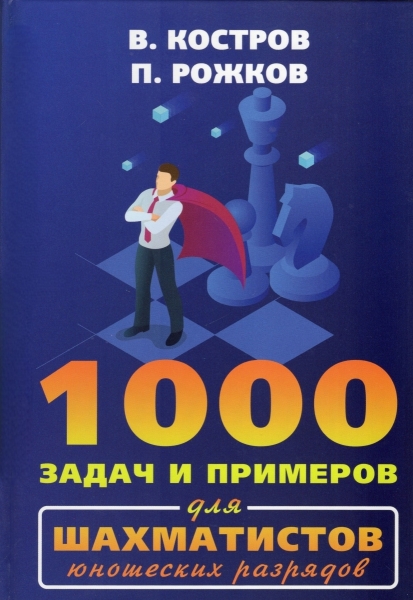
    Kostrov

    Hundreds of thousands of novice chess players have held in their hands the solution books of “1000 chess problems” for the 1st, 2nd and 3rd years of study. These collections became winners of the “Chess Vseobuch of Russia” competition. We decided to combine our three books into one so that the future grandmaster would have more opportunities for improvement and choice of material. It will also be easier for students and coaches to regulate the speed of the material. In the first parts of our book, novice chess players will get acquainted with all possible types of checkmates. Then, future grandmasters will learn to deliver magnificent double blows with a queen and a knight, promote a pawn to a queen. Studying according to this solution book, you will also master the pin, learn to cover yourself from the enemy's pieces, block the enemy's forces, destroy the most reliable fortresses, distract and entice his royal majesty and much more. Work with the book as with a textbook, and do not forget to write down the solutions under each diagram! The correct solutions are at the end of the book. For the widest range of chess fans.

    15.75 $
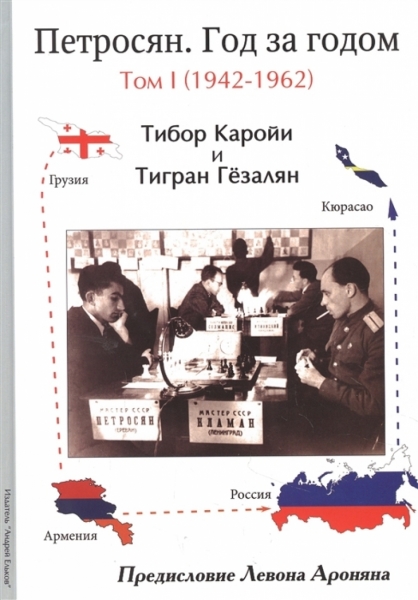
  • Author:
    Gezalyan

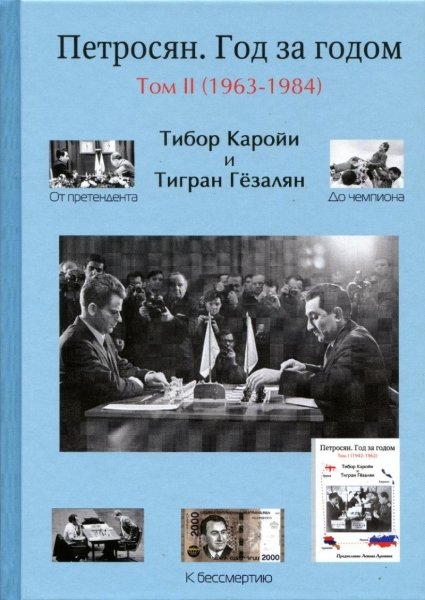
    International Master Tibor Karolyi and FIDE Master Tigran Gozalyan have prepared a major work (in two volumes) about the life and work of the 9th world chess champion Tigran Petrosyan (he held the title from 1963 to 1969).  Volume II (1963-1984) tells about Petrosyan's victory in the 1963 world title match over Mikhail Botvinnik, about the grandiose two-match confrontation with Boris Spassky in 1966 and 1969, about all his candidates' matches after losing the title – against Bobby Fischer, Viktor Korchnoi and other world-class opponents. All tournaments and matches of the second half of Petrosian's chess career are presented, up to his last performances in 1983. The authors subjected 175 complete games and fragments to an in-depth analysis (using modern computers). Not all of them have been deeply studied and commented on before, but even then the book provides a significantly improved analysis. Among Petrosyan’s opponents – world champions and contenders Kasparov, Karpov, Fischer, Spassky, Tal, Smyslov, Botvinnik, Korchnoi and Bronstein, as well as Timman, Larsen, Reshevsky, Belyavsky, Polugaevsky, Portisch, Romanishin and many others. Special attention is paid to his coaches – Alexey Suetin and Igor Zaitsev. 

    50.00 $
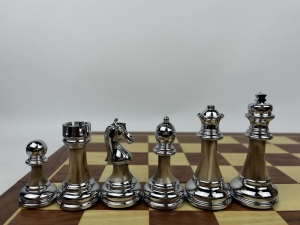
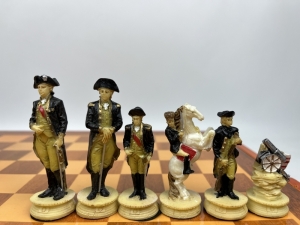
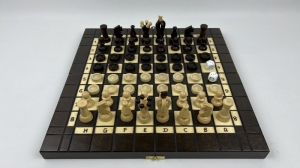
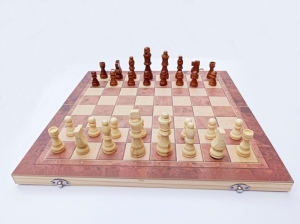
  • The size of the board when folded is 35x17.5 cm. The size of the board when unfolded is 35x35 cm. Cage size is 3x3 cm  King height 6.6 cm. Base diameter 2.2 cm. Pawn height 3.1 cm. Base diameter 2 cm. Backgammon - checker 2.1 cm. Weight 830 g. Includes backgammon chips and dice Chess board and backgammon chips can be used to play checkers Manufacturer Poland

    148.00 $
  • Author:
    Eive

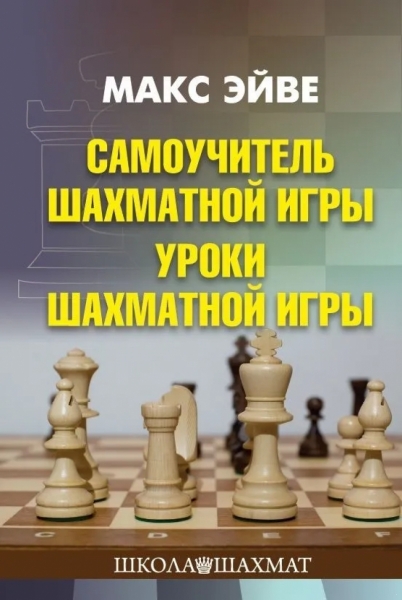
    The corpus of this textbook includes two significant works by the world chess champion, scientist and prominent teacher Max Euwe — "Self‑help chess game", created in collaboration with G. Den-Hertog, and "Chess Lessons". The first work is designed for beginners, the second for more experienced chess players. The book is a real chess tutorial in the true sense of the word. This is expressed not only in the appropriate distribution of the material and the method of presentation, designed to awaken the initiative of the student, but also in numerous practical exercises offered to the reader after explaining each new concept or technique.The textbook primarily attracts the methodology of presentation of the material, the principles of which will be useful for coaches and teachers of chess sections and circles. For a wide range of chess fans.

    25.00 $
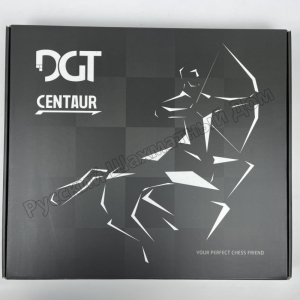
  • Made in Holland. Chess computer "Centaur" easy to use. You can easily install any language. Using the touch panel  40x40 cm (cell size 48 x 48 mm) you can easily move the figures. The sensors will record strokes. The board has a capacious rechargeable internal battery. The uniqueness of the computer is that it quickly adapts to  your playing strength (from beginner to grandmaster) so that you have the right opponent. Centaur will help you analyze the game so as not to make the same mistakes and improve your chess skill. Please note, computer is not compatible to connect to your PC or online chess. The set includes USB cable and DGT electronic chess pieces . Height of the king is 86mm.  

    1553.60 $
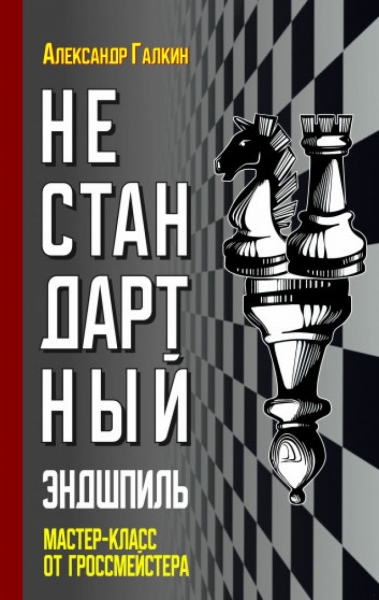
  • Author:
    Galkin

    16.67 $
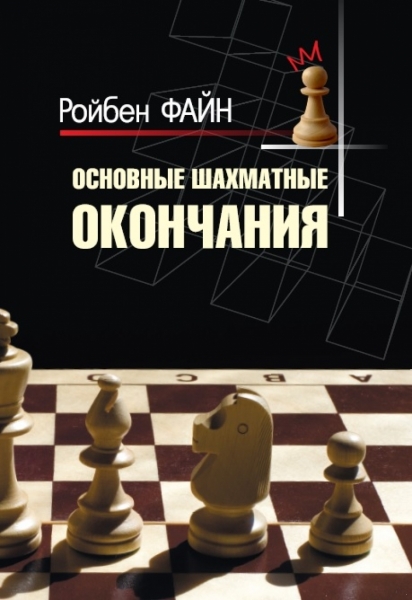
  • Author:
    Fine

    In the vast ocean of chess literature there are relatively few books about the endgame, and only a few of them can be considered true chess classics. And the most outstanding among the classics — Reuben Fine's book "Basic Chess Endings". Reuben Fine (1914−1993) was for a long time one of the best chess players in the world. As an author, Fine showed himself to be an excellent analyst who understood the full depth and peculiarities of the endgame. Having studied various types of standard positions, Fine established useful rules for practical play and proved himself to be an experienced teacher who, using skillfully chosen examples, was able to teach the reader all the necessary lessons and introduce him to the basic ideas of the endgame. Many generations of chess players in different countries of the world keep copies of “Basic Chess Endings”. For example, Mikhail Botvinnik considered Fine's work the most worthy of all that had ever been written on endgame theory.

    35.00 $
  • Author:
    Karoii

    50.00 $
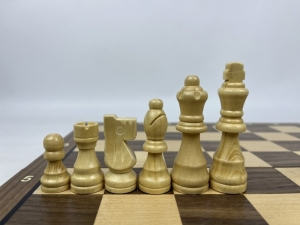
  • Chess was invented in the 5th century AD in India and spread throughout the world. The uniqueness of this game is that it still covers the minds of everyone - from young to old! Chess combines elements of science and sports. They develop logic, perseverance, attentiveness, analytical thinking and memory.  Checkers is a fun, dynamic and relatively simple game. Every country in the world has it. It is comparatively easier to find a partner here than in chess. Backgammon – one of the oldest known board games. It is known that it came to us from the East. First, you need to master the basic techniques, so that later you can boldly apply various tricks during the game.  Cage length: 4.5 cm. King height: 8.8cm King base diameter: 2.8 cm The length and width of the field when unfolded: 44 X 44 cm. Material: wood Country of origin: China.

    84.48 $
  • more

Garde, Moscow

Книги издательства:

  • book

    26.67 $

    There is also a half-price option with significant cover defects that do not interfere with reading.

    The book reveals ways to play in the most popular formation - the Carlsbad pawn structure. The authors review typical (and atypical) plans, characteristic principles and strategic techniques in attack, defense and maneuver. The publication is intended for advanced chess players, coaches, heads of chess clubs and sections, and simply chess lovers.

    The book inside is in perfect condition. 

    The cover is worn (see photo). 

  • book

    24.83 $

    The book is devoted to the issues of combating short castling with the arrangement of pawns in the f7, g7, h7 fields. The authors consider the most typical schemes for seeing a frontal figure-shaped attack on the king with a given pawn structure. 

  • book

    13.33 $

    Original tutorial. The name Lasker Compensation is sufficiently conditional. In the classical literature, this ratio of material is unequivocally determined: a queen against a rook, a light piece and a pawn. In the book presented to the reader, this question is considered more widely: the queen is on one side, and the rook and the light piece on the other side are the fundamental position. One or two pawns can be on either side without disturbing the integrity of the logical narrative. Moreover, the queen's sacrifices for a rook, a light piece and pawns are usually referred to as a mid-spiel position. This paper discusses the issues of struggle for a given material ratio in all phases of a chess game. The book is for chess dischargers, coaches, heads of chess clubs and sections and just chess lovers.