menu
top sales
  • Author:
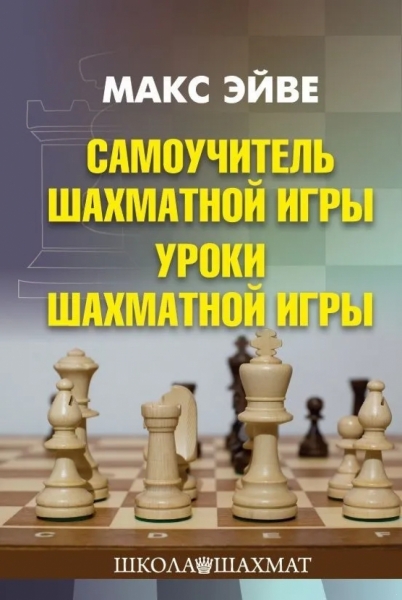
    Eive

    The corpus of this textbook includes two significant works by the world chess champion, scientist and prominent teacher Max Euwe — "Self‑help chess game", created in collaboration with G. Den-Hertog, and "Chess Lessons". The first work is designed for beginners, the second for more experienced chess players. The book is a real chess tutorial in the true sense of the word. This is expressed not only in the appropriate distribution of the material and the method of presentation, designed to awaken the initiative of the student, but also in numerous practical exercises offered to the reader after explaining each new concept or technique.The textbook primarily attracts the methodology of presentation of the material, the principles of which will be useful for coaches and teachers of chess sections and circles. For a wide range of chess fans.

    25.00 $
  • Author:
    Bezgodov

    The youngest first–grader in the USSR, the world champion among young men, a participant in the candidates tournament at the age of 19 - Boris Spassky's rise was rapid. And then fate gave the brilliant chess player a test of strength: he stumbled twice at the decisive moment and remained beyond the threshold of interzonal tournaments ... Only ten years after his first great success, Spassky managed to pass all the qualifying tests and earn the right to a match for the crown, but he failed to defeat the Iron Tigran Petrosian the first time. It took three more years of super–efforts: by Sisyphus he rose again to the foot of Olympus and did not miss a second chance - in 1969 he became the Tenth king of chess! An essay about the life of Boris Vasilyevich and his sporting path full of ups and downs was written by Dmitry Oleynikov, Candidate of Historical Sciences, curator of the Chess Museum of the Chess Federation of Russia. 70 beautiful and instructive games of Spassky were commented on by the champion of Russia in 1993, the famous author and theorist grandmaster Alexey Bezgodov, as well as grandmaster Dmitry Kryakvin and FIDE master Steve Giddins. The preface was written by the 14th world champion Vladimir Kramnik. For a wide range of chess fans.

    21.67 $
  • Author:
    Kalinichenko

    The vast majority of opening guides are written for adult readers. This book is also devoted to the theory but it is junior. The structure of the book is simple and attractive: openings are examined using examples from actual games, each of which is presented in the form of a lesson with its own name. Several such lessons form an opening theme, and the examination of each theme concludes with exercises. In each opening, attention is drawn to its characteristic tactical and strategic ideas of combinations for independent solution strictly corresponds to the opening theme. Written in clear and easy language, the book is furnished with a large number of diagrams. Colored explanatory arrows on the diagrams and the selection of individual pages with a colored background make the book easier to understand. Regular work solve two problems: deepen the student's knowledge and develop his tactical vision, thus improving his skill and results.

    28.80 $
  • Author:
    Gezalyan

    International Master Tibor Karolyi and FIDE Master Tigran Gozalyan have prepared a major work (in two volumes) about the life and work of the 9th world chess champion Tigran Petrosyan (he held the title from 1963 to 1969).  Volume II (1963-1984) tells about Petrosyan's victory in the 1963 world title match over Mikhail Botvinnik, about the grandiose two-match confrontation with Boris Spassky in 1966 and 1969, about all his candidates' matches after losing the title – against Bobby Fischer, Viktor Korchnoi and other world-class opponents. All tournaments and matches of the second half of Petrosian's chess career are presented, up to his last performances in 1983. The authors subjected 175 complete games and fragments to an in-depth analysis (using modern computers). Not all of them have been deeply studied and commented on before, but even then the book provides a significantly improved analysis. Among Petrosyan’s opponents – world champions and contenders Kasparov, Karpov, Fischer, Spassky, Tal, Smyslov, Botvinnik, Korchnoi and Bronstein, as well as Timman, Larsen, Reshevsky, Belyavsky, Polugaevsky, Portisch, Romanishin and many others. Special attention is paid to his coaches – Alexey Suetin and Igor Zaitsev. 

    50.00 $
  • Magnetic road chess: folding board-case made of artificial leather, tablet-figures with a convex image. Wallet size 19x22 cm. The playing field is 15.5 x 15.5 cm. Cell 2x2 cm.

    51.72 $
  • Author:
    Kapengut

    An outstanding theorist and successful coach shares his memories of communication and cooperation with Mikhail Tal, Anatoly Karpov, Isaac Boleslavsky, Elena Akhmylovskaya and other outstanding chess players. Separate large chapter – a story about many years of work with Boris Gelfand: over these years (1980-1993) the student went from a 12-year-old candidate for master to the holder of the 3rd rating in the world. Albert Kapengut – winner of 6 gold medals at the World Student Olympics, seven-time champion of Belarus, participant in the individual and team championships of the USSR among men, champion of the USSR as part of the Burevestnik team. The book includes 70 games commented in detail by the author, a careful study of which will help the reader not only better understand popular opening schemes, but also get a taste for serious analytical work. “My story is not so much about a career, although “you can’t erase words from a song,” but about memorable situations, often funny, sometimes absurd, and dotted about people I met along the way, sometimes with touches of biography, prompting readers to become interested in more complete information.” ;" (A. Kapengut). For a wide range of chess lovers.

    43.33 $
  • Author:
    Tal

    21.67 $
  • Author:
    Chandler

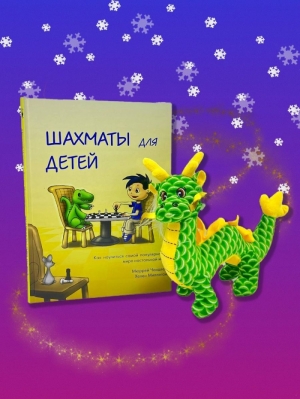
    The set consists of the book Chandler M. Chess for Children (gift edition) and the hero of this book - Marty the dragon (Dragon is the symbol of 2024). LEARN CHESS with the Very Big Dragon Marty! Using this entertaining book, your child will quickly and easily learn to play chess – the world's most popular strategy game that develops logical thinking. The rules are explained clearly and clearly, step by step, from scratch. The lessons reinforce the fun conversations between the boy Petya and his favorite dragon Marty, who calls himself the Very Big Dragon. In many countries, chess is recognized as a useful means of developing creative thinking in children. Although they are considered a complex and even mysterious game, the rules are quite simple. It doesn't take long to understand how the pieces move, and even a five-year-old child can enjoy chess. And children really like to beat their friends and relatives! Enlarged format (210x290 mm) The cute green dragon, the symbol of 2024, symbolizing strength, generosity, courage and endurance, is the hero of the book, which explains the rules of the chess game. The dragon has a suction cup, and you can use it to hang the toy on a glossy surface, on a window or refrigerator. Made of soft fabric,  has a height of 20 cm and a length of 26 cm.

    27.33 $
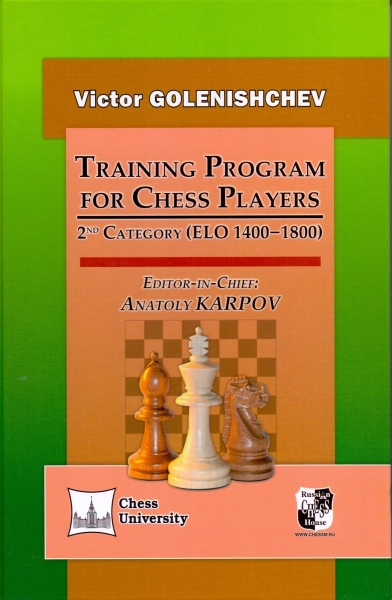
  • Author:
    Golenishchev

    Like other titles in the Training Program for Chess Players series, this volume is both an excellent textbook for independent study and a powerful training aid for chess coaches. In the view of many experts, no better work of this kind has ever been written. coach and Master of Sport. Golenishchev's programs are still considered. critically important and are successfully employed in chess schools. His teaching methods remain popular in Russia and around the world. Supervised by Editor-in-Chief and former Karpov, this new edition of Golenishchev's classic work is updated to include important games from the recent high-level chess competitions, reflecting modern approaches to the game. OPENING Fragment 1 OPENING Fragment 2

    30.00 $
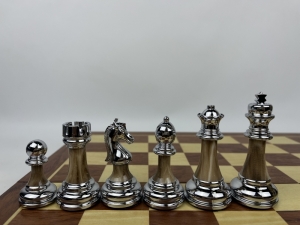
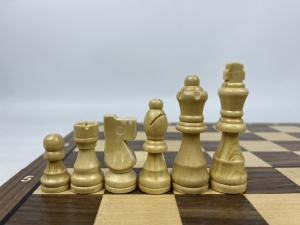
  • The size of the board when folded is 35x17.5 cm. The size of the board when unfolded is 35x35 cm. Cage size is 3x3 cm  King height 6.6 cm. Base diameter 2.2 cm. Pawn height 3.1 cm. Base diameter 2 cm. Backgammon - checker 2.1 cm. Weight 830 g. Includes backgammon chips and dice Chess board and backgammon chips can be used to play checkers Manufacturer Poland

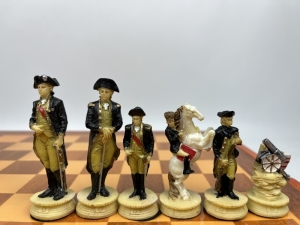
    148.00 $
  • more

Spiritual renaissance

Книги издательства:

  • book

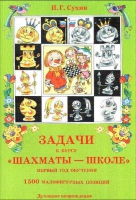
    The ability to declare the opponent a mate & ndash; the basis of chess art. However, in the sea of ​​chess literature, the most important stage of training was undeservedly forgotten; & ndash; tasks on mate in one turn. The task book includes the material that corresponds to the Chess program, the first year, the textbook for schoolchildren & Chess, the first year, or There the cells are black-and-white miracles and mysteries are full & raquo; and a manual for the teacher & laquo; Chess, the first year, or I study and teach & raquo ;. In the collection of 1500 tasks: 1242 clearly structured three-, four- and five figured positions-schemes, covering all typical matte constructions for a given number of figures and a workshop of 258 training positions.

  • book

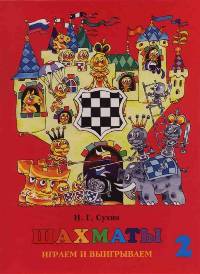
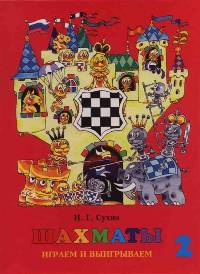
    Primary school textbook. This tutorial continues the course of the initial chess game training and follows the textbook & laquo; Chess, the first year, or There the cells of black and white wonders and mysteries are full & raquo ;. The theory of the chess game is fixed with the help of a large number of didactic tasks and games, with the predominant use of illustrative material of a meaningful nature. The textbook is intended for the second class, but can be used in classes in other classes. This is ensured by the fact that in each section students are offered both simple and complex tasks. To the textbook & laquo; Chess, the second year, or Play and win & raquo; developed a methodical manual for the teacher (and parents) & laquo; Chess: the second year, or I study and teach & raquo;.

  • book

    22.76 $

    Primary school textbook. This tutorial continues the course of the initial chess game training and follows the textbook & laquo; Chess, the first year, or There the cells of black and white wonders and mysteries are full & raquo ;. The theory of the chess game is fixed with the help of a large number of didactic tasks and games, with the predominant use of illustrative material of a meaningful nature. The textbook is intended for the second class, but can be used in classes in other classes. This is ensured by the fact that in each section students are offered both simple and complex tasks. To the textbook & laquo; Chess, the second year, or Play and win & raquo; developed a methodical manual for the teacher (and parents) & laquo; Chess: the second year, or I study and teach & raquo;.

  • book

    16.55 $

    The project provides for the introduction of the subject "Chess" to the primary school as compulsory for all students in the class.
    Representing an organic combination of science and games, chess helps younger schoolchildren overcome the crisis of the age of seven, when children's games are replaced by serious school classes . Classes in chess contribute to the development of voluntary attention of younger schoolchildren, semantic memory and thinking in general. One can not ignore the great potential of chess in preserving the health of schoolchildren. Being in the grid of compulsory subjects, chess contributes to the development of a completely different principle of working with educational material, helping to prevent the mental overstrain of children inevitable today because of the excess of information. And finally, like no subject of the school curriculum, chess can make real competition with computer games that negatively affect the child's psyche, and this happens not through prohibitions on the part of adults, but because of natural interest in an exciting and wise game.
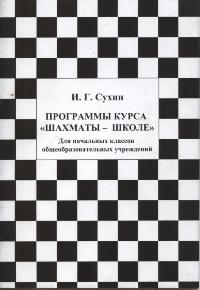
    As a basis for the introduction of chess in primary school is considered the course of IG Sukhin "Chess - school" for primary classes of general educational institutions.
    2nd edition

  • book

    9.11 $

    The publication presents a completed line of programs for the elective course "Chess for School," provided with three years of teaching and methodological training: "Chess, the first year," "Chess, the second year," and "Chess, the third year." The collection includes the first, second and third year programs. After the explanatory memorandum, for each year of the training, sample topics, didactic tasks and games, an approximate distribution of program material, requirements for the knowledge and skills of students, lists of recommended literature are presented.

  • book

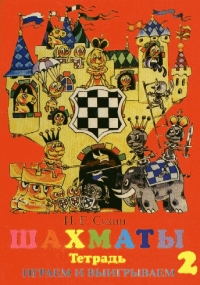
    BOO A book and two workbooks - 1 set (in one copy)! This textbook continues the course of elementary education in a chess game and follows the textbook "Chess, first year, or there are black-and-white miracles and secrets full of cells." This course is unique and written specifically for elementary school. The theory of chess games is fixed with the help of a large number of didactic tasks and games, with the predominant use of illustrative material of a meaningful nature. The textbook is intended for the second class of a four-year elementary school, but can be used in classes in other classes. This is ensured by the fact that in each section students are offered both simple and complex tasks.