menu
top sales
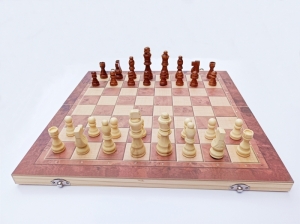
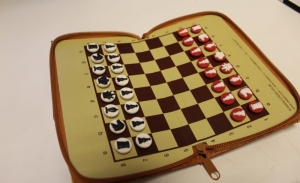
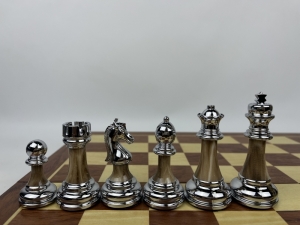
  • Chess was invented in the 5th century AD in India and spread throughout the world. The uniqueness of this game is that it still covers the minds of everyone - from young to old! Chess combines elements of science and sports. They develop logic, perseverance, attentiveness, analytical thinking and memory.  Checkers is a fun, dynamic and relatively simple game. Every country in the world has it. It is comparatively easier to find a partner here than in chess. Backgammon – one of the oldest known board games. It is known that it came to us from the East. First, you need to master the basic techniques, so that later you can boldly apply various tricks during the game.  Cage length: 4.5 cm. King height: 8.8cm King base diameter: 2.8 cm The length and width of the field when unfolded: 44 X 44 cm. Material: wood Country of origin: China.

    84.48 $
  • Author:
    Galkin

    The book by grandmaster and experienced coach Alexander Galkin is  the final link in a series of publications by the author, directed  to study the classical endgame using examples of modern games   grandmasters. This time the subject of the study – light piece endgames. Clarification of the methodology for working on this stage of the game, as well as the main features and methods of playing such endings. Examples  taken from the practice of modern grandmasters and dated back to 2020-2023. The author offers the reader the most recent and unique information. The material is structured in such a way that the reader can get the maximum  benefit from studying the examples offered by the author  queen endings and its  other derivatives. The book is aimed at advanced chess players, is useful for coaches and can be recommended to a wide range of chess fans

    18.33 $
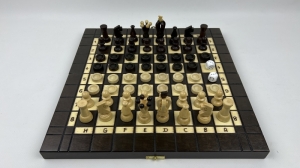
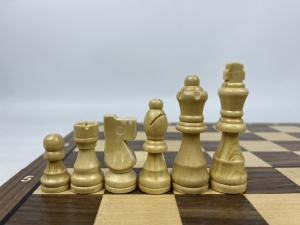
  • The size of the board when folded is 46x23x5 cm. The size of the board when unfolded is 35x35 cm. Cage size is 4.6x4.6 cm  The height of the king is 10 cm. The diameter of the base is 3 cm. Pawn height 5.5 cm. Base diameter 2.8 cm. Weight 1380 g. ART 123 Manufacturer Poland

    183.15 $
  • Author:
    Franco

    The book by grandmaster and experienced chess coach Zenon Franco includes 36 instructive attacking games and is divided into four chapters - the king in the center, one-sided castling, opposite-sided castling, and attack-defense-counterattack. Before each game, the opponents are introduced, and a brief description of the events that took place in it is given. Based on the results of the struggle in the game, lessons that are useful to learn from what has been read are listed in a concise form. The book is not overloaded with variations, the emphasis is on detailed explanations in the "move by move" format, which creates an ideal platform for studying chess. At the "support" points of each game, the reader is offered test questions, which helps both the practical study of key chess techniques and the reliable assimilation of the acquired knowledge. Questions and answers involve the reader in the learning process and help him track the growth of his chess strength. For a wide range of chess fans.

    19.00 $
  • Author:
    Kasparov

    41.67 $
  • Author:
    Yanvarev

    Igor Yanvarev "Tactical Mastery of a Chess Player. Volume 2. Basics of Calculation Techniques". Andrey Elkov Publishing House, Moscow, 2025 - 392 p. Before you is the second book from the three-volume work by International Master I.K. Yanvarev, a famous trainer, author of the fundamental work "The Old Indian Played by Tigran Petrosian" (2010), which received recognition from readers and was republished abroad. The three-volume work is united by a common idea - tactics and combinations in chess. In fact, this is a turnkey textbook, it explains everything from scratch to an advanced level. The second volume is devoted to the basics of calculation techniques, such topics as the tactical "spectrum" of a position, concentration of attention, inclusion of imagination are considered, the "tree of variations" is interpreted in a new way, the practical component is emphasized - the economy of calculation. A separate chapter allows the reader to assess their ability to calculate variations and outline ways to eliminate weaknesses. Each chapter ends with a large number of carefully selected examples for independent solution. Unlike other similar publications, the author examines chess tactics as a single whole, in combination with strategy and elements of psychology. It is based on the original author's methodology, which has proven itself well when working with chess players of various qualifications. Excellently selected examples, a clear logical structure and consistency in the presentation simplify the understanding of the material. For a wide range of chess fans.

    19.00 $
  • Author:
    Zhuravlev

    This tutorial is addressed to those who want to learn to play chess on their own and improve further. The lesson-based method of presentation, as well as numerous exercises, contribute to the consistent assimilation of the rules and laws that form the basis of the chess game. The book contains extensive educational material, which is presented to the reader in accordance with modern pedagogical principles. The purpose of this manual is to train chess players of the III category (rating up to 1800). The textbook can also be used for classes in groups - it covers the material of existing programs of the first year of study in children's and youth chess schools.

    23.33 $
  • Author:
    Franco

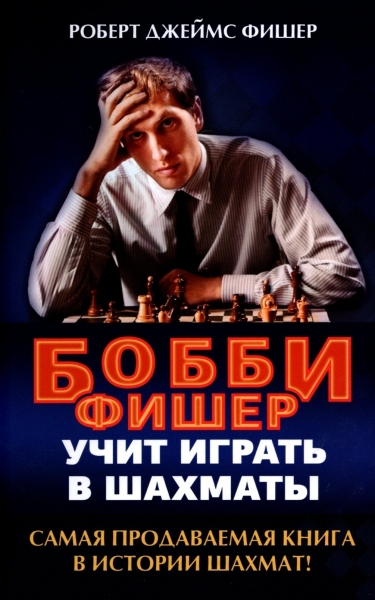
    In his new book, grandmaster Zenon Franco deeply analyzes the 69 instructive victories of the 11th world champion Robert Fischer. The book is not overloaded with options, the emphasis – with detailed explanations in a move-by-move style, creating an ideal platform for learning chess. In the "reference" At points in each game, the reader is offered test questions, which helps both the practical study of key techniques of the chess game and the reliable assimilation of acquired knowledge. Questions and answers engage the reader in the learning process and help him track his growth in chess strength. The appendix provides a critical analysis of the unsatisfactory translation of Robert Fisher's famous book “My 60 Memorable Games.”

    23.33 $
  • Author:
    Ezhov

    Grandmaster Carlos Torre – like a chess comet; his genius flashed dazzlingly and quickly went out in the chess firmament! He – the author of the most famous “mill” in the history of chess, the 2nd world champion Emanuel Lasker fell into its merciless millstones. The authors spoke about the life and work of the Mexican genius (the book contains 25 commentated games by K. Torre). Torre’s book “How a Chess Player is Formed” is presented, an essay by international master Yaroslav Prizant about Torre’s attack in modern practice. In the section "Play like Torre" – 36 instructive examples from his practice to solve. Finally, there is an interview with Carlos Torre, conducted by Gabriel Velasco in 1977. Working with the book will give readers not only aesthetic pleasure, but will also help improve their skills.

    18.33 $
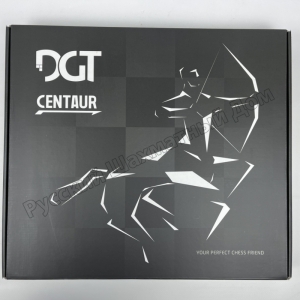
  • A limited edition of the most famous electronic chess clock. Design & quot; under the tree & quot ;. Released for the 25th anniversary of the DGT. & Nbsp; These watches are used in all major tournaments, world championships and World Cups, World Chess Olympiads. Installation of any time controls, including Fisher and Bronstein controls (with added time). & Nbsp;

    237.50 $
  • more

Skakaev K.P.

Книги издательства:

  • book

    50.00 $

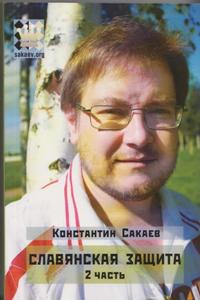
    In this work, an interested reader can see the Slavic defense as only modern top-level grandmasters see it. In this case, the explanations are given in an accessible form. In the work on the book, I used all my many years of practical and theoretical experience, as well as the strongest game programs to date. For many years I played the most diverse ramifications of this debut for both colors, analyzed it both independently and in collaboration with many famous grandmasters. Now I have decided to give everyone the opportunity to immerse themselves in the grandmaster’s laboratory and see my professional attitude to certain debut ramifications. All noteworthy lines are disassembled in detail. Also, a very large number of new products with the attached analysis. At the same time, many weak and unprincipled, although in some cases having a lot of practice, the moves were given a concise assessment.

  • book

    83.33 $

    Славянская защита - самый популярный закрытый дебют наших дней, входящий в репертуар подавляющего большинства гроссмейстеров высокого класса. Шахматист-практик, играющий 1.d4, сталкивается с этим дебютом практически в каждом турнире, черными же применять его можно вообще чуть ли не в каждой второй партии. В течение многих лет я играл самые разные разветвления этого дебюта за оба цвета, анализировал его как самостоятельно, так и в содружестве со многими известными гроссмейстерами. Сейчас я решил дать возможность всем желающим заглянуть в гроссмейстерскую лабораторию и познакомиться с моим профессиональным отношением к тем или иным дебютным разветвлениям. Вторая часть работы включает в себя все системы, не вошедшие в первую. Это популярный вариант Алапина 3.Kf3 Kf6 4.Kc3 dxc4, а также системы, берущие начало после 4...e6. Не забыты такие возможности как 5.g3 и 5.Фb3, а после 5.e3 Kbd7 разбираются главным образом меранский (6.Сd3 dxc4 7.Сxc4 b5) и антимеранский (6.Фc2 Сd6) варианты. Еще одну солидную часть книги занимает продолжение 5.Bg5, делящееся в свою очередь на несколько крупных самостоятельных разделов. Это московский (5...h6 6.Сxf6) и антимосковский (5...h6 6.Сh4) варианты, а также система Ботвинника 5...dxc4. Возможность объединить такое количество систем в одной книге (ее можно было бы сделать пятитомником) появилась благодаря тому, что я старался дерево устаревших с моей точки зрения линий сократить до умеренного количества, оставляя лишь то, что действительно полезно знать. В дебютных книгах часто приводятся второсортные продолжения, после которых следует большое количество ссылок на сыгранные таким образом партии. В итоге книга раздувается, а суть оказывается размыта. Я в подобных случаях кратко отмечал, почему данная конкретная линия не заслуживает подробного рассмотрения. Такой подход позволил «объять необъятное» не только без потери качества, но наоборот — под рукой всегда именно то, что необходимо, а найти нужную рекомендацию гораздо проще. Текстовые пояснения к вариантам и ключевым позициям даны не везде, а лишь в тех случаях, где мне это показалось важным и где выводы не слишком очевидны. В остальном использовалась общепринятая символьная система оценок. Книга содержит очень большое количество новинок с прилагающимися анализами, проделанными не менее тщательно, чем в первой части.