 Русский
  Английский
Russian Chess House
Книги издательства:
- Сортировка:
- от дорогих
- от дешевых
- новые поступления
- названия
- автор
-
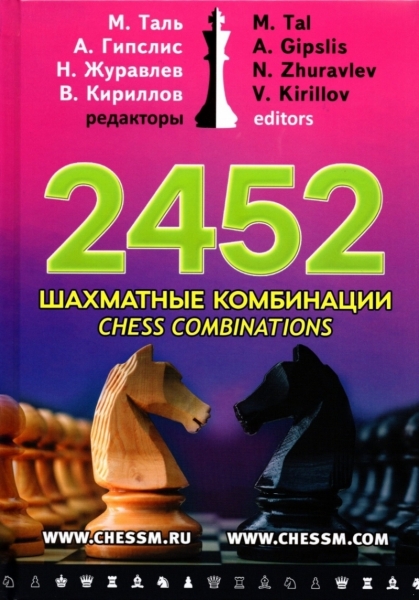
30.00 $
This collection of wonderful combinations is based on the famous magazine “Chess” published in the USSR. The editorial office was located in Riga, its members included strong Latvian chess players, and the editor-in-chief of the publication for many years was the eighth world champion Mikhail Tal, who always took an active part in the development of the magazine. Perhaps the most popular section among readers has always been “Find the best continuation without moving the pieces.” A fresh dozen of the most beautiful and instructive combinations, mainly from current tournaments, were published on the back cover, and the solutions were given in the next issue.
The combinations were selected by the editorial team very carefully, because the magazine's circulation was more than 60,000 copies and was distributed in more than 50 countries! This edition includes combinations published in the mentioned section from 1980 to 1990.
By solving these combinations, you are sure to improve your tactical skills and significantly strengthen your game. -
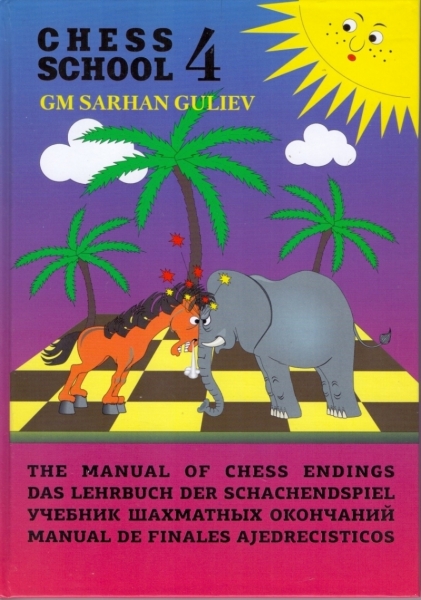
12.93 $
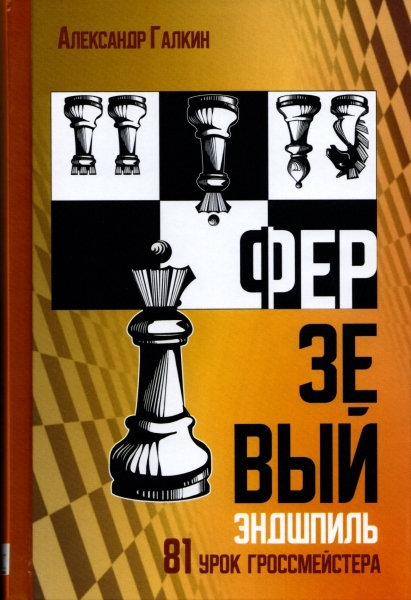
Here is a compilation of the 600 most important standard (exact) positions on the endgame. The textbook consists of eight parts: pawn endings, horsebacks, elephants, an elephant against a horse, mixed figured endings, mate with light figures, rooks, queens and endings with an unusual balance of forces. Complete each section of the job for self-decision, the answers to which you will find at the end of the book.
-
26.20 $
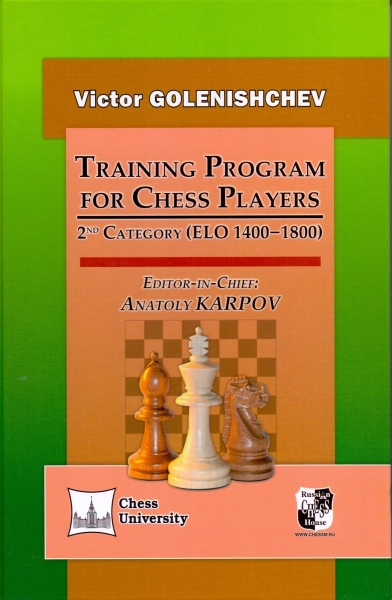
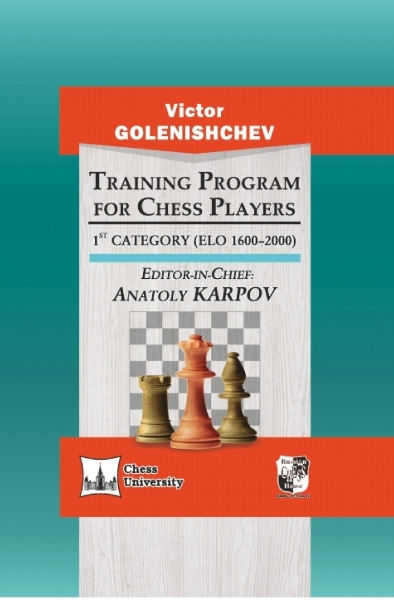
Like other titles in the Training Program for Chess Players series, this volume is both an excellent textbook for independent study and a powerful teaching aid for chess coaches. In the view of many experts, no better work of this kind has ever been written.The series was designed as a self-contained training program by Victor Golenishchev, a distinguished Soviet chesscoach and Master of Sport. Golenishchev’s programs are still considered critically important and are successfully employed in chess schools. His teaching methods remain popular in Russia and around the world.
Supervised by Editor-in-Chief and former World Chess Champion Anatoly Karpov, this new edition of Golenishchev’s classic work is updated to include important games from recent high-level chess competitions, reflecting modern approaches to the game.
-

14.07 $
The fourth world champion Alexander Alekhine has gone down in history not
only as the winner of numerous tournaments and matches and the creator of
hundreds of chess masterpieces. He is also rightly regarded as one of the
most outstanding analysts of all time. Alekhine’s annotations are
distinguished by their depth and objectivity, and a clear explanation of the
ideas inherent in a position. In this edition for the first time ALL
Alekhine’s games with his own annotations have been compiled. At present
many of them can be found only in old magazines, and some have not
previously been published in English.
In the editorial notes the achievements of modern computer analysis (italicized)
have been incorporated.
pdf file
-
14.07 $
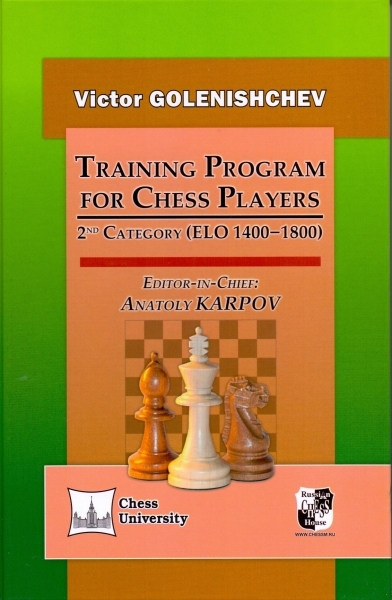
Like other titles in the Training Program
for Chess Players series, this
volume is both an excellent textbook
for independent study and a powerful
training aid for chess coaches. In the
view of many experts, no better work
of this kind has ever been written.
coach and Master of Sport. Golenishchev's programs are still considered.
critically important and are successfully
employed in chess schools. His
teaching methods remain popular in
Russia and around the world.
Supervised by Editor-in-Chief and former
Karpov, this new edition of Golenishchev's
classic work is updated to include
important games from the recent
high-level chess competitions, reflecting
modern approaches to the game. -
11.39 $
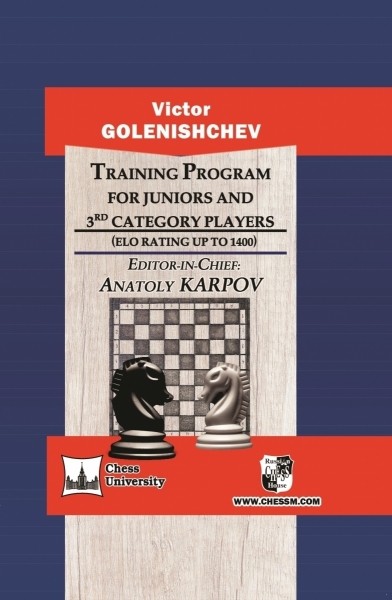
This book is both an excellent manual for independent study, and
a valuable instructional aid for chess trainers and teachers. Many
experts even consider that nothing better of its kind has been written.
As a program for training chess players, it was developed by Victor
Golenishchev, a USSR master and honoured trainer. Golenishchev’s
programs (the present book, and also the programs for 2nd category,
1st category and candidate master) still retain great methodological
value and are successfully employed in chess teaching. It is noteworthy
that the present work is extremely popular not only with our
trainers, but also with foreign experts. The present edition of this
classic book has been updated with numerous examples from the
games of the best players of recent years, and reflects modern views
on chess. The editor-in-chief is the multiple world champion Anatoly
Karpov.
This program is intended for the teaching of chess in schools and junior
clubs, and is aimed at trainers, teachers and club organisers, working with
young chess players.
The program assumes that the pupils know the moves of the pieces and
understand the aim of the game, although the more complicated rules will
be unfamiliar to them.
The teaching plan is aimed at 75 lessons (twice a week, each of two hours)
– a total of 150 hours.
The scheme of a lesson is roughly as follows: checking of home
assignment, explanation of theoretical material, recording by the pupils of
the home assignment and a practical part. The length of the theoretical part
of the lesson should not exceed 20-30 minutes, since most of the pupils will
be in junior school classes. Chess attracts them above all as a game, and in an
effort to cover too much the teacher may kill the keen interest of the young
listeners. -
24.00 $
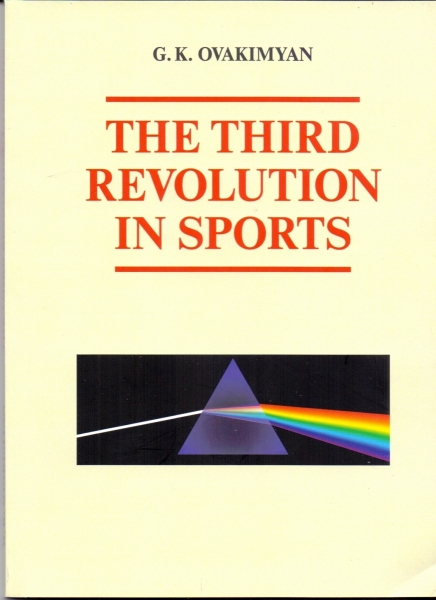
The Informational Technological Revolution had transformed practically
all the spheres of human activity. Sports will not be an exception, and new
kinds of sports, distinctive of the information society, are bound to emerge.
The author of this book believes that these will be spectacular intellectual
games, based on such popular sports as chess, go, xiangqi, shogi, renju, etc.
The author is convinced: the team game scenario he had developed will
resolve the issue of these sports & rsquo; staginess by ensuring an active discussion in
the course of the entire game. It results in the harmonious combination of
a highly dynamic game and sufficient time for effective creativity, which, along
with the exhilaration of a team discussion and availability of new information,
guarantees the staginess of intellectual competitions.
The book is intended for the general public
-
 The life of a chess player in the system. Memories of the grandmaster
Author:
The life of a chess player in the system. Memories of the grandmaster
Author:
Averbah 45.00 $ -
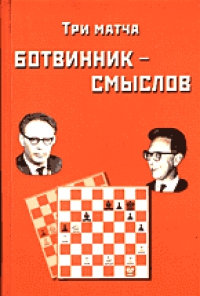 Три матча Ботвинник-Смыслов
Author:
Три матча Ботвинник-Смыслов
Author:
Botvinnik 45.00 $ -
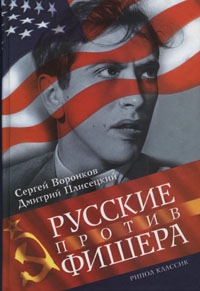 Russians vs Fisher
Author:
Russians vs Fisher
Author:
Voronkov 65.00 $ -
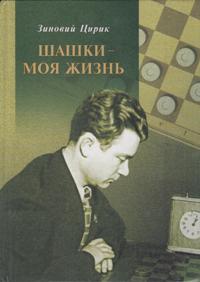 Checkers is my life
Author:
Checkers is my life
Author:
Ciric 87.50 $ -
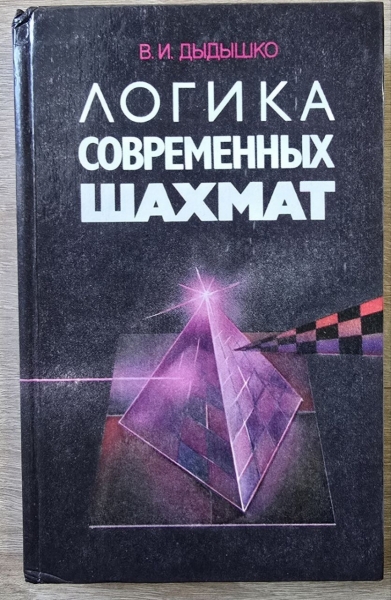 The logic of modern chess
Author:
The logic of modern chess
Author:
Dydyshko 72.50 $ -
 Siegbert Tarrasch. The Queen
Author:
Siegbert Tarrasch. The Queen
Author:
Tarrash 72.50 $ -
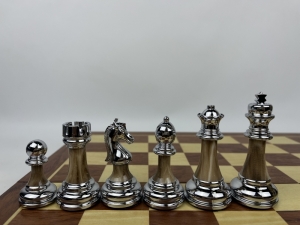 High quality acrylic metal heavy chess pieces with wooden board
202.50 $
High quality acrylic metal heavy chess pieces with wooden board
202.50 $
-
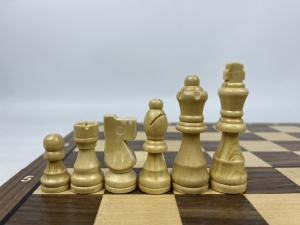 Wooden magnetic Staunton chess with a lock (silver)
56.25 $
Wooden magnetic Staunton chess with a lock (silver)
56.25 $
-
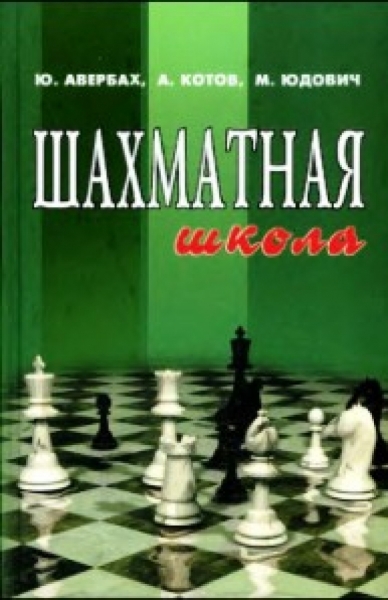 Chess school
Author:
Chess school
Author:
Averbah 15.00 $ -
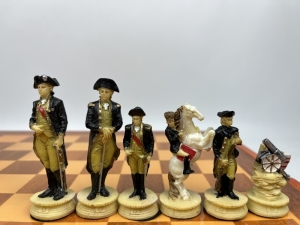 The chess set of The Chessmen. US war - Great Britain
325.00 $
The chess set of The Chessmen. US war - Great Britain
325.00 $