 Русский
  Английский
Suhin
Книги автора:
-
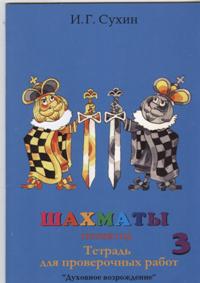
The notebook is intended for the third year of study in any grade of primary school. Each of the 15 tests is designed for 15-25 minutes and is located on a separate sheet. The notebook can be used at various stages of the educational process for frontal, group, individual work, for classes in pairs.
-
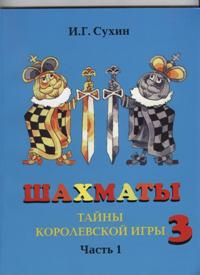
22.76 $
This tutorial continues the course of the initial chess game training and follows the textbooks & laquo; Chess, the first year, or There the cells of black and white wonders and mysteries are full & raquo; and 'Chess, the second year, or Play and Win & raquo ;. The theory of the chess game is fixed with the help of a large number of didactic tasks and games, with the predominant use of illustrative material of a meaningful nature. The textbook is intended for the third grade of primary school, but can be used in classes in other classes. This is ensured by the fact that in each section students are offered both simple and complex tasks. To the textbook & laquo; Chess, the third year, or Secrets of the royal game & raquo; a methodical manual for the teacher (and parents) was developed, "Chess, the third year, or I study and teach".
-
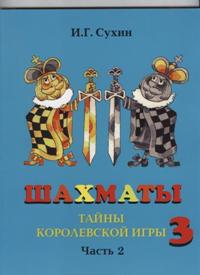
This tutorial continues the course of the initial chess game training and follows the textbooks & laquo; Chess, the first year, or There the cells of black and white wonders and mysteries are full & raquo; and 'Chess, the second year, or Play and Win & raquo ;. The theory of the chess game is fixed with the help of a large number of didactic tasks and games, with the predominant use of illustrative material of a meaningful nature. The textbook is intended for the third grade of primary school, but can be used in classes in other classes. This is ensured by the fact that in each section students are offered both simple and complex assignments. To the textbook "Chess, the third year, or the secrets of the royal game". a methodical manual for the teacher (and parents) was developed, "Chess, the third year, or I study and teach".
-
Notebooks contain entertaining assignments that will help the child learn the basics of the chess game. Working with notebooks, the child will help the scattered artist: correct his mistakes, guess the riddles. In the workbooks, the material corresponding to the Chess program, the third year, is included, the textbook for schoolchildren & Chess, the third year, or the Secrets of the royal game & raquo; and a manual for the teacher & laquo; Chess, the third year, or I study and teach & raquo ;. Notebooks are designed for the third year of study in any grade of primary school.
-
8.28 $
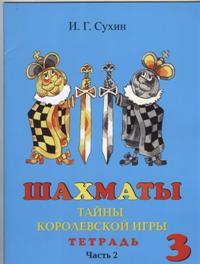
The Notebook contains entertaining assignments that will help children learn the basics of the chess game. Work with the notebook, the student will solve chess problems, helping the scattered artist, as well as perform entertaining tasks. The notebook is intended for the third year of schooling in the third or fourth grade of primary school.
-
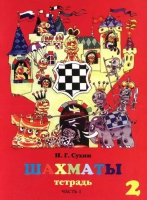
Notebooks contain entertaining assignments that will help the child learn the basics of the chess game. Working with notebooks, the child will help the scattered artist: correct his mistakes, guess the riddles. Worksheets include the material that corresponds to the Chess program, the second year, the textbook for schoolchildren & Chess, the second year, or Play and win & raquo; and a tutorial for the teacher & laquo; Chess, the second year, or I study and teach & raquo ;. Notebooks are designed for the second year of study in any grade of primary school. In the case of notebooks in the first class, it is not necessary to perform assignments related to the use of chess notation and recording, and most of the problems can be solved only by arrows.
-
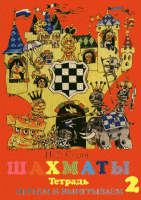
Notebooks contain entertaining assignments that will help the child learn the basics of the chess game. Working with notebooks, the child will help the scattered artist: correct his mistakes, guess the riddles. Worksheets include the material that corresponds to the Chess program, the second year, the textbook for schoolchildren & Chess, the second year, or Play and win & raquo; and a tutorial for the teacher & laquo; Chess, the second year, or I study and teach & raquo ;. Notebooks are designed for the second year of study in any grade of primary school. In the case of notebooks in the first class, it is not necessary to perform assignments related to the use of chess notation and recording, and most of the problems can be solved only by arrows.
-
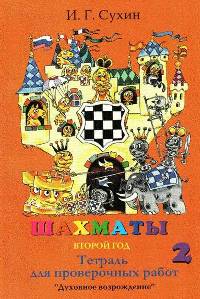
The notebook is intended for the second year of study in any grade of primary school. Each of the 15 tests is designed for 15-25 minutes and is located on a separate sheet. The main task of the publication is to ensure ongoing monitoring after passing through each major topic of the curriculum. There are two equivalent options for monitoring: 1. Before each test work, students are given a notebook. 2. Students are given only sheets with the current test work, previously cut from the notebook. Therefore on each sheet there are columns "school and class number", "surname of the pupil". The notebook can be used at various stages of the educational process for frontal, group, individual work, for classes in pairs.
-
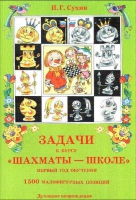
The ability to declare the opponent a mate & ndash; the basis of chess art. However, in the sea of chess literature, the most important stage of training was undeservedly forgotten; & ndash; tasks on mate in one turn. The task book includes the material that corresponds to the Chess program, the first year, the textbook for schoolchildren & Chess, the first year, or There the cells are black-and-white miracles and mysteries are full & raquo; and a manual for the teacher & laquo; Chess, the first year, or I study and teach & raquo ;. In the collection of 1500 tasks: 1242 clearly structured three-, four- and five figured positions-schemes, covering all typical matte constructions for a given number of figures and a workshop of 258 training positions.
-
22.76 $
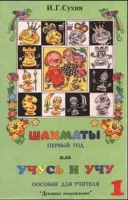
This book & ndash; the first in the world practice of chess allowance for primary school teachers who do not have much knowledge in the field of chess. This manual is designed to be a textbook for the first year of schooling & laquo; Chess, the first year, or There cells of black and white wonders and mysteries are full & raquo ;. The manual details the methodology for each lesson. At the beginning of each chapter-lesson, the teacher explains the necessary chess information. The abundance of fun tasks in the manual, fascinating didactic games will allow the teacher to make each occupation a holiday for the children. The book is addressed to primary school teachers, teachers of kindergarten preparatory groups, teacher trainers, and also parents.
-
 The life of a chess player in the system. Memories of the grandmaster
Author:
The life of a chess player in the system. Memories of the grandmaster
Author:
Averbah 45.00 $ -
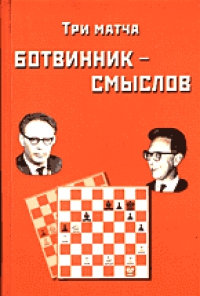 Три матча Ботвинник-Смыслов
Author:
Три матча Ботвинник-Смыслов
Author:
Botvinnik 45.00 $ -
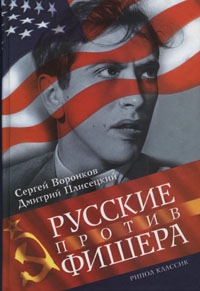 Russians vs Fisher
Author:
Russians vs Fisher
Author:
Voronkov 65.00 $ -
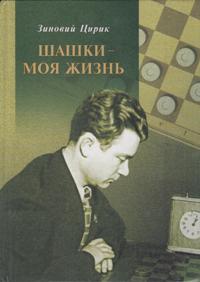 Checkers is my life
Author:
Checkers is my life
Author:
Ciric 87.50 $ -
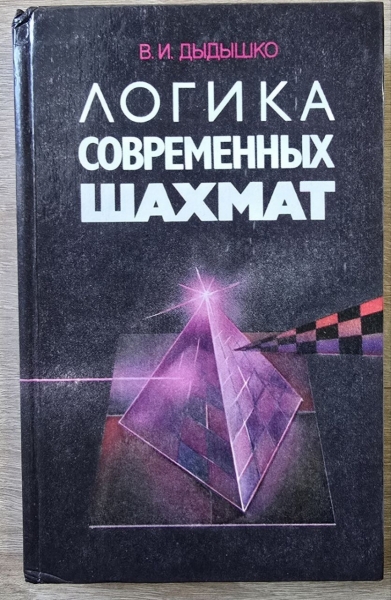 The logic of modern chess
Author:
The logic of modern chess
Author:
Dydyshko 72.50 $ -
 Siegbert Tarrasch. The Queen
Author:
Siegbert Tarrasch. The Queen
Author:
Tarrash 72.50 $ -
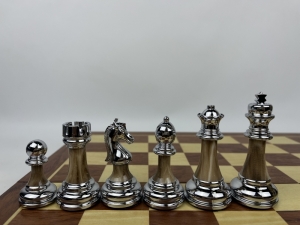 High quality acrylic metal heavy chess pieces with wooden board
202.50 $
High quality acrylic metal heavy chess pieces with wooden board
202.50 $
-
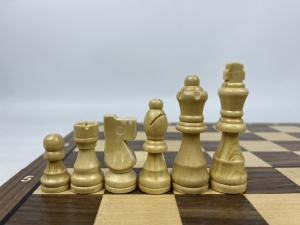 Wooden magnetic Staunton chess with a lock (silver)
56.25 $
Wooden magnetic Staunton chess with a lock (silver)
56.25 $
-
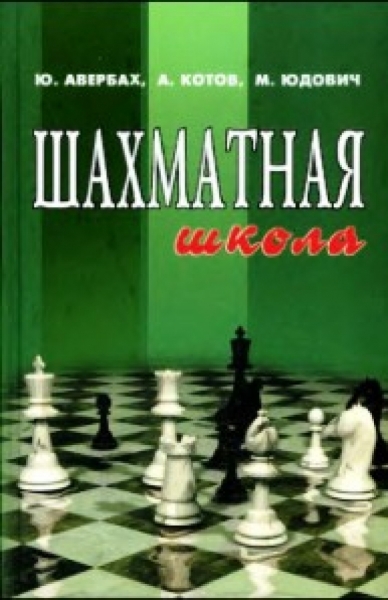 Chess school
Author:
Chess school
Author:
Averbah 15.00 $ -
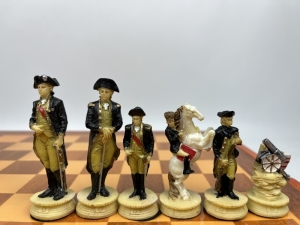 The chess set of The Chessmen. US war - Great Britain
325.00 $
The chess set of The Chessmen. US war - Great Britain
325.00 $