menu
top sales
  • A limited edition of the most famous electronic chess clock. Design & quot; under the tree & quot ;. Released for the 25th anniversary of the DGT. & Nbsp; These watches are used in all major tournaments, world championships and World Cups, World Chess Olympiads. Installation of any time controls, including Fisher and Bronstein controls (with added time). & Nbsp;

    237.50 $
  • Author:
    Fine

    In the vast ocean of chess literature there are relatively few books about the endgame, and only a few of them can be considered true chess classics. And the most outstanding among the classics — Reuben Fine's book "Basic Chess Endings". Reuben Fine (1914−1993) was for a long time one of the best chess players in the world. As an author, Fine showed himself to be an excellent analyst who understood the full depth and peculiarities of the endgame. Having studied various types of standard positions, Fine established useful rules for practical play and proved himself to be an experienced teacher who, using skillfully chosen examples, was able to teach the reader all the necessary lessons and introduce him to the basic ideas of the endgame. Many generations of chess players in different countries of the world keep copies of “Basic Chess Endings”. For example, Mikhail Botvinnik considered Fine's work the most worthy of all that had ever been written on endgame theory.

    35.00 $
  • Author:
    Zhuravlev

    This tutorial is addressed to those who want to learn to play chess on their own and improve further. The lesson-based method of presentation, as well as numerous exercises, contribute to the consistent assimilation of the rules and laws that form the basis of the chess game. The book contains extensive educational material, which is presented to the reader in accordance with modern pedagogical principles. The purpose of this manual is to train chess players of the III category (rating up to 1800). The textbook can also be used for classes in groups - it covers the material of existing programs of the first year of study in children's and youth chess schools.

    23.33 $
  • Author:
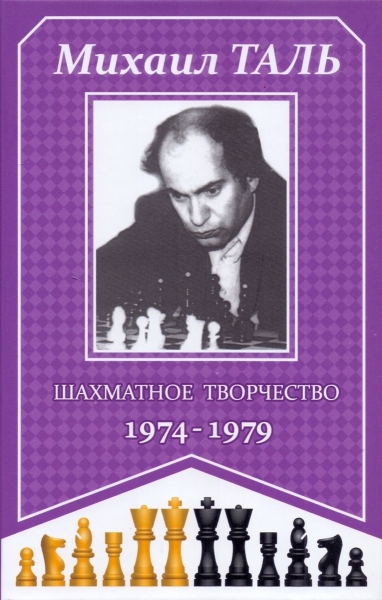
    Tal

    21.67 $
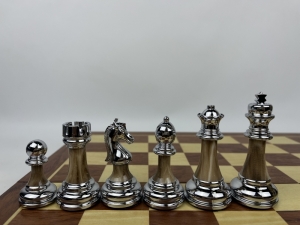
  • The size of the board when folded is 46x23x5 cm. The size of the board when unfolded is 35x35 cm. Cage size is 4.6x4.6 cm  The height of the king is 10 cm. The diameter of the base is 3 cm. Pawn height 5.5 cm. Base diameter 2.8 cm. Weight 1380 g. ART 123 Manufacturer Poland

    183.15 $
  • Author:
    Chernyshov

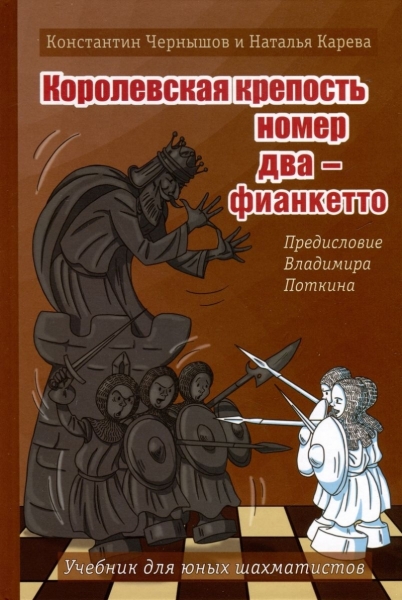
    The authors continue to study typical opening and middlegame positions. Royal Fortress No. 2 has pawns on squares f7, g6, h7 (or f2, g3, h2), and they are usually joined by another defender – bishop on g7 (g2). This formation is called fianchetto, it is found in many popular openings, such as the Catalan Opening, King's Indian Defense, Grunfeld Defense and a number of others.  The authors analyze in detail the techniques of attack, defense and counterattack. Most examples – from the creativity of modern chess players (for example, a separate chapter is dedicated to the strongest Russian grandmaster Ian Nepomniachtchi); they are complemented by parts that have become a classical heritage. The book contains about 300 positions for independent solution, so it is not only a textbook, but also a solid problem book. Grandmaster Konstantin Chernyshov, head of the Interregional Grandmaster School in Kostroma, and his daughter International Master Natalya Kareva – experienced coaches, whose students include grandmasters and masters, champions of Russia and Europe among juniors.  The book is addressed to young chess players and their mentors. 

    20.00 $
  • Author:
    Chandler

    The set consists of the book Chandler M. Chess for Children (gift edition) and the hero of this book - Marty the dragon (Dragon is the symbol of 2024). LEARN CHESS with the Very Big Dragon Marty! Using this entertaining book, your child will quickly and easily learn to play chess – the world's most popular strategy game that develops logical thinking. The rules are explained clearly and clearly, step by step, from scratch. The lessons reinforce the fun conversations between the boy Petya and his favorite dragon Marty, who calls himself the Very Big Dragon. In many countries, chess is recognized as a useful means of developing creative thinking in children. Although they are considered a complex and even mysterious game, the rules are quite simple. It doesn't take long to understand how the pieces move, and even a five-year-old child can enjoy chess. And children really like to beat their friends and relatives! Enlarged format (210x290 mm) The cute green dragon, the symbol of 2024, symbolizing strength, generosity, courage and endurance, is the hero of the book, which explains the rules of the chess game. The dragon has a suction cup, and you can use it to hang the toy on a glossy surface, on a window or refrigerator. Made of soft fabric,  has a height of 20 cm and a length of 26 cm.

    27.33 $
  • Author:
    Getmanchuk

    16.67 $
  • Author:
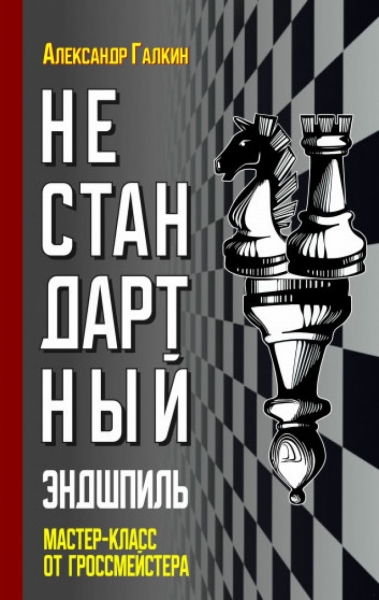
    Galkin

    The book by grandmaster and experienced coach Alexander Galkin is dedicated to the strongest piece on the chessboard – to the queen. Using the example of episodes from games of modern grandmasters (the vast majority of games date back to 2020-2023) and his own grandmaster practice, the author tries to generalize, and in some places even clarify the methodology for understanding and playing queen endings, as well as other types of endgames with the presence of queens ) On the desk. The book presents various ratios of material – “queen against queen”, “queen and minor piece against queen and minor piece”, “queen and rook against queen and rook”, “queen against two rooks”, “queen against rook and pawns”, “ queen against a rook and a minor piece”, “two queens against two queens” – practically the entire spectrum of encountered endgames of this type. The material is structured in such a way that the reader can get maximum benefit from studying the examples of queen endings and its other derivatives offered by the author. The book is aimed at advanced chess players, is useful for coaches and can be recommended to a wide range of chess fans.

    18.33 $
  • Author:
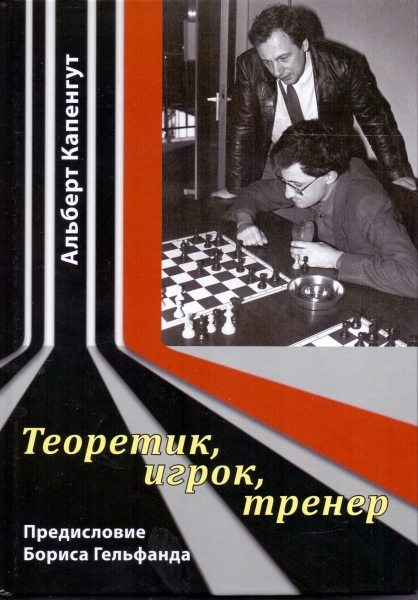
    Kapengut

    An outstanding theorist and successful coach shares his memories of communication and cooperation with Mikhail Tal, Anatoly Karpov, Isaac Boleslavsky, Elena Akhmylovskaya and other outstanding chess players. Separate large chapter – a story about many years of work with Boris Gelfand: over these years (1980-1993) the student went from a 12-year-old candidate for master to the holder of the 3rd rating in the world. Albert Kapengut – winner of 6 gold medals at the World Student Olympics, seven-time champion of Belarus, participant in the individual and team championships of the USSR among men, champion of the USSR as part of the Burevestnik team. The book includes 70 games commented in detail by the author, a careful study of which will help the reader not only better understand popular opening schemes, but also get a taste for serious analytical work. “My story is not so much about a career, although “you can’t erase words from a song,” but about memorable situations, often funny, sometimes absurd, and dotted about people I met along the way, sometimes with touches of biography, prompting readers to become interested in more complete information.” ;" (A. Kapengut). For a wide range of chess lovers.

    43.33 $
  • more

Golenishchev

Книги автора:

  • book

    26.20 $

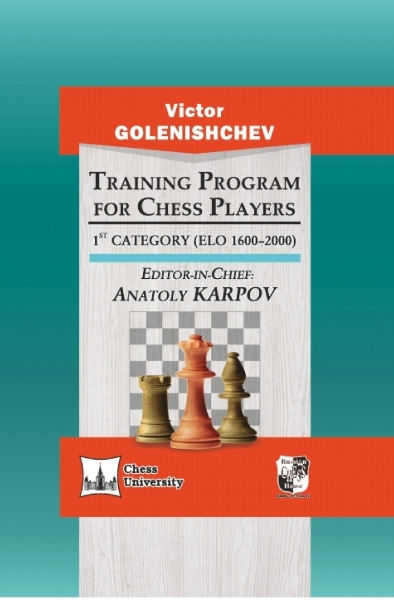
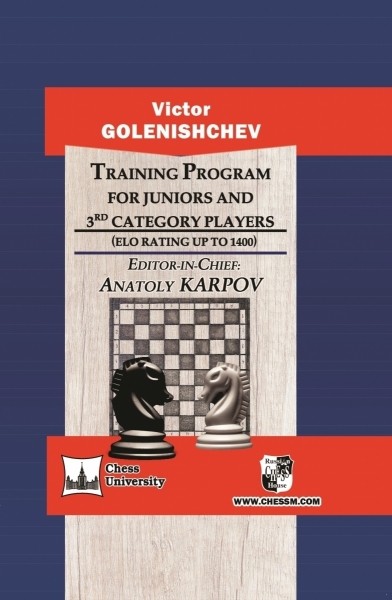
    Like other titles in the Training Program for Chess Players series, this volume is both an excellent textbook for independent study and a powerful teaching aid for chess coaches. In the view of many experts, no better work of this kind has ever been written.The series was designed as a self-contained training program by Victor Golenishchev, a distinguished Soviet chesscoach and Master of Sport. Golenishchev’s programs are still considered critically important and are successfully employed in chess schools. His teaching methods remain popular in Russia and around the world.

    Supervised by Editor-in-Chief and former World Chess Champion Anatoly Karpov, this new edition of Golenishchev’s classic work is updated to include important games from recent high-level chess competitions, reflecting modern approaches to the game.

    Fragment 1

    Fragment 2

  • book

    14.07 $

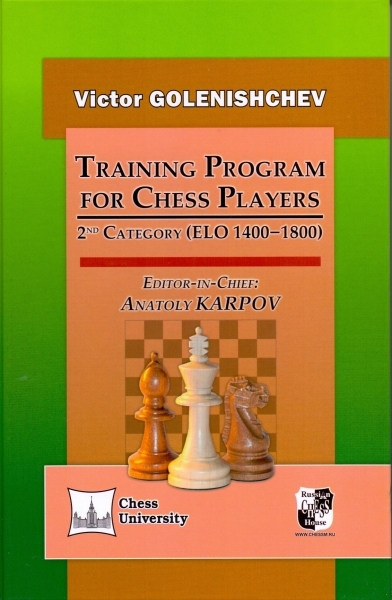
    Like other titles in the Training Program
    for Chess Players series, this
    volume is both an excellent textbook
    for independent study and a powerful
    training aid for chess coaches. In the
    view of many experts, no better work
    of this kind has ever been written.
    coach and Master of Sport. Golenishchev's programs are still considered.
    critically important and are successfully
    employed in chess schools. His
    teaching methods remain popular in
    Russia and around the world.
    Supervised by Editor-in-Chief and former
    Karpov, this new edition of Golenishchev's
    classic work is updated to include
    important games from the recent
    high-level chess competitions, reflecting
    modern approaches to the game.


  • book

    11.39 $

    This book is both an excellent manual for independent study, and
    a valuable instructional aid for chess trainers and teachers. Many
    experts even consider that nothing better of its kind has been written.
    As a program for training chess players, it was developed by Victor
    Golenishchev, a USSR master and honoured trainer. Golenishchev’s
    programs (the present book, and also the programs for 2nd category,
    1st category and candidate master) still retain great methodological
    value and are successfully employed in chess teaching. It is noteworthy
    that the present work is extremely popular not only with our
    trainers, but also with foreign experts. The present edition of this
    classic book has been updated with numerous examples from the
    games of the best players of recent years, and reflects modern views
    on chess. The editor-in-chief is the multiple world champion Anatoly
    Karpov.


    This program is intended for the teaching of chess in schools and junior
    clubs, and is aimed at trainers, teachers and club organisers, working with
    young chess players.
    The program assumes that the pupils know the moves of the pieces and
    understand the aim of the game, although the more complicated rules will
    be unfamiliar to them.
    The teaching plan is aimed at 75 lessons (twice a week, each of two hours)
    – a total of 150 hours.
    The scheme of a lesson is roughly as follows: checking of home
    assignment, explanation of theoretical material, recording by the pupils of
    the home assignment and a practical part. The length of the theoretical part
    of the lesson should not exceed 20-30 minutes, since most of the pupils will
    be in junior school classes. Chess attracts them above all as a game, and in an
    effort to cover too much the teacher may kill the keen interest of the young
    listeners.

    Fragment 1

    Fragment 2