menu
top sales
  • A limited edition of the most famous electronic chess clock. Design & quot; under the tree & quot ;. Released for the 25th anniversary of the DGT. & Nbsp; These watches are used in all major tournaments, world championships and World Cups, World Chess Olympiads. Installation of any time controls, including Fisher and Bronstein controls (with added time). & Nbsp;

    237.50 $
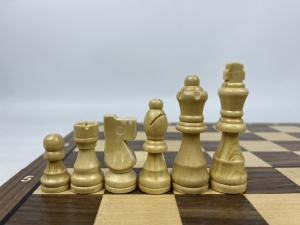
  • Chess was invented in the 5th century AD in India and spread throughout the world. The uniqueness of this game is that it still covers the minds of everyone - from young to old! Chess combines elements of science and sports. They develop logic, perseverance, attentiveness, analytical thinking and memory.  Checkers is a fun, dynamic and relatively simple game. Every country in the world has it. It is comparatively easier to find a partner here than in chess. Backgammon – one of the oldest known board games. It is known that it came to us from the East. First, you need to master the basic techniques, so that later you can boldly apply various tricks during the game.  Cage length: 4.5 cm. King height: 8.8cm King base diameter: 2.8 cm The length and width of the field when unfolded: 44 X 44 cm. Material: wood Country of origin: China.

    84.48 $
  • Author:
    Getmanchuk

    16.67 $
  • Author:
    Chernyshov

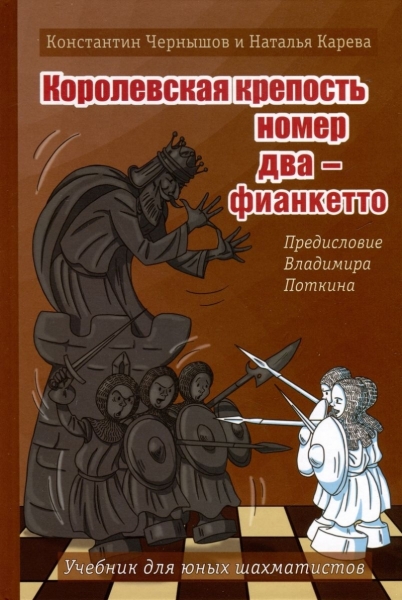
    The authors continue to study typical opening and middlegame positions. Royal Fortress No. 2 has pawns on squares f7, g6, h7 (or f2, g3, h2), and they are usually joined by another defender – bishop on g7 (g2). This formation is called fianchetto, it is found in many popular openings, such as the Catalan Opening, King's Indian Defense, Grunfeld Defense and a number of others.  The authors analyze in detail the techniques of attack, defense and counterattack. Most examples – from the creativity of modern chess players (for example, a separate chapter is dedicated to the strongest Russian grandmaster Ian Nepomniachtchi); they are complemented by parts that have become a classical heritage. The book contains about 300 positions for independent solution, so it is not only a textbook, but also a solid problem book. Grandmaster Konstantin Chernyshov, head of the Interregional Grandmaster School in Kostroma, and his daughter International Master Natalya Kareva – experienced coaches, whose students include grandmasters and masters, champions of Russia and Europe among juniors.  The book is addressed to young chess players and their mentors. 

    20.00 $
  • Author:
    Ezhov

    Grandmaster Carlos Torre – like a chess comet; his genius flashed dazzlingly and quickly went out in the chess firmament! He – the author of the most famous “mill” in the history of chess, the 2nd world champion Emanuel Lasker fell into its merciless millstones. The authors spoke about the life and work of the Mexican genius (the book contains 25 commentated games by K. Torre). Torre’s book “How a Chess Player is Formed” is presented, an essay by international master Yaroslav Prizant about Torre’s attack in modern practice. In the section "Play like Torre" – 36 instructive examples from his practice to solve. Finally, there is an interview with Carlos Torre, conducted by Gabriel Velasco in 1977. Working with the book will give readers not only aesthetic pleasure, but will also help improve their skills.

    18.33 $
  • Author:
    Bezgodov

    The youngest first–grader in the USSR, the world champion among young men, a participant in the candidates tournament at the age of 19 - Boris Spassky's rise was rapid. And then fate gave the brilliant chess player a test of strength: he stumbled twice at the decisive moment and remained beyond the threshold of interzonal tournaments ... Only ten years after his first great success, Spassky managed to pass all the qualifying tests and earn the right to a match for the crown, but he failed to defeat the Iron Tigran Petrosian the first time. It took three more years of super–efforts: by Sisyphus he rose again to the foot of Olympus and did not miss a second chance - in 1969 he became the Tenth king of chess! An essay about the life of Boris Vasilyevich and his sporting path full of ups and downs was written by Dmitry Oleynikov, Candidate of Historical Sciences, curator of the Chess Museum of the Chess Federation of Russia. 70 beautiful and instructive games of Spassky were commented on by the champion of Russia in 1993, the famous author and theorist grandmaster Alexey Bezgodov, as well as grandmaster Dmitry Kryakvin and FIDE master Steve Giddins. The preface was written by the 14th world champion Vladimir Kramnik. For a wide range of chess fans.

    21.67 $
  • Author:
    Gezalyan

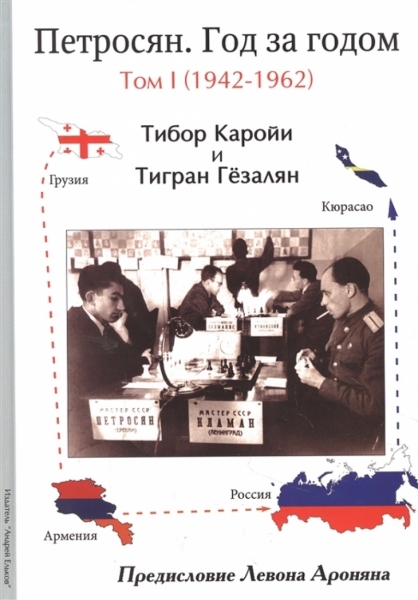
    International Master Tibor Karolyi and FIDE Master Tigran Gozalyan have prepared a major work (in two volumes) about the life and work of the 9th world chess champion Tigran Petrosyan (he held the title from 1963 to 1969).  Volume II (1963-1984) tells about Petrosyan's victory in the 1963 world title match over Mikhail Botvinnik, about the grandiose two-match confrontation with Boris Spassky in 1966 and 1969, about all his candidates' matches after losing the title – against Bobby Fischer, Viktor Korchnoi and other world-class opponents. All tournaments and matches of the second half of Petrosian's chess career are presented, up to his last performances in 1983. The authors subjected 175 complete games and fragments to an in-depth analysis (using modern computers). Not all of them have been deeply studied and commented on before, but even then the book provides a significantly improved analysis. Among Petrosyan’s opponents – world champions and contenders Kasparov, Karpov, Fischer, Spassky, Tal, Smyslov, Botvinnik, Korchnoi and Bronstein, as well as Timman, Larsen, Reshevsky, Belyavsky, Polugaevsky, Portisch, Romanishin and many others. Special attention is paid to his coaches – Alexey Suetin and Igor Zaitsev. 

    50.00 $
  • Author:
    Fine

    In the vast ocean of chess literature there are relatively few books about the endgame, and only a few of them can be considered true chess classics. And the most outstanding among the classics — Reuben Fine's book "Basic Chess Endings". Reuben Fine (1914−1993) was for a long time one of the best chess players in the world. As an author, Fine showed himself to be an excellent analyst who understood the full depth and peculiarities of the endgame. Having studied various types of standard positions, Fine established useful rules for practical play and proved himself to be an experienced teacher who, using skillfully chosen examples, was able to teach the reader all the necessary lessons and introduce him to the basic ideas of the endgame. Many generations of chess players in different countries of the world keep copies of “Basic Chess Endings”. For example, Mikhail Botvinnik considered Fine's work the most worthy of all that had ever been written on endgame theory.

    35.00 $
  • Author:
    Kalinichenko

    The vast majority of opening guides are written for adult readers. This book is also devoted to the theory but it is junior. The structure of the book is simple and attractive: openings are examined using examples from actual games, each of which is presented in the form of a lesson with its own name. Several such lessons form an opening theme, and the examination of each theme concludes with exercises. In each opening, attention is drawn to its characteristic tactical and strategic ideas of combinations for independent solution strictly corresponds to the opening theme. Written in clear and easy language, the book is furnished with a large number of diagrams. Colored explanatory arrows on the diagrams and the selection of individual pages with a colored background make the book easier to understand. Regular work solve two problems: deepen the student's knowledge and develop his tactical vision, thus improving his skill and results.

    28.80 $
  • Author:
    Vysotsky

    20.00 $
  • more

Karpov

Книги автора:

  • book

    33.75 $

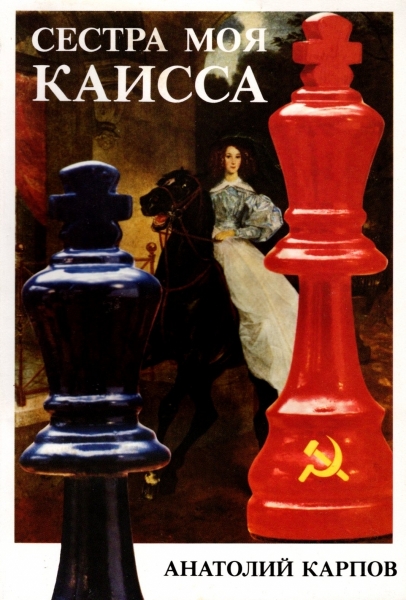
    In this book, published in the United States in Russian, the twelfth world champion A. Karpov in a fascinating manner tells about his life.

  • book

    6.91 $

    This book consists of twenty conversations, covering various chess topics. The first twelve conversations, as it should be in the textbook, are devoted to the three stages of a chess game. The first of five debut conversations tells about popular combinations and traps at the start of the battle. And in the second conversation, super-fast victories are collected, and all games here belong to world champions! The following three conversations are more solid. The examples of games played at the highest grandmaster level show how to play open, half-open and closed openings, respectively. Further there are four conversations about the middle game. The first two are tactics, the other two are more about the strategy of the game. Here are numerous combinations - from typical, educational to famous, classic. In one of the conversations there was a collection of combinations with the queen sacrifice, made in the games of chess kings! Finally, three more conversations are dedicated to the endgame. The most common endings that are most often encountered in practice are pawns and rooks.
  • book

    103.45 $

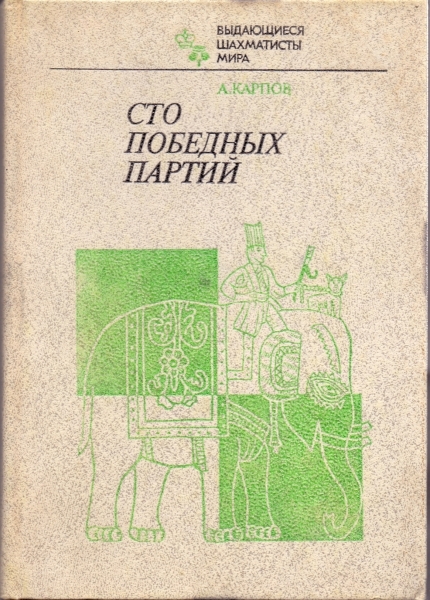
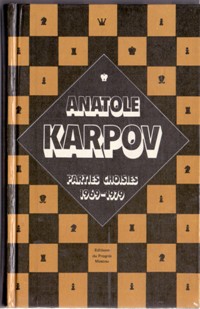
    The book is devoted to the work of the triple world champion, the outstanding Soviet chess player A. Karpov. It includes favorites & nbsp; games , played from 1969 to 1983, carefully selected and commented by the author. The notes to them reflect Karpov’s views on the chess struggle, his creative principles.

  • book

    18.62 $

    The book is dedicated to the work of the three-time champion, outstanding chess player A. Karpov. It includes selected games played from 1969 to 1983, carefully selected and commented on by the author. The notes to them reflect Karpov's views on chess, his creative principles. In the book & ldquo; One Hundred Victory Games & rdquo; Anatoly Karpov appears before us as a worthy world champion, playing and winning, as a theorist, analyst, inquisitive researcher, continuer of the classical chess heritage. For highly qualified chess players.

  • book

    13.00 $

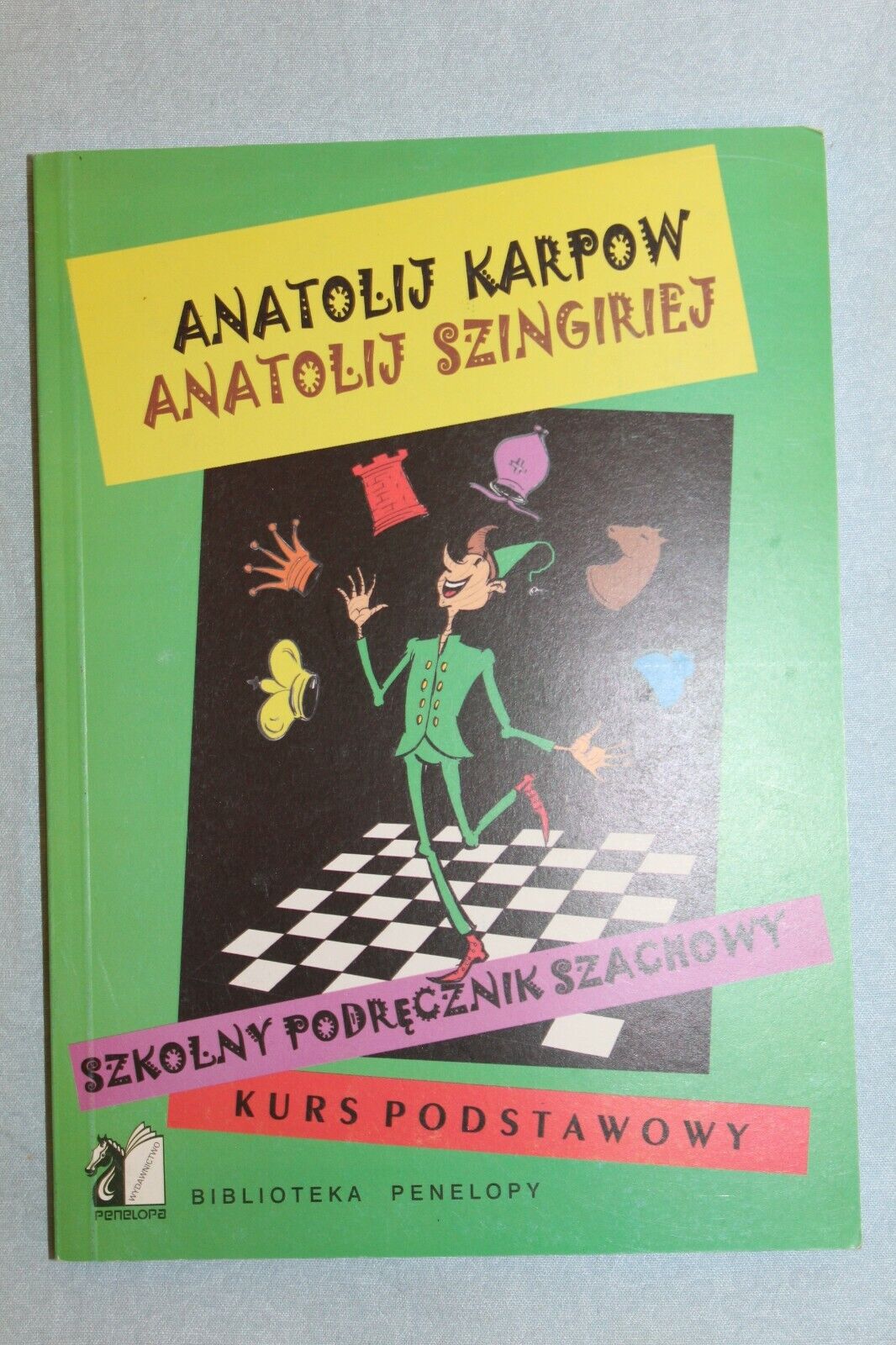
    Author: A. Karpov, A. Szingiriej

    Title: Szkolny Podrecznik Szachowy. Kurs Podstawowy

    Published: Warszawa, 2009

    Binding: Softcover

    Language: Polish

    Pages: 200

  • book

    12.00 $

    The book of the multiple world chess champion A. Karpov and the master A. Matsukevich is devoted to one of the most profound and not fully studied topics - the search for an algorithm for assessing position and, as a result, choosing the right plan. Designed for qualified chess players

    FAMOUS FRAGMENT

    FIRST 7 PAGES

    LAST 7 PAGES

    & nbsp;

  • book

    23.33 $

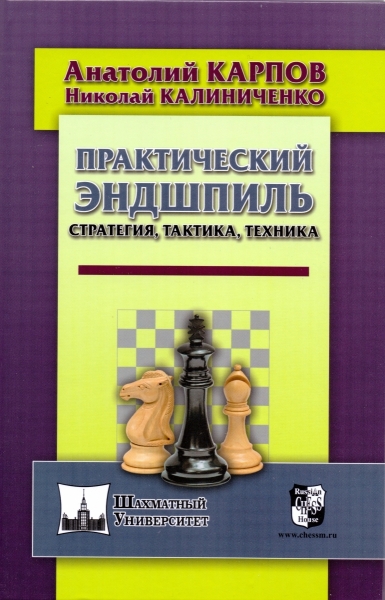
    Very often the chess game ends in the endgame, and to achieve victory, the chess player needs to know the typical techniques of realizing the advantage with limited material on the board. In this book, practical examples from the parties of the great endgame masters are considered, in which the strongest side has a certain kind of advantage & ndash; material, positional, structural, greater activity of figures. One of the chapters is devoted to combinations in the endgame. In the last chapter, the instructive endings of one of the authors of the book, the twelfth world champion Anatoly Karpov, rightly considered one of the most outstanding masters of the endgame in the history of chess, are collected. Table of Contents & nbsp; Trailer

  • book

    14.48 $

    Very often, a chess game ends in an endgame, and in order to achieve victory, a chess player needs to know typical methods for realizing an advantage with limited material on the board. This book discusses practical examples from the batches of big masters of the endgame, in which the strongest side has a certain type of advantage & ndash; material, positional, structural, greater activity of the figures. One of the chapters is devoted to combinations in the endgame. The final chapter contains the instructive endings of one of the authors of the book, the twelfth world champion Anatoly Karpov, who is rightfully considered to be one of the most prominent endgame masters in chess history. Table of Contents Excerpt