 Русский
  Английский
Antiques VIP
-
3250.00 $
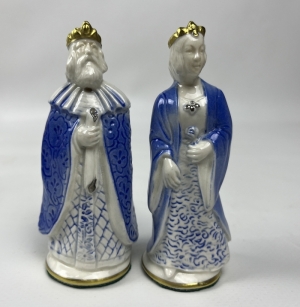
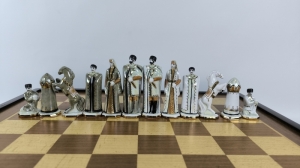
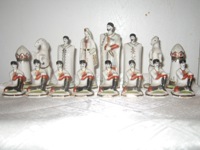
The wooden box has scuffs from time to time. The figures are in perfect condition. Overglaze polychrome painting, gilding. The brand of the Carl Enns porcelain manufactory. Chess "Lumberjacks". Zitzendorf. The same set is available at the Porcelain Chess Museum in St. Petersburg. Germany, 20th century. The first attempts to create porcelain production in Zitzendorf date back to the second half of the 18th century. In the 20th century, the manufactory underwent many difficulties and transformations and ceased to exist in 2012. The chivalrous theme The height of the king is 11 cm. The diameter of the base of the king is 4 cm Pawn height - 8.1 cm The diameter of the pawn base is 2.8 The size of the casket is 51.5 x 24.5 x 13.9 cm Art P14
-
250.00 $
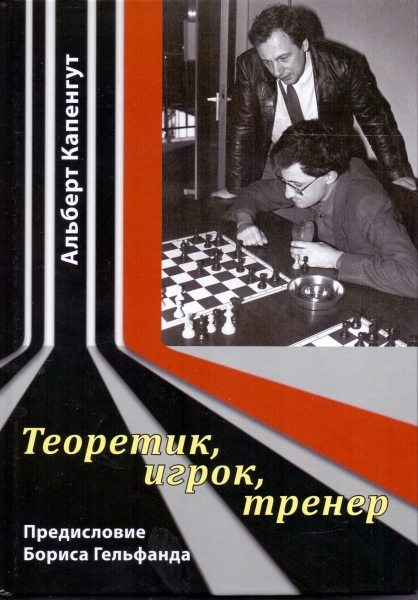
The theory of chess in this book receives a clear and stable presentation inextricably linked with the practical game. Using numerous examples from tournament games of outstanding masters, the reader step by step masters the basics of chess strategy and tactics.
-
15000.00 $
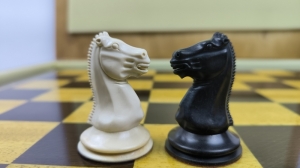
The white figures are made of mammoth bone. In order to eliminate the staining of figures with black paint, the manufacturer decided to use an equally luxurious material for black figures - ebony in its natural and natural form. Ebony is a dense black-brown hardwood that comes from several species of the genus Diospyros. This wood is used to make chess pieces because of its strength, fine texture and mirror shine when polished. It is noteworthy that ebony wood sinks in water due to its high density. Ebony is considered to be precious and one of the most expensive types of wood The sizes of the shapes: King: Height - 10.3cm Base diameter - 5 cm A pawn: Height - 5 cm Base diameter - 3.5 cm Horse: Height - 6 cm Base diameter - 4 cm Rook: Height - 5.7cm Base diameter - 4 cm Elephant: Height - 6.6cm Base diameter - 4 cm Queen: Height - 8.5 cm Base diameter - 4 cm Board size: 52.5x52.5x11 cm The size of the playing field is 46x46 cm The size of the game cage is 5.5 cm The size of the shipping case: 63x59x14 cm These chess sets represent exactly the first model of the Staunton design of 1849. Staunton is a standard chess piece design created in the mid-19th century by Nathaniel Cook. This chess design got its name in honor of the famous English chess player Howard Staunton, who lived in the 19th century. The FIDE organization recommends Staunton chess for competitions held under its auspices. Until the middle of the 19th century, every country in Europe where chess tournaments were held had its own traditional standards for chess piece designs (Barleycorn, Calver, Selenus, St. George, Lund, Regence, etc.), which was undoubtedly very inconvenient during international competitions. Nathaniel Cook registered Staunton chess on March 1, 1849, however, in the same year the rights to this chess design passed to John Jacquet, who was the brother of Nathaniel Cook's wife and owned John Jaques of London, specializing in the manufacture and sale of sports equipment. The first set of chess designed by Staunton went on sale on September 8, 1849. At the same time, the periodical "The Illustrated London News", well-known at that time, printed an advertising article stating that Howard Staunton himself was one of the creators of this wonderful design of chess pieces. There is a version that the famous chess player wrote the article, as he subsequently actively contributed to the promotion of this chess set on the market. Howard Staunton's facsimile signature was displayed under the cover of the chessboards of the first Staynton sets, and one of his books was attached to the set for free as an advertisement. However, there is an assumption that the real author of the Staunton design is John Jacquet, and Cook only registered it for himself and subsequently attracted Howard Staunton to promote chess on the market. In 1940, German aircraft bombed the John Jaques of London factory. Historical sketches and drawings of Staunton chess pieces burned down in the fire. The first Staunton chess sets were carved from ivory or hardwoods (for example, boxwood). Later, they began to be created from mammoth tusks and various valuable tree species such as wenge, ebony, boxwood, etc.
-
330.00 $
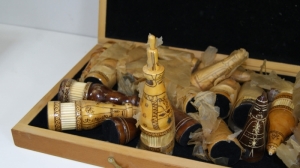
Pawn height 8.5 cm Diameter of the pawn base - 3.5 cm Height of the king - 14 cm The diameter of the king base is 3.5 cm Board size 50x50 Price in 1981 50 rubles 50 kopecks. ART P11
-
4166.67 $
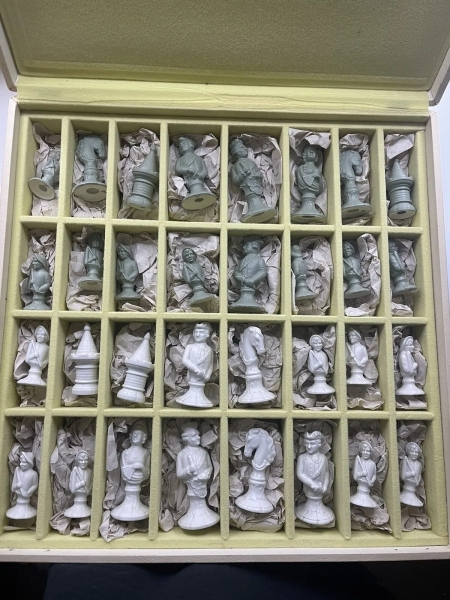
Furstenberg porcelain manufactory. Chess "Busts". Germany, mid-20th century. Two-layer jasper mass. Brand of the Furstenberg porcelain manufactory. In 1747, Duke Charles I of Brunswick founded a porcelain manufactory at Fürstenberg Castle (Saxony). Porcelain production, which became the second largest in Germany, soon made Fürstenberg a kind of artistic center of the duchy. The same set is available in the Porcelain Chess Museum in St. Petersburg. Porcelain glaze. Glass board. King height 9.5 cm Pawn height 6 cm Art P12
-

666.67 $
Attention! One pawn is missing from the set. The board has small chips. Chess from the times of the USSR, heavy. . Rock crystal figures very large, hollow inside. Presidential level chess, at one time such chess was given to General Gromov, Fidel Castro, Kadyrov Sr., Leonid Kuchma, the President of Armenia. Very rare. ART P12 (Back)
-
1666.67 $
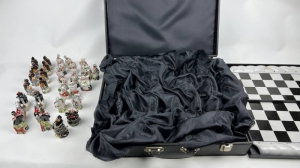
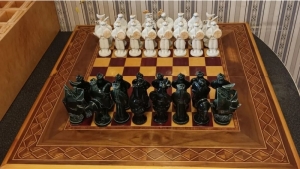
New. Cobalt porcelain with gilding. Author's work. Verbilki. Limited edition. CHARACTERISTICS: Chessboard: size 44 x 38 cm. Height of figures: from 7.0 to 9.0 cm. Size of suitcase: 46x40x9 cm. ART P12
-
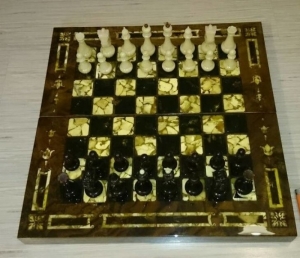
6000.00 $
Exclusive handcrafted artwork. The figures are made of white and dark amber. The chessboard is made of swamp oak with amber inserts of various shades. Chess is packed in a special suitcase. Suitcase width 50 cm, suitcase height 26.5 cm, suitcase depth 11 cm. Board size 42 * 42 cm, cage size 4 * 4 cm, king height 7.8 cm , the diameter of the king's base is 2, 5 cm. Art 19
-
-
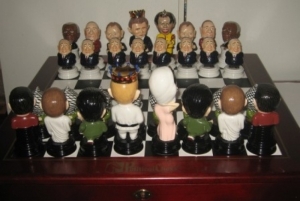
2666.67 $
Board size 45x45 cm King height 13 cm Base diameter 4.5 cm A real VIP gift All the most influential political figures on your chess board. Chessboard - mahogany. The figurines are made of high quality porcelain and painted by hand. ART P11


-
 The life of a chess player in the system. Memories of the grandmaster
Author:
The life of a chess player in the system. Memories of the grandmaster
Author:
Averbah 45.00 $ -
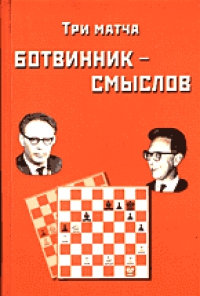 Три матча Ботвинник-Смыслов
Author:
Три матча Ботвинник-Смыслов
Author:
Botvinnik 45.00 $ -
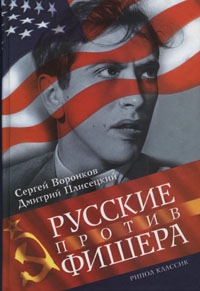 Russians vs Fisher
Author:
Russians vs Fisher
Author:
Voronkov 65.00 $ -
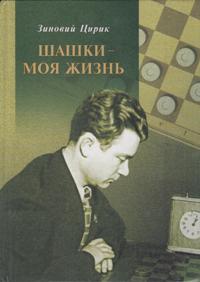 Checkers is my life
Author:
Checkers is my life
Author:
Ciric 87.50 $ -
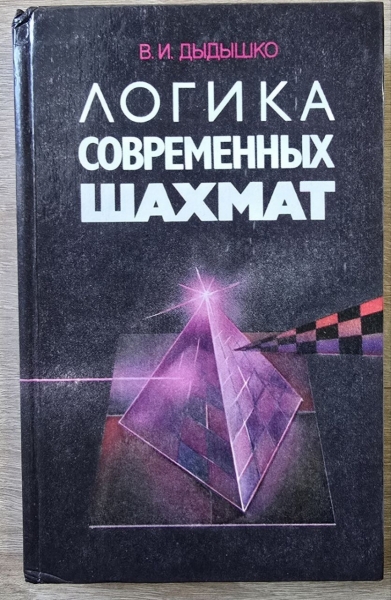 The logic of modern chess
Author:
The logic of modern chess
Author:
Dydyshko 72.50 $ -
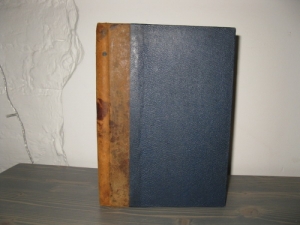 Siegbert Tarrasch. The Queen
Author:
Siegbert Tarrasch. The Queen
Author:
Tarrash 72.50 $ -
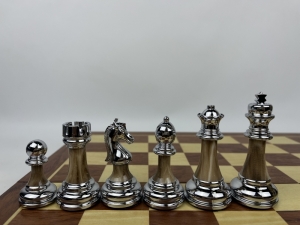 High quality acrylic metal heavy chess pieces with wooden board
202.50 $
High quality acrylic metal heavy chess pieces with wooden board
202.50 $
-
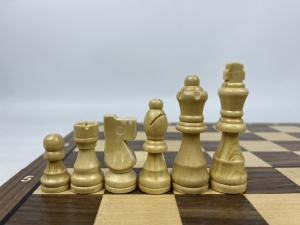 Wooden magnetic Staunton chess with a lock (silver)
56.25 $
Wooden magnetic Staunton chess with a lock (silver)
56.25 $
-
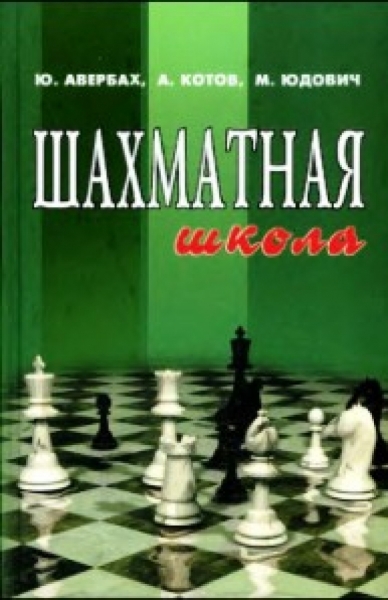 Chess school
Author:
Chess school
Author:
Averbah 15.00 $ -
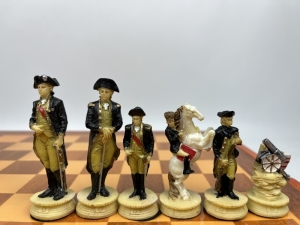 The chess set of The Chessmen. US war - Great Britain
325.00 $
The chess set of The Chessmen. US war - Great Britain
325.00 $