menu
top sales
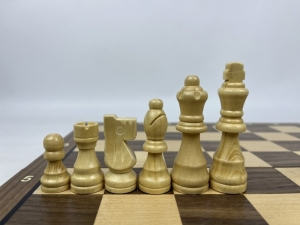
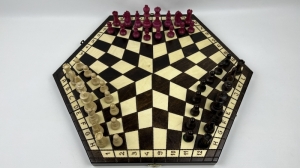
  • The size of the board when folded is 46x23x5 cm. The size of the board when unfolded is 35x35 cm. Cage size is 4.6x4.6 cm  The height of the king is 10 cm. The diameter of the base is 3 cm. Pawn height 5.5 cm. Base diameter 2.8 cm. Weight 1380 g. ART 123 Manufacturer Poland

    183.15 $
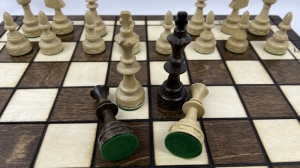
  • Unique chess for 3 players. Such chess will appeal to any person who chooses something new and appreciates original things. Manufacturer MADON-CHESS (Poland) Chessboard size: 46.5x54x2.5cm (unfolded) King height: 7.7cm King base diameter (cm): 3  Pawn height (cm): 3.6 Pawn base diameter (cm): 2.1 Presence of weighting agent: no Weight: 1311 g. Wood used for the chessboard: beech, birch Wood used for figures: hornbeam, beech  Intermediate chess for three is ideal entertainment for friends. The chess store presents to customers a unique set from a Polish manufacturer. If you are planning to buy a medium chess set for three in Moscow, pay attention to the set MADON-CHESS.   The main advantages of a chess set for three are reasonable cost and workmanship. The chess pieces are made of beech and oak of the highest quality. The chessboard is not inferior in quality: it is based on birch and beech.  The set consists of chess in three colors.  The chessboard has a compact size and is convenient to store on a shelf. Inside the board there are three separate compartments for storing pieces. For convenience and to keep products intact, the board is equipped with a soft lining.

    214.50 $
  • Author:
    Bezgodov

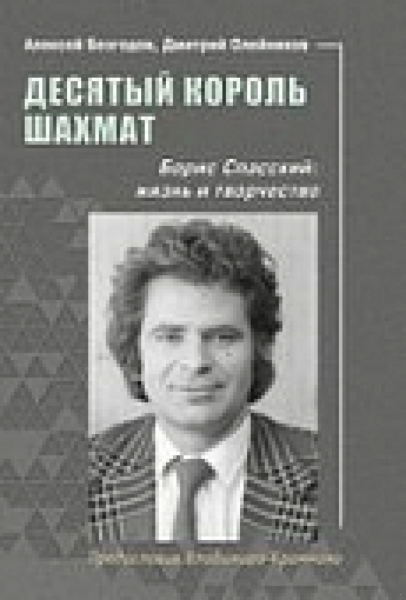
    The youngest first–grader in the USSR, the world champion among young men, a participant in the candidates tournament at the age of 19 - Boris Spassky's rise was rapid. And then fate gave the brilliant chess player a test of strength: he stumbled twice at the decisive moment and remained beyond the threshold of interzonal tournaments ... Only ten years after his first great success, Spassky managed to pass all the qualifying tests and earn the right to a match for the crown, but he failed to defeat the Iron Tigran Petrosian the first time. It took three more years of super–efforts: by Sisyphus he rose again to the foot of Olympus and did not miss a second chance - in 1969 he became the Tenth king of chess! An essay about the life of Boris Vasilyevich and his sporting path full of ups and downs was written by Dmitry Oleynikov, Candidate of Historical Sciences, curator of the Chess Museum of the Chess Federation of Russia. 70 beautiful and instructive games of Spassky were commented on by the champion of Russia in 1993, the famous author and theorist grandmaster Alexey Bezgodov, as well as grandmaster Dmitry Kryakvin and FIDE master Steve Giddins. The preface was written by the 14th world champion Vladimir Kramnik. For a wide range of chess fans.

    21.67 $
  • Author:
    Golenishchev

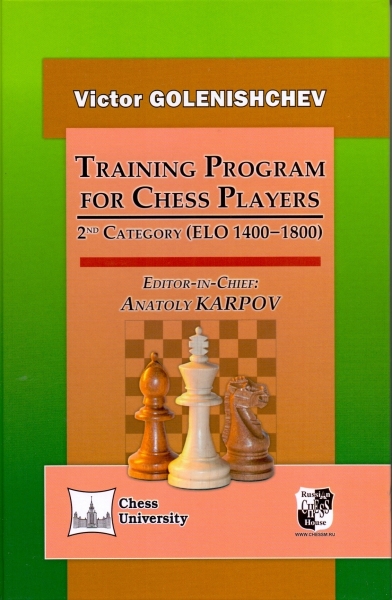
    Like other titles in the Training Program for Chess Players series, this volume is both an excellent textbook for independent study and a powerful training aid for chess coaches. In the view of many experts, no better work of this kind has ever been written. coach and Master of Sport. Golenishchev's programs are still considered. critically important and are successfully employed in chess schools. His teaching methods remain popular in Russia and around the world. Supervised by Editor-in-Chief and former Karpov, this new edition of Golenishchev's classic work is updated to include important games from the recent high-level chess competitions, reflecting modern approaches to the game. OPENING Fragment 1 OPENING Fragment 2

    30.00 $
  • Author:
    Chernyshov

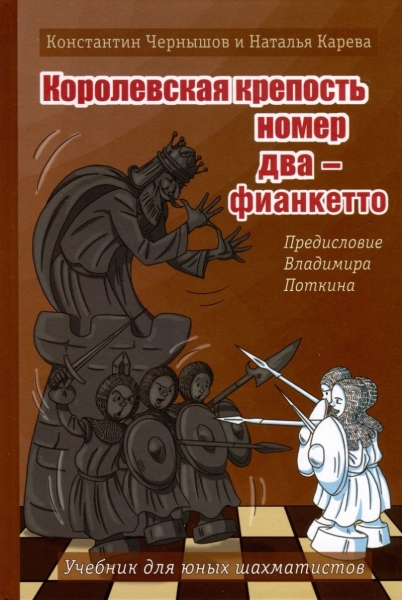
    The authors continue to study typical opening and middlegame positions. Royal Fortress No. 2 has pawns on squares f7, g6, h7 (or f2, g3, h2), and they are usually joined by another defender – bishop on g7 (g2). This formation is called fianchetto, it is found in many popular openings, such as the Catalan Opening, King's Indian Defense, Grunfeld Defense and a number of others.  The authors analyze in detail the techniques of attack, defense and counterattack. Most examples – from the creativity of modern chess players (for example, a separate chapter is dedicated to the strongest Russian grandmaster Ian Nepomniachtchi); they are complemented by parts that have become a classical heritage. The book contains about 300 positions for independent solution, so it is not only a textbook, but also a solid problem book. Grandmaster Konstantin Chernyshov, head of the Interregional Grandmaster School in Kostroma, and his daughter International Master Natalya Kareva – experienced coaches, whose students include grandmasters and masters, champions of Russia and Europe among juniors.  The book is addressed to young chess players and their mentors. 

    20.00 $
  • Author:
    Gezalyan

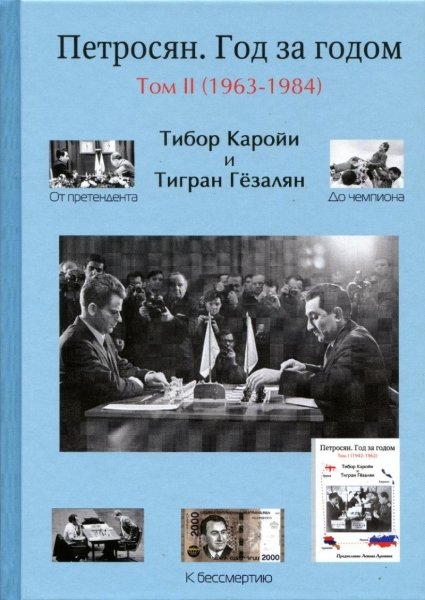
    International Master Tibor Karolyi and FIDE Master Tigran Gozalyan have prepared a major work (in two volumes) about the life and work of the 9th world chess champion Tigran Petrosyan (he held the title from 1963 to 1969).  Volume II (1963-1984) tells about Petrosyan's victory in the 1963 world title match over Mikhail Botvinnik, about the grandiose two-match confrontation with Boris Spassky in 1966 and 1969, about all his candidates' matches after losing the title – against Bobby Fischer, Viktor Korchnoi and other world-class opponents. All tournaments and matches of the second half of Petrosian's chess career are presented, up to his last performances in 1983. The authors subjected 175 complete games and fragments to an in-depth analysis (using modern computers). Not all of them have been deeply studied and commented on before, but even then the book provides a significantly improved analysis. Among Petrosyan’s opponents – world champions and contenders Kasparov, Karpov, Fischer, Spassky, Tal, Smyslov, Botvinnik, Korchnoi and Bronstein, as well as Timman, Larsen, Reshevsky, Belyavsky, Polugaevsky, Portisch, Romanishin and many others. Special attention is paid to his coaches – Alexey Suetin and Igor Zaitsev. 

    50.00 $
  • Author:
    Fine

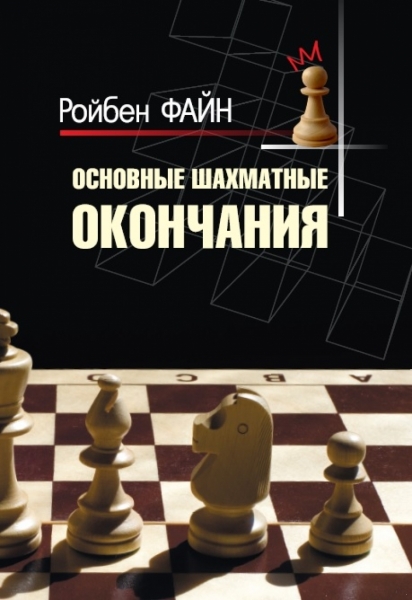
    In the vast ocean of chess literature there are relatively few books about the endgame, and only a few of them can be considered true chess classics. And the most outstanding among the classics — Reuben Fine's book "Basic Chess Endings". Reuben Fine (1914−1993) was for a long time one of the best chess players in the world. As an author, Fine showed himself to be an excellent analyst who understood the full depth and peculiarities of the endgame. Having studied various types of standard positions, Fine established useful rules for practical play and proved himself to be an experienced teacher who, using skillfully chosen examples, was able to teach the reader all the necessary lessons and introduce him to the basic ideas of the endgame. Many generations of chess players in different countries of the world keep copies of “Basic Chess Endings”. For example, Mikhail Botvinnik considered Fine's work the most worthy of all that had ever been written on endgame theory.

    35.00 $
  • Author:
    Galkin

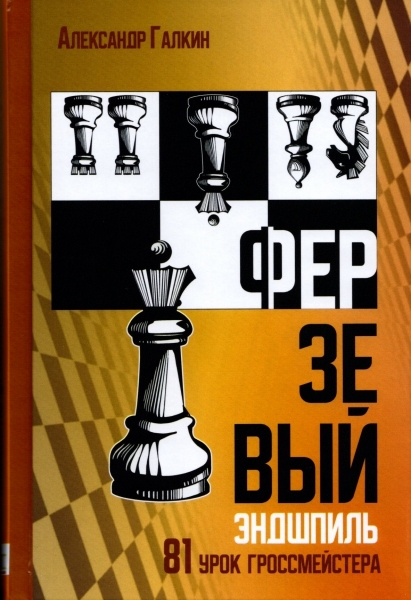
    The book by grandmaster and experienced coach Alexander Galkin is dedicated to the strongest piece on the chessboard – to the queen. Using the example of episodes from games of modern grandmasters (the vast majority of games date back to 2020-2023) and his own grandmaster practice, the author tries to generalize, and in some places even clarify the methodology for understanding and playing queen endings, as well as other types of endgames with the presence of queens ) On the desk. The book presents various ratios of material – “queen against queen”, “queen and minor piece against queen and minor piece”, “queen and rook against queen and rook”, “queen against two rooks”, “queen against rook and pawns”, “ queen against a rook and a minor piece”, “two queens against two queens” – practically the entire spectrum of encountered endgames of this type. The material is structured in such a way that the reader can get maximum benefit from studying the examples of queen endings and its other derivatives offered by the author. The book is aimed at advanced chess players, is useful for coaches and can be recommended to a wide range of chess fans.

    18.33 $
  • Author:
    Chandler

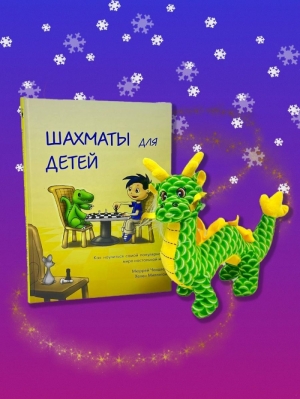
    The set consists of the book Chandler M. Chess for Children (gift edition) and the hero of this book - Marty the dragon (Dragon is the symbol of 2024). LEARN CHESS with the Very Big Dragon Marty! Using this entertaining book, your child will quickly and easily learn to play chess – the world's most popular strategy game that develops logical thinking. The rules are explained clearly and clearly, step by step, from scratch. The lessons reinforce the fun conversations between the boy Petya and his favorite dragon Marty, who calls himself the Very Big Dragon. In many countries, chess is recognized as a useful means of developing creative thinking in children. Although they are considered a complex and even mysterious game, the rules are quite simple. It doesn't take long to understand how the pieces move, and even a five-year-old child can enjoy chess. And children really like to beat their friends and relatives! Enlarged format (210x290 mm) The cute green dragon, the symbol of 2024, symbolizing strength, generosity, courage and endurance, is the hero of the book, which explains the rules of the chess game. The dragon has a suction cup, and you can use it to hang the toy on a glossy surface, on a window or refrigerator. Made of soft fabric,  has a height of 20 cm and a length of 26 cm.

    27.33 $
  • Author:
    Yanvarev

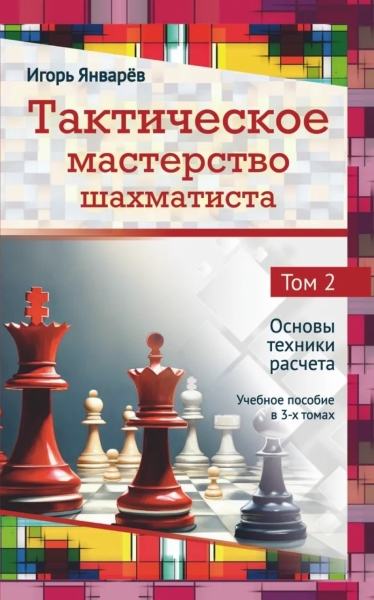
    Igor Yanvarev "Tactical Mastery of a Chess Player. Volume 2. Basics of Calculation Techniques". Andrey Elkov Publishing House, Moscow, 2025 - 392 p. Before you is the second book from the three-volume work by International Master I.K. Yanvarev, a famous trainer, author of the fundamental work "The Old Indian Played by Tigran Petrosian" (2010), which received recognition from readers and was republished abroad. The three-volume work is united by a common idea - tactics and combinations in chess. In fact, this is a turnkey textbook, it explains everything from scratch to an advanced level. The second volume is devoted to the basics of calculation techniques, such topics as the tactical "spectrum" of a position, concentration of attention, inclusion of imagination are considered, the "tree of variations" is interpreted in a new way, the practical component is emphasized - the economy of calculation. A separate chapter allows the reader to assess their ability to calculate variations and outline ways to eliminate weaknesses. Each chapter ends with a large number of carefully selected examples for independent solution. Unlike other similar publications, the author examines chess tactics as a single whole, in combination with strategy and elements of psychology. It is based on the original author's methodology, which has proven itself well when working with chess players of various qualifications. Excellently selected examples, a clear logical structure and consistency in the presentation simplify the understanding of the material. For a wide range of chess fans.

    19.00 $
  • more

Debut theory

  • book

    Over 80 commented parties in detail (Intershah).

  • book

    25.56 $

    RUB

    About the Sveshnikov system

  • book

    23.50 $

    RUB

    Berlin, German, and jacket.

  • book

    72.50 $

    RUB

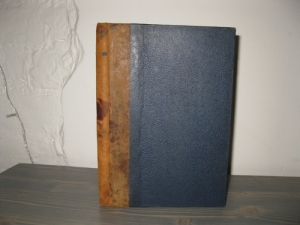
    Lifetime edition. Siegbert Tarrasch (1862-1934) - one of the greatest chess players and chess theorists in history, grandmaster. High-quality semi-leather binding of the time of publication. Underlining in the text.

  • book

    Репринт в картонном переплете.

  • book

    22.80 $

    RUB

    The best compositions and works of one of the most interesting sketchists.

  • book

    83.33 $

    RUB

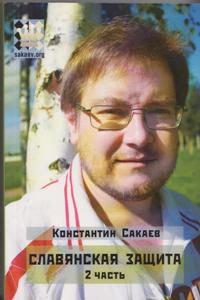
    Славянская защита - самый популярный закрытый дебют наших дней, входящий в репертуар подавляющего большинства гроссмейстеров высокого класса. Шахматист-практик, играющий 1.d4, сталкивается с этим дебютом практически в каждом турнире, черными же применять его можно вообще чуть ли не в каждой второй партии. В течение многих лет я играл самые разные разветвления этого дебюта за оба цвета, анализировал его как самостоятельно, так и в содружестве со многими известными гроссмейстерами. Сейчас я решил дать возможность всем желающим заглянуть в гроссмейстерскую лабораторию и познакомиться с моим профессиональным отношением к тем или иным дебютным разветвлениям. Вторая часть работы включает в себя все системы, не вошедшие в первую. Это популярный вариант Алапина 3.Kf3 Kf6 4.Kc3 dxc4, а также системы, берущие начало после 4...e6. Не забыты такие возможности как 5.g3 и 5.Фb3, а после 5.e3 Kbd7 разбираются главным образом меранский (6.Сd3 dxc4 7.Сxc4 b5) и антимеранский (6.Фc2 Сd6) варианты. Еще одну солидную часть книги занимает продолжение 5.Bg5, делящееся в свою очередь на несколько крупных самостоятельных разделов. Это московский (5...h6 6.Сxf6) и антимосковский (5...h6 6.Сh4) варианты, а также система Ботвинника 5...dxc4. Возможность объединить такое количество систем в одной книге (ее можно было бы сделать пятитомником) появилась благодаря тому, что я старался дерево устаревших с моей точки зрения линий сократить до умеренного количества, оставляя лишь то, что действительно полезно знать. В дебютных книгах часто приводятся второсортные продолжения, после которых следует большое количество ссылок на сыгранные таким образом партии. В итоге книга раздувается, а суть оказывается размыта. Я в подобных случаях кратко отмечал, почему данная конкретная линия не заслуживает подробного рассмотрения. Такой подход позволил «объять необъятное» не только без потери качества, но наоборот — под рукой всегда именно то, что необходимо, а найти нужную рекомендацию гораздо проще. Текстовые пояснения к вариантам и ключевым позициям даны не везде, а лишь в тех случаях, где мне это показалось важным и где выводы не слишком очевидны. В остальном использовалась общепринятая символьная система оценок. Книга содержит очень большое количество новинок с прилагающимися анализами, проделанными не менее тщательно, чем в первой части.

  • book

    93.33 $

    RUB

    The book is devoted to the original invention of an outstanding Moldovan coach and theorist Vyacheslav Chebanenko. The 4 ... a6 system in the Slavic Defense, which was considered quackly a quarter of a century ago, has become one of the most popular and reliable for black tabi in closed debuts today. The student and continuer of the Chebanenko case grandmaster Viorel Bologan summarizes the accumulated experience, as well as gives a number of new ideas and analyzes typical middlegame plans. Assignments for self-help will help you to better understand the strategic and tactical subtleties of the Chebanenko system and quickly master the scheme that the best chess players of the world have adopted.

  • book

    Brochure on option 1. d4 d5 2.c4 c6 3. Nc3 e6 4. e4 !?