menu
top sales
  • Author:
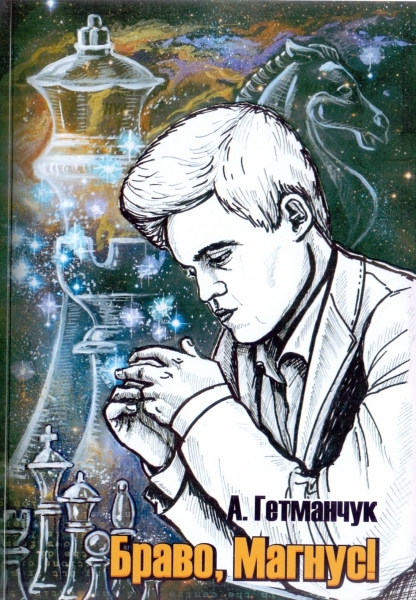
    Getmanchuk

    16.67 $
  • Author:
    Eive

    The corpus of this textbook includes two significant works by the world chess champion, scientist and prominent teacher Max Euwe — "Self‑help chess game", created in collaboration with G. Den-Hertog, and "Chess Lessons". The first work is designed for beginners, the second for more experienced chess players. The book is a real chess tutorial in the true sense of the word. This is expressed not only in the appropriate distribution of the material and the method of presentation, designed to awaken the initiative of the student, but also in numerous practical exercises offered to the reader after explaining each new concept or technique.The textbook primarily attracts the methodology of presentation of the material, the principles of which will be useful for coaches and teachers of chess sections and circles. For a wide range of chess fans.

    25.00 $
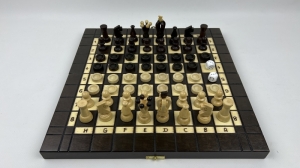
  • Magnetic road chess: folding board-case made of artificial leather, tablet-figures with a convex image. Wallet size 19x22 cm. The playing field is 15.5 x 15.5 cm. Cell 2x2 cm.

    51.72 $
  • Author:
    Galkin

    The book by grandmaster and experienced coach Alexander Galkin is dedicated to the strongest piece on the chessboard – to the queen. Using the example of episodes from games of modern grandmasters (the vast majority of games date back to 2020-2023) and his own grandmaster practice, the author tries to generalize, and in some places even clarify the methodology for understanding and playing queen endings, as well as other types of endgames with the presence of queens ) On the desk. The book presents various ratios of material – “queen against queen”, “queen and minor piece against queen and minor piece”, “queen and rook against queen and rook”, “queen against two rooks”, “queen against rook and pawns”, “ queen against a rook and a minor piece”, “two queens against two queens” – practically the entire spectrum of encountered endgames of this type. The material is structured in such a way that the reader can get maximum benefit from studying the examples of queen endings and its other derivatives offered by the author. The book is aimed at advanced chess players, is useful for coaches and can be recommended to a wide range of chess fans.

    18.33 $
  • A limited edition of the most famous electronic chess clock. Design & quot; under the tree & quot ;. Released for the 25th anniversary of the DGT. & Nbsp; These watches are used in all major tournaments, world championships and World Cups, World Chess Olympiads. Installation of any time controls, including Fisher and Bronstein controls (with added time). & Nbsp;

    237.50 $
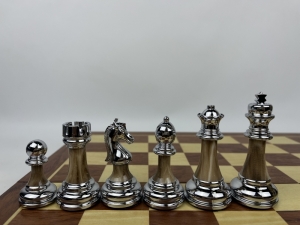
  • Unique chess for 3 players. Such chess will appeal to any person who chooses something new and appreciates original things. Manufacturer MADON-CHESS (Poland) Chessboard size: 46.5x54x2.5cm (unfolded) King height: 7.7cm King base diameter (cm): 3  Pawn height (cm): 3.6 Pawn base diameter (cm): 2.1 Presence of weighting agent: no Weight: 1311 g. Wood used for the chessboard: beech, birch Wood used for figures: hornbeam, beech  Intermediate chess for three is ideal entertainment for friends. The chess store presents to customers a unique set from a Polish manufacturer. If you are planning to buy a medium chess set for three in Moscow, pay attention to the set MADON-CHESS.   The main advantages of a chess set for three are reasonable cost and workmanship. The chess pieces are made of beech and oak of the highest quality. The chessboard is not inferior in quality: it is based on birch and beech.  The set consists of chess in three colors.  The chessboard has a compact size and is convenient to store on a shelf. Inside the board there are three separate compartments for storing pieces. For convenience and to keep products intact, the board is equipped with a soft lining.

    214.50 $
  • Author:
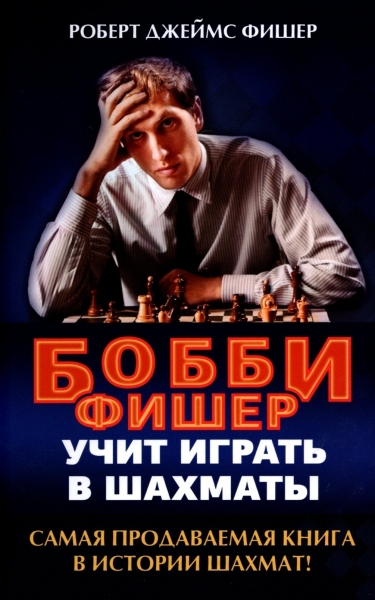
    Fisher

    15.00 $
  • Author:
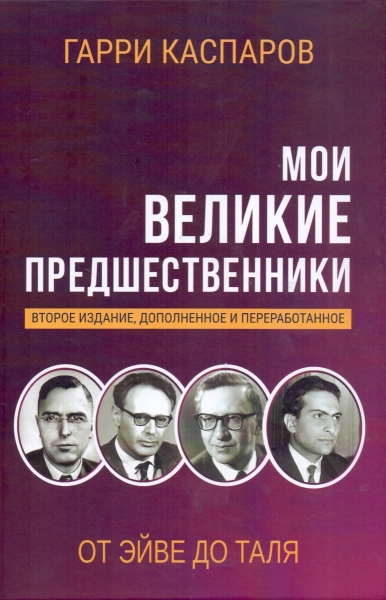
    Kasparov

    41.67 $
  • Author:
    Bogdanovich

    50.00 $
  • Author:
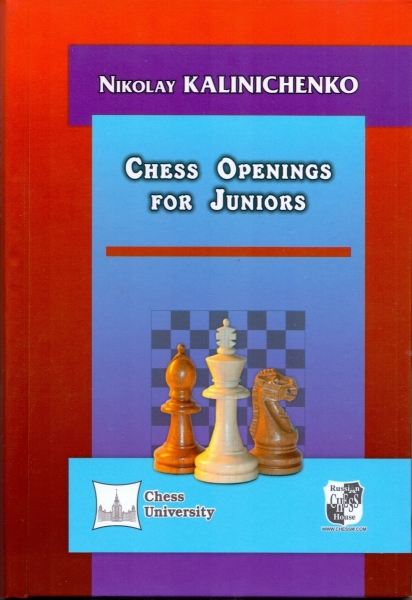
    Kalinichenko

    The vast majority of opening guides are written for adult readers. This book is also devoted to the theory but it is junior. The structure of the book is simple and attractive: openings are examined using examples from actual games, each of which is presented in the form of a lesson with its own name. Several such lessons form an opening theme, and the examination of each theme concludes with exercises. In each opening, attention is drawn to its characteristic tactical and strategic ideas of combinations for independent solution strictly corresponds to the opening theme. Written in clear and easy language, the book is furnished with a large number of diagrams. Colored explanatory arrows on the diagrams and the selection of individual pages with a colored background make the book easier to understand. Regular work solve two problems: deepen the student's knowledge and develop his tactical vision, thus improving his skill and results.

    28.80 $
  • more

New York

Книги издательства:

  • book

    The only book of the first world champion V. Steinits

  • book

    3227.59 $

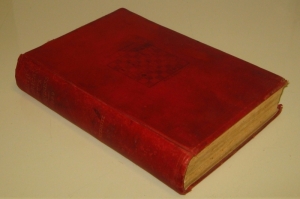
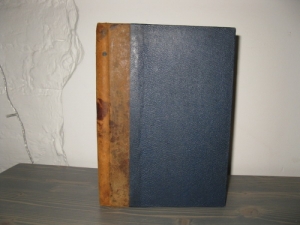
    The circulation is limited to 500 copies. Genuine leather binding with gilded letters on the spine. This is a copy of 267 issued to Khomatov, Tashkent & nbsp; Contains a report of the Congress Committee and all 432 games with Steinitz notes. It was a double round robin tournament of 20 people. One of the longest tournaments in history. In the first half of the tournament, draws counted as half a point. In the second half, they were replayed once. Between 38 regular rounds, 8 rounds of replay and 4 rounds of playoffs for the first at the end there were 50 rounds (!). Like the 4th Congress, this tournament consisted mainly of foreign masters. Captain Mackenzie’s resignation seems to date back to this time (although some sources consider him the US champion until his death in 1891), giving the top American finisher some claims to be the de facto US champion. The best American finisher was Solomon Lipschutz, who took 6th place with a score of + 22-9 = 7. The book is accompanied by an article by the Soviet master Aginsky, the former owner of this book. Tables and charts.