menu
top sales
  • Author:
    Bezgodov

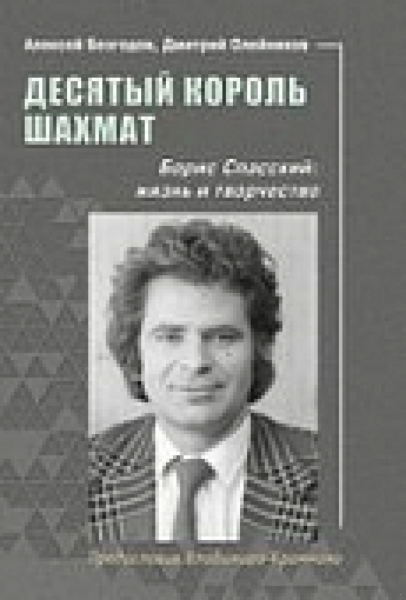
    The youngest first–grader in the USSR, the world champion among young men, a participant in the candidates tournament at the age of 19 - Boris Spassky's rise was rapid. And then fate gave the brilliant chess player a test of strength: he stumbled twice at the decisive moment and remained beyond the threshold of interzonal tournaments ... Only ten years after his first great success, Spassky managed to pass all the qualifying tests and earn the right to a match for the crown, but he failed to defeat the Iron Tigran Petrosian the first time. It took three more years of super–efforts: by Sisyphus he rose again to the foot of Olympus and did not miss a second chance - in 1969 he became the Tenth king of chess! An essay about the life of Boris Vasilyevich and his sporting path full of ups and downs was written by Dmitry Oleynikov, Candidate of Historical Sciences, curator of the Chess Museum of the Chess Federation of Russia. 70 beautiful and instructive games of Spassky were commented on by the champion of Russia in 1993, the famous author and theorist grandmaster Alexey Bezgodov, as well as grandmaster Dmitry Kryakvin and FIDE master Steve Giddins. The preface was written by the 14th world champion Vladimir Kramnik. For a wide range of chess fans.

    21.67 $
  • Author:
    Franco

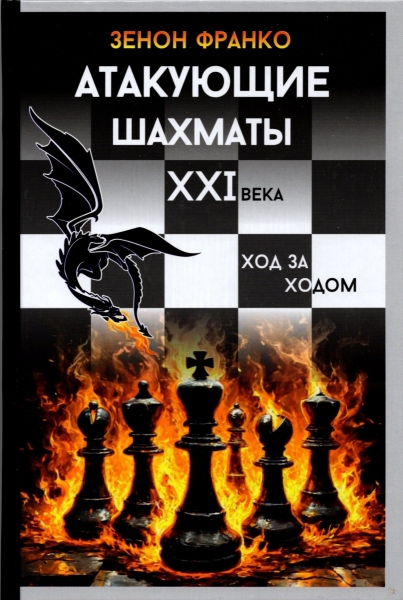
    The book by grandmaster and experienced chess coach Zenon Franco includes 36 instructive attacking games and is divided into four chapters - the king in the center, one-sided castling, opposite-sided castling, and attack-defense-counterattack. Before each game, the opponents are introduced, and a brief description of the events that took place in it is given. Based on the results of the struggle in the game, lessons that are useful to learn from what has been read are listed in a concise form. The book is not overloaded with variations, the emphasis is on detailed explanations in the "move by move" format, which creates an ideal platform for studying chess. At the "support" points of each game, the reader is offered test questions, which helps both the practical study of key chess techniques and the reliable assimilation of the acquired knowledge. Questions and answers involve the reader in the learning process and help him track the growth of his chess strength. For a wide range of chess fans.

    19.00 $
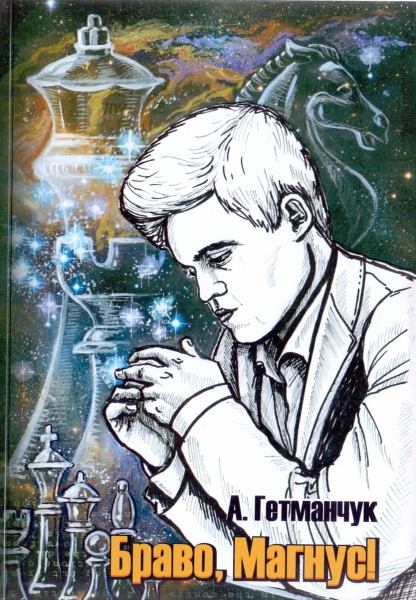
  • Author:
    Getmanchuk

    16.67 $
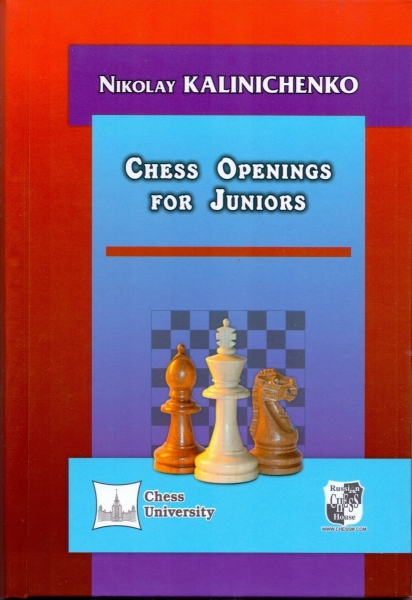
  • Author:
    Kalinichenko

    The vast majority of opening guides are written for adult readers. This book is also devoted to the theory but it is junior. The structure of the book is simple and attractive: openings are examined using examples from actual games, each of which is presented in the form of a lesson with its own name. Several such lessons form an opening theme, and the examination of each theme concludes with exercises. In each opening, attention is drawn to its characteristic tactical and strategic ideas of combinations for independent solution strictly corresponds to the opening theme. Written in clear and easy language, the book is furnished with a large number of diagrams. Colored explanatory arrows on the diagrams and the selection of individual pages with a colored background make the book easier to understand. Regular work solve two problems: deepen the student's knowledge and develop his tactical vision, thus improving his skill and results.

    28.80 $
  • Magnetic road chess: folding board-case made of artificial leather, tablet-figures with a convex image. Wallet size 19x22 cm. The playing field is 15.5 x 15.5 cm. Cell 2x2 cm.

    51.72 $
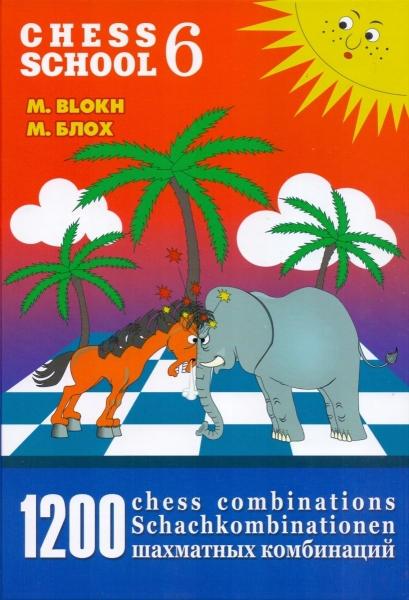
  • Author:
    Blokh

    The answer book of an international grandmaster and an experienced coach (among whose students is A. Grischuk) Bloch's Maxim contains over 1200 combinations from practical games and specially compiled examples. All tasks are characterized by intense struggle, in which the goal is achieved by single moves. The book is intended for both young and adult amateurs, and for masters. The arrangement of examples by topic allows you to use the book not only as a task book, but also as a textbook. Of particular interest are over two hundred specially compiled by the author overstressed positions in which white wins the only way during the course of white, and black wins during the course of black. These examples, as well as over 50 fragments from the parties of the author and his students, are published for the first time.

    21.67 $
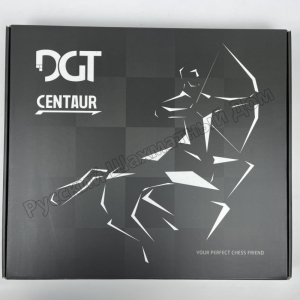
  • Made in Holland. Chess computer "Centaur" easy to use. You can easily install any language. Using the touch panel  40x40 cm (cell size 48 x 48 mm) you can easily move the figures. The sensors will record strokes. The board has a capacious rechargeable internal battery. The uniqueness of the computer is that it quickly adapts to  your playing strength (from beginner to grandmaster) so that you have the right opponent. Centaur will help you analyze the game so as not to make the same mistakes and improve your chess skill. Please note, computer is not compatible to connect to your PC or online chess. The set includes USB cable and DGT electronic chess pieces . Height of the king is 86mm.  

    1553.60 $
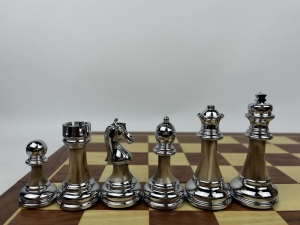
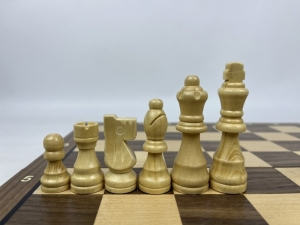
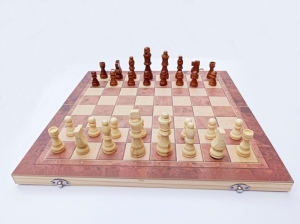
  • Chess was invented in the 5th century AD in India and spread throughout the world. The uniqueness of this game is that it still covers the minds of everyone - from young to old! Chess combines elements of science and sports. They develop logic, perseverance, attentiveness, analytical thinking and memory.  Checkers is a fun, dynamic and relatively simple game. Every country in the world has it. It is comparatively easier to find a partner here than in chess. Backgammon – one of the oldest known board games. It is known that it came to us from the East. First, you need to master the basic techniques, so that later you can boldly apply various tricks during the game.  Cage length: 4.5 cm. King height: 8.8cm King base diameter: 2.8 cm The length and width of the field when unfolded: 44 X 44 cm. Material: wood Country of origin: China.

    84.48 $
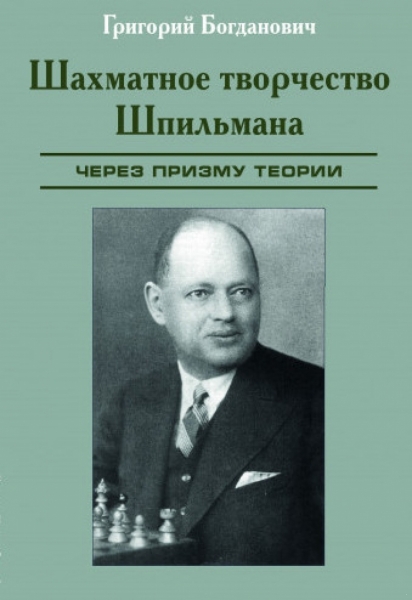
  • Author:
    Bogdanovich

    50.00 $
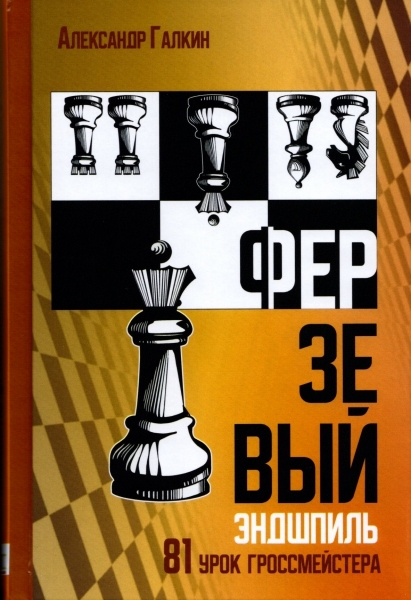
  • Author:
    Galkin

    The book by grandmaster and experienced coach Alexander Galkin is dedicated to the strongest piece on the chessboard – to the queen. Using the example of episodes from games of modern grandmasters (the vast majority of games date back to 2020-2023) and his own grandmaster practice, the author tries to generalize, and in some places even clarify the methodology for understanding and playing queen endings, as well as other types of endgames with the presence of queens ) On the desk. The book presents various ratios of material – “queen against queen”, “queen and minor piece against queen and minor piece”, “queen and rook against queen and rook”, “queen against two rooks”, “queen against rook and pawns”, “ queen against a rook and a minor piece”, “two queens against two queens” – practically the entire spectrum of encountered endgames of this type. The material is structured in such a way that the reader can get maximum benefit from studying the examples of queen endings and its other derivatives offered by the author. The book is aimed at advanced chess players, is useful for coaches and can be recommended to a wide range of chess fans.

    18.33 $
  • more

Romanovsky

Книги автора:

  • book

    15.00 $

    Peter Arsenyevich Romanovsky - one of the strongest Soviet masters of the 20s - 30s, a major chess teacher, the author of a number of valuable books on various issues of chess creativity, enjoyed a well-deserved success. His views have not lost their relevance today. Romanovskiy addressed the theme of the middlegamet twice. The first work under this title was published in 1929, when the whole world was under the impression of hypermodernism: it seemed that the `magic stone` of chess was found. The first `Mittelshpil` Romanovsky became the anthem of the new ideas of Nimzowitsch, Reti and other leading figures of the time. After many years, Romanovsky again wrote a book with the same name. By this time, the passion around hypermodernism had subsided, it is time to return to the unfading values created by the classics and romantics, and to give a new assessment of the accumulated ideological wealth in chess. The second book was published in two volumes (`Plan` and` Combination`), and the volume dedicated to the combination was published in soft binding and few people have survived to this day. This was the reason for his re-release.
  • book

    28.79 $

    The classic work of a prominent master and a fine coach (see Mittelspiel, Combination).
  • book

    Peter Arsenyevich Romanovsky - one of the strongest Soviet masters of 20-x - 30-x., A major chess teacher, the author of several valuable books on various issues of chess creativity, enjoyed a well-deserved success. His views have not lost their relevance today. Romanovskiy addressed the theme of the middlegamet twice. The first work under this title was published in 1929, when the whole world was under the impression of hypermodernism: it seemed that "the magic stone" chess found. The first & quot; Mittelspiel & quot; Romanovsky became the anthem of the new ideas of Nimzowitsch, Reti and other leading figures of the time. After many years, Romanovsky again wrote a book with the same name. By this time, the passion around hypermodernism had subsided, it is time to return to the unfading values created by the classics and romantics, and to give a new assessment of the accumulated ideological wealth in chess. The second book was published in two volumes (& quot; Plan & quot; and & quot; Combination & quot;). Book of Honored Master of Sports and Honored Coach of the USSR PA. Romanovsky & quot; Mittelspiel. Plan & quot; comprehensively covers the issues of the theory of the middle of the game - the most important stage of a chess game. The book will help the chess player to master the skill of drawing up and implementing a plan in a chess game. The book is designed for chess dischargers.

  • book

    20.15 $

    Historical and theoretical essay.
  • book

    22.45 $

    An excellent teaching aid can serve as the author’s selected games. They are arranged on a thematic basis, and detailed notes to them, as rightly pointed out by P. A. Romanovsky, reveal the “internal meaning of the processes of struggle”. The book includes the author’s games with Alekhine, Botvinnik, Kotov, Levenfish, Bondarevsky, Averbakh and many other major masters. The class of the game in these games is not always the same, but at an invariably high level are deep and informative notes. The autobiography of P. A. Romanovsky is instructive and interesting. It contains curious sketches of pre-revolutionary chess life, a description of the first steps in the development of Soviet chess culture. The author recalls some statements by Alekhine, episodes of various competitions. The main thing, of course, in the autobiography is the story about the formation of the chess view of the Russian master, his creative position now, after almost half a century of service to chess art. There is no doubt that readers with interest and benefit for themselves will become acquainted with the work of the oldest master.